Alumina Ceramic: The Workhorse of Advanced Engineering Materials
In the vast and ever-evolving landscape of advanced materials, few substances are as ubiquitous, reliable, and versatile as alumina ceramic. Known chemically as aluminum oxide (Al₂O₃), it might sound like a simple compound, but its engineered forms represent a cornerstone of modern engineering.
From the spark plug igniting your car’s engine to the substrate carrying microchips in your smartphone, alumina ceramic works silently yet indispensably behind the scenes.
This blog serves as a comprehensive introduction to this remarkable material, exploring its essence, its standout properties, and the fundamental reasons for its widespread adoption.
1. What Exactly is Alumina Ceramic?
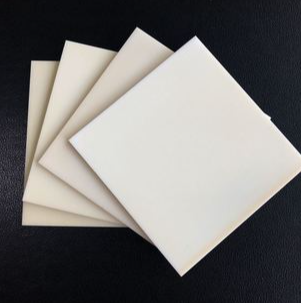
At its core, alumina ceramic is a manufactured material derived from aluminum oxide powder. While aluminum oxide occurs naturally as the mineral corundum (the base for rubies and sapphires), industrial alumina ceramics are produced through a carefully controlled process.
High-purity alumina powder is compacted and sintered at temperatures often exceeding 1600°C, transforming it into an exceptionally hard, dense, and stable polycrystalline structure.
The purity level, ranging from around 90% to as high as 99.99+%, is a critical factor that directly tunes its final properties. Higher purity grades offer superior performance in electrical insulation, corrosion resistance, and thermal characteristics, making them suitable for more demanding applications.
2. A Symphony of Exceptional Properties
The dominance of alumina in the technical ceramics market is not accidental. It is the direct result of a unique and synergistic combination of properties that few other materials can match simultaneously.
- Exceptional Hardness and Wear Resistance: Alumina ceramic is incredibly hard, typically ranking 9 on the Mohs scale (just below diamond at 10). This gives it outstanding resistance to abrasion, scratching, and wear.
In applications like slurry pumps, mining equipment liners, and cutting tools, alumina components outlast metals by orders of magnitude, drastically reducing maintenance and downtime. - 2 High Mechanical Strength: It exhibits excellent compressive strength, often surpassing that of many metals. This allows it to bear significant loads without deformation.
However, like most ceramics, it is a brittle material with lower tensile strength and fracture toughness compared to metals, a factor engineers must account for in design by avoiding tensile stress concentrations. - Superior Electrical Insulation: Alumina is an outstanding electrical insulator, even at elevated temperatures. It possesses high dielectric strength (resistance to electrical breakdown) and a favorable dielectric constant.
This makes it the material of choice for substrates in electronic circuits, insulating housings for high-voltage equipment, and spark plug bodies. - Excellent Thermal Properties: Alumina boasts a high melting point (over 2050°C) and can operate continuously in air up to about 1750°C.
It also has good thermal conductivity for a ceramic (about 10-30 times that of stainless steel), allowing it to dissipate heat effectively in electronic and thermal management applications. Its thermal expansion coefficient is relatively well-matched to certain metals, facilitating brazing and sealing. - Outstanding Chemical Inertness: Alumina is highly resistant to attack by a wide range of chemicals, including strong acids and alkalis at elevated temperatures. It does not rust or corrode like metals, making it ideal for chemical processing equipment, biomedical implants (where biocompatibility is crucial), and harsh environmental seals.
- Cost-Effectiveness: Compared to other advanced ceramics like zirconia or silicon nitride, alumina is relatively inexpensive to produce in standard grades. This favorable balance of performance and cost is a key driver behind its “workhorse” status.
3. Where Do We Encounter Alumina Ceramic?
Its property profile opens doors to a staggering array of applications across industries:
- Electronics & Electrical: The largest volume application. Used as substrates and packages for integrated circuits (ICs), thanks to its ability to insulate while conducting heat away from delicate silicon chips.
- Industrial & Mechanical: Wear plates, liners, nozzles, bearings, and seals in demanding environments involving abrasion, corrosion, or high temperatures.
- Medical & Dental: Utilized for hip and knee joint prostheses, dental implants, and brackets due to its biocompatibility, wear resistance, and smooth surface finish.
- Automotive: Found in spark plugs, sensors (oxygen, knock), and wear-resistant components in fuel systems and engines.
- Chemical & Petrochemical: Valves, pump components, and labware that must withstand corrosive media.
- Defense & Aerospace: Used in armor systems, missile radomes, and thermal insulation tiles.
4.Understanding the Trade-offs: No Material is Perfect
While alumina’s advantages are numerous, a responsible engineer must understand its limitations. Its primary weakness is brittleness and relatively low fracture toughness.
It is susceptible to catastrophic failure under impact or severe tensile stress, and it does not deform plastically to absorb energy like metals. This necessitates careful, “ceramic-specific” design: avoiding sharp corners, supporting components to avoid bending stresses, and using compressive loading wherever possible.
Additionally, while its thermal shock resistance is adequate for many applications, it is inferior to some other ceramics like silicon carbide. Rapid and extreme temperature fluctuations can cause cracking.
Conclusion: A Foundational Material for Modern Technology
Alumina ceramic stands as a testament to the power of materials engineering. By taking a common chemical compound and mastering its processing, we have created a material that enables progress across virtually every field of technology.
Its unique combination of hardness, insulation, thermal stability, and chemical resistance-all at a reasonable cost-makes it an irreplaceable solution for countless engineering challenges.
As we push the boundaries of technology into more extreme environments, from deeper wells to faster electronics, alumina ceramic, in both its standard and evolving high-purity forms, will undoubtedly continue to be a fundamental building block of innovation.

Leave a Reply