
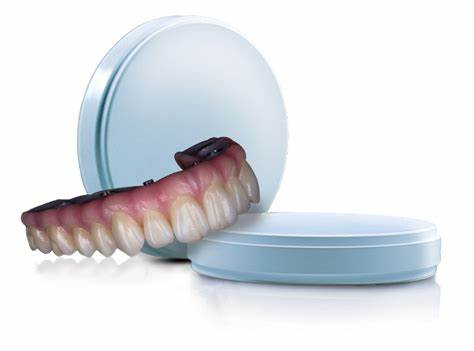
The Art and Science of Producing Zirconia Discs for Dental Prosthetics
Introduction
In the ever-evolving field of dental prosthetics, the use of zirconia discs has become increasingly prevalent due to their superior strength, aesthetic appeal, and biocompatibility. The production process of these discs is a fascinating blend of advanced material science and precision engineering. This blog post aims to shed light on the intricate journey of creating zirconia discs for dental prosthetics, highlighting the technological marvels and expertise involved in this process.
The Raw Material: Zirconium Dioxide
The journey begins with zirconium dioxide, the primary raw material for zirconia discs. This material is chosen for its exceptional durability and aesthetic properties, which are akin to natural teeth. The zirconium dioxide is often stabilized with yttria (yttrium oxide) to enhance its strength and fracture resistance, forming Yttria-stabilized Tetragonal Zirconia Polycrystal (Y-TZP).
Milling the Zirconia Powder
- Preparation: The raw zirconium dioxide is transformed into a fine powder, which is the foundation for the zirconia disc. This powder is carefully prepared to ensure uniform particle size and consistency.
- Milling Process: The powder is then subjected to a milling process where it is mixed with binding agents and other additives. This mixture is crucial for achieving the desired physical and chemical properties in the final product.
Shaping the Disc
- Pressing: The milled powder is pressed into a disc shape using a specialized hydraulic or isostatic press. The pressing process is meticulously controlled to achieve uniform density and thickness across the disc.
- Pre-sintering: After pressing, the discs undergo a pre-sintering process. This step involves a low-temperature heat treatment that solidifies the disc, making it sufficiently robust for handling and further processing.
The Sintering Process
- High-Temperature Sintering: The core of the production process is the high-temperature sintering. During this phase, the discs are placed in a sintering furnace where they are heated to temperatures typically between 1350°C and 1500°C.
- Densification: This high-temperature exposure causes the particles within the zirconia disc to fuse together, a process known as densification. It eliminates porosity and imparts the disc with high strength and durability.
- Cooling: Post-sintering, the discs are cooled in a controlled manner to prevent any thermal stress or cracking.
Quality Control and Finishing
- Inspection: Each zirconia disc undergoes rigorous quality control checks to ensure its density, strength, and dimensions meet stringent standards.
- Finishing Touches: The discs may be further processed for coloration to match the natural shade of teeth and polished to achieve the desired surface finish.
Conclusion
The production of zirconia discs for dental prosthetics is a remarkable process that combines cutting-edge technology with meticulous craftsmanship. Each step, from the initial milling of zirconium dioxide powder to the final sintering, is crucial in determining the quality of the final product. The result is a high-performing, aesthetically pleasing, and biocompatible material that has become a staple in modern dentistry.
As the dental industry continues to advance, the production of zirconia discs stands as a testament to the incredible progress in dental materials and technology. For dental professionals and patients alike, understanding this process underscores the value and reliability of zirconia dental prosthetics in delivering effective and long-lasting dental solutions.


Leave a Reply