
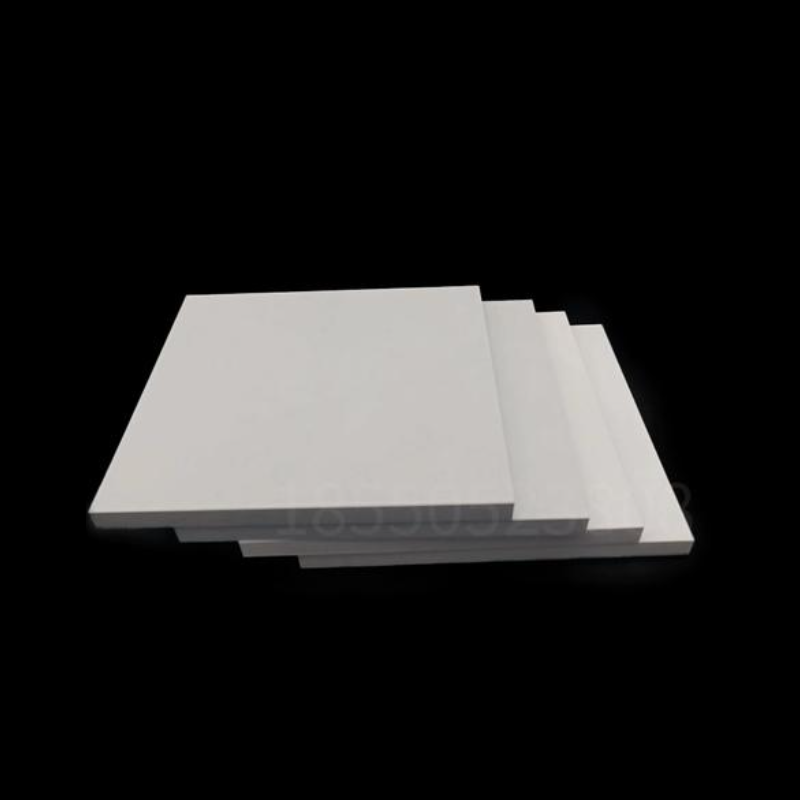
Research Progress on Boron Nitride-Based Composite Materials
Introduction
Due to the demanding requirements of industries such as aerospace, semiconductors, and high-temperature manufacturing, traditional refractory materials often cannot meet performance standards. Boron Nitride (BN), with its excellent high-temperature resistance, corrosion resistance, and electrical insulating properties, has emerged as a promising candidate material for composites. This blog will explore various research directions of boron nitride-based composites, including their combinations with metals, ceramics, and polymers, while highlighting recent advances and applications.
1. Advantages of Boron Nitride Composites
Boron nitride offers several advantages, including:
- High-Temperature Resistance: BN has a melting point over 3000°C, maintaining stability in extremely hot environments, making it ideal for high-temperature applications.
- Oxidation Resistance: BN does not react with oxygen and is resistant to oxidation even at high temperatures.
- Electrical Insulation and Thermal Conductivity: As an excellent insulator, BN also exhibits remarkable thermal conductivity, which is especially beneficial in electronic devices and high-temperature applications.
By combining BN with other materials, composites can be created that leverage these advantages while overcoming the limitations of individual components.
2. Boron Nitride in Metal Matrix Composites (MMCs)
Metal matrix composites (MMCs) are enhanced by adding reinforcement phases, such as boron nitride, to improve the properties of metals.
2.1 Boron Nitride and Aluminum Matrix Composites
Aluminum is lightweight and has good thermal conductivity, but its performance decreases in high-temperature or corrosive environments. Adding boron nitride to aluminum matrices can enhance heat and corrosion resistance, while its lubricating properties improve wear resistance. These composites are particularly suitable for engine components and heat exchangers.
Application Example: Aluminum-boron nitride composites are used in aerospace thermal protection systems, providing durability and structural integrity under extreme conditions.
2.2 Boron Nitride and Nickel Matrix Composites
Nickel alloys exhibit good heat resistance but have relatively low thermal conductivity. Adding boron nitride to nickel alloys can improve thermal conductivity and high-temperature stability, making these composites suitable for aerospace applications, such as turbine blades and high-temperature furnaces.
3. Boron Nitride in Ceramic Matrix Composites
Ceramics are known for their high-temperature and chemical stability, but their brittleness limits their applications. Adding boron nitride can improve toughness and impact resistance while retaining the thermal properties of ceramics.
3.1 Boron Nitride and Alumina Matrix Composites
Alumina (Al₂O₃) is a widely used refractory material, but its brittleness presents challenges. By adding boron nitride nanosheets, the toughness of the composite can be significantly increased, enhancing its thermal shock resistance.
Application Scenarios: These composites are used in high-temperature ceramic coatings and molds in metallurgy.
3.2 Boron Nitride and Silicon Carbide Matrix Composites
Silicon carbide (SiC) is an extremely hard material used in high-temperature environments, but its thermal conductivity can be improved. Combining SiC with boron nitride can enhance both thermal conductivity and thermal shock resistance, making it suitable for aerospace components and industrial applications such as nuclear reactors.
4. Boron Nitride in Polymer Matrix Composites
The combination of boron nitride and polymers is particularly beneficial for applications requiring high electrical insulation and thermal conductivity. By incorporating boron nitride nanosheets or nanotubes, the thermal conductivity of polymers can be significantly enhanced while maintaining excellent electrical insulating properties.
4.1 Boron Nitride and Polyethylene Matrix Composites
Polyethylene (PE) has excellent electrical insulating properties but a low thermal conductivity. Adding boron nitride nanosheets can enhance the thermal conductivity without affecting the insulation properties, making it suitable for use as heat dissipation components in electronic devices.
4.2 Boron Nitride and Epoxy Resin Matrix Composites
Epoxy resins are commonly used in electronic packaging. Adding boron nitride to epoxy resin can improve its thermal conductivity and insulating properties at high temperatures, making it an ideal choice for electrical insulation and thermal management applications.
5. Recent Advances in Boron Nitride Nanomaterials
The exploration of nanotechnology has revealed new potential for boron nitride. Boron nitride nanotubes (BNNTs) and boron nitride nanosheets (BNNS) have unique properties that differ from traditional boron nitride particles.
5.1 Boron Nitride Nanotubes (BNNTs)
Boron nitride nanotubes, similar to carbon nanotubes, possess excellent mechanical strength and thermal stability. Incorporating them into composites can improve toughness and enhance thermal conductivity. BNNTs have potential applications in advanced electronics and flexible circuit boards.
5.2 Boron Nitride Nanosheets (BNNS)
Boron nitride nanosheets are a two-dimensional material with exceptional thermal conductivity and electrical insulation properties. As a thermal filler, BNNS has widespread applications in high-performance thermal materials for smartphones, computers, and other electronic devices.
6. Future Prospects and Challenges
Despite the vast application potential of boron nitride-based composites, several challenges remain:
- Cost: The production process of boron nitride materials is complex and costly. Future research must focus on reducing these costs to promote broader applications.
- Dispersion Issues: Achieving uniform dispersion of boron nitride in composites can be challenging, which may affect performance.
- Expansion of Applications: While boron nitride composites are effective in high-temperature applications, more research is needed to explore their use in emerging fields such as flexible electronics and quantum computing.
Conclusion
Boron nitride-based composites offer a range of performance advantages, including high-temperature resistance, corrosion resistance, and excellent thermal conductivity, and they hold great development potential. By combining boron nitride with metals, ceramics, and polymers, these composites have become indispensable in various high-end industrial applications. With advances in technology and cost reduction, the future prospects of boron nitride composites are promising.
![Boron Nitride Plates/Trays [MH-BNC995T - BoronNitride]](https://moatcity.com/wp-content/uploads/2024/10/氮化硼板.jpg)
![Boron Nitride Saggars [MH-BNC995H - BoronNitride]](https://moatcity.com/wp-content/uploads/2024/12/氮化硼匣钵.png)

Leave a Reply