Optimizing Kiln Furniture Systems: Integrated Solutions Using Corundum-Mullite Materials
As firing temperatures rise and kiln cycles accelerate, the demand for high-efficiency, durable, and thermally stable kiln furniture systems becomes more pressing than ever. In advanced ceramics, powder metallurgy, and energy materials processing, kiln furniture is not just a support—it is a performance enabler. One material that has gained increasing traction for integrated kiln furniture design is corundum-mullite, due to its unique balance of thermal, mechanical, and structural advantages.
This blog explores how kiln system designers can optimize setter plates, saggers, beams, and support structures using corundum-mullite, and how an integrated approach leads to longer service life, lower energy consumption, and improved product quality.
-
Understanding the “System” Perspective in Kiln Furniture Design
Traditional kiln furniture design often treats components such as setter plates, beams, and support columns in isolation. However, this piecemeal approach can result in:
Uneven heat distribution
Misaligned thermal expansion rates
Excessive thermal mass
Poor weight load transfer
An integrated design approach, using materials like corundum-mullite for system-wide compatibility, allows for the creation of a balanced thermal-mechanical structure that works synergistically under high temperature conditions.
-
Why Corundum-Mullite Is Ideal for System-Level Integration
Corundum-mullite is a ceramic composite consisting of:
α-Al₂O₃ (corundum): High structural integrity at >1,650 °C
Mullite (3Al₂O₃·2SiO₂): Low thermal expansion, high thermal shock resistance
This material offers:
| Property | Performance Benefit |
| High creep resistance | Maintains shape and load capacity under stress |
| Excellent thermal stability | Withstands fast ramps and high peak temperatures |
| Moderate density (~2.7 g/cm³) | Reduces energy consumption compared to heavier refractories |
| Good fracture toughness | Tolerates mechanical vibration and thermal gradients |
These properties make it suitable not only for setter plates and saggers but also for kiln supports, trays, and pallet systems.
-
Key Elements of an Optimized Corundum-Mullite-Based Kiln Furniture System
3.1 Setter Plates
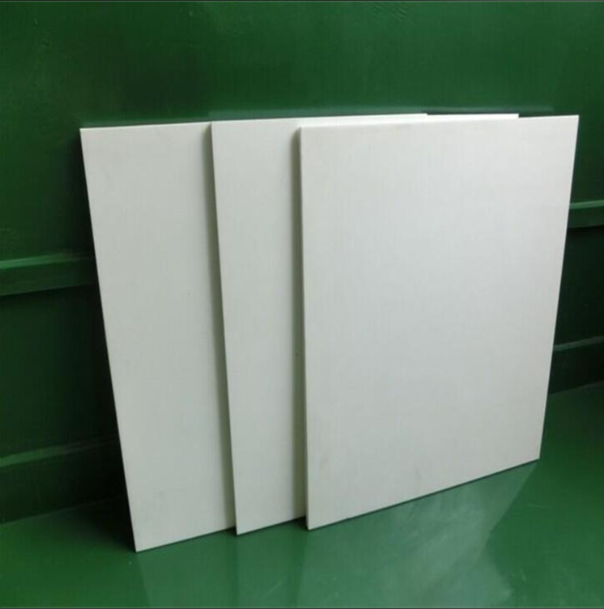
Used for supporting ceramic bodies during sintering, corundum-mullite setter plates offer:
Flatness retention over multiple cycles
Low warpage even in fast-fire kilns
Optional anti-stick coatings (e.g., zirconia) for sensitive products
Design Tip: Consider using thin, ribbed structures to reduce mass while maintaining rigidity.
3.2 Saggers
Ideal for powder processing (e.g., lithium battery cathodes), saggers made from corundum-mullite can be customized with:
High-density sintered walls to resist vapor attack
Geometry tailored for stackability and airflow
Glazed interiors to prevent sticking or infiltration
Design Tip: Use reinforced corners and wall tapers to reduce crack formation under thermal load.
3.3 Beams and Support Columns
These components transfer weight and help maintain system geometry. Corundum-mullite beams offer:
Stable modulus of rupture at high temperature
Compatibility with setter and sagger expansion behavior
Lower thermal inertia compared to silicon carbide
Design Tip: Use hollow cross-sections to reduce mass and minimize thermal lag.
3.4 Stacking Accessories (Posts, Spacers, Clamps)
Small elements can cause big problems if mismatched in expansion rate or strength. Using corundum-mullite for these ensures:
Uniform thermal response across system
No mismatched creep or shifting
Easier inventory control with a unified material base
- Performance Gains from Integrated Corundum-Mullite Systems
- Reduced Energy Consumption
By using corundum-mullite across all furniture components:
Lower total system weight
Shorter heating times
Less fuel or electricity usage per batch
Estimated energy savings: 10–20% compared to traditional fireclay or cordierite systems.
-
Extended Service Life
Integrated systems avoid localized stress points due to material mismatch. As a result:
Uniform wear and thermal fatigue behavior
Setter plates last 80–120 cycles
Beams and supports remain crack-free even in high-speed cycles
-
Improved Product Yields
With improved dimensional stability and better heat distribution:
Fewer warped ceramic bodies
Less contamination from spalling or chemical interaction
Higher repeatability of sintering results
-
Customization and Modularity
One of the advantages of working with corundum-mullite is its flexibility in forming and shaping:
| Forming Method | Application Examples |
| Dry pressing | Setter plates, small saggers |
| Extrusion | Hollow beams, support tubes |
| Slip casting | Complex geometries with smooth surfaces |
| CNC machining (post-sintering) | Fine adjustments, flatness correction |
Kiln designers can build modular systems—allowing easy replacement of individual parts without changing the entire assembly.
-
Case Example: Lithium Iron Phosphate (LFP) Firing Line
In a fast-firing roller kiln used for LFP cathode material:
Original system: Silica-bonded saggers on cordierite plates
Issues: Cracking after 40–50 cycles, high energy usage
Upgrade: Fully integrated corundum-mullite system (plates, saggers, posts)
Results after 6 months:
30% increase in product yield
40% reduction in furniture replacement cost
15% drop in energy consumption per ton of product
Conclusion
Optimizing a kiln’s performance is not just about upgrading individual components—it’s about designing a unified system where every piece works together thermally, mechanically, and chemically. Corundum-mullite materials provide the ideal foundation for such an integrated approach.

Leave a Reply