
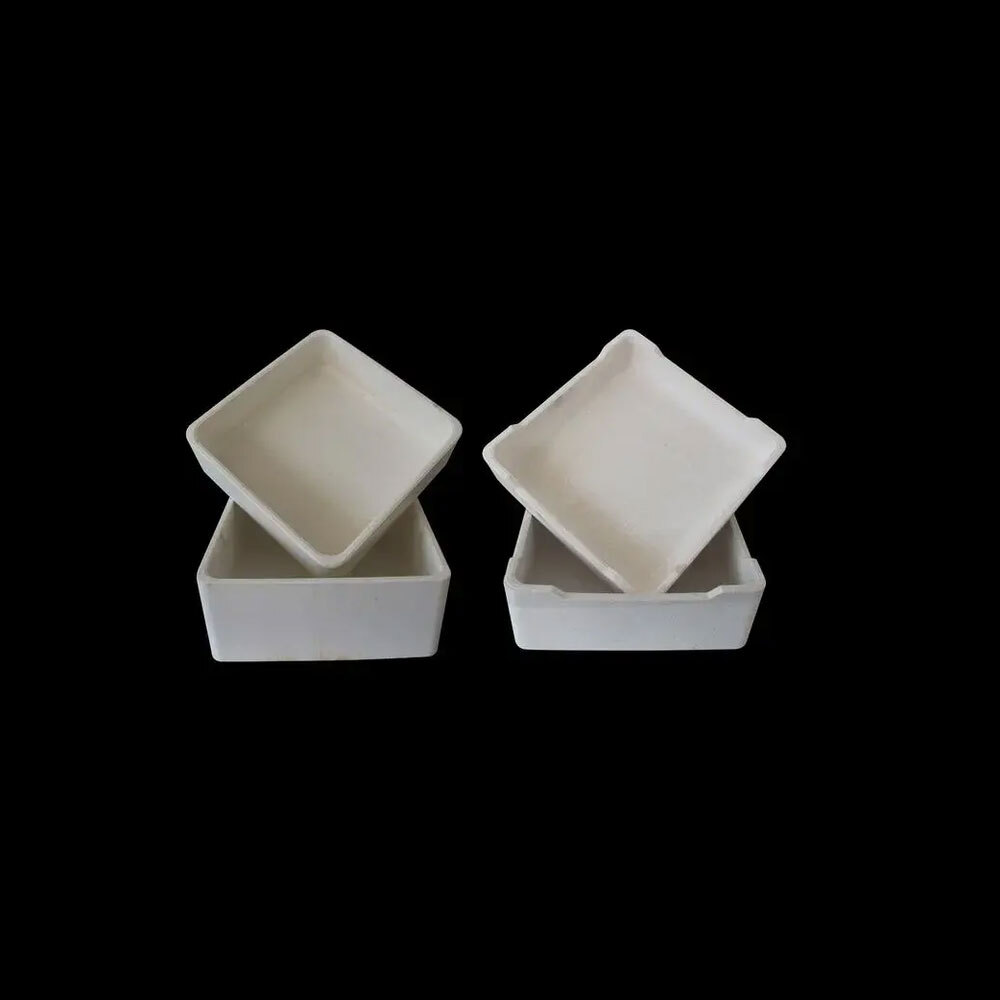
"No Fear of Thermal Shock, No Matter How High the Temperature Soars" — Analysis of the Thermal Stability and Thermal Shock Resistance of Andalusite-Mullite Refractory Materials
Andalusite-Mullite refractories are widely used in industries such as metallurgy, ceramics, and glass due to their excellent high-temperature properties. In these high-temperature and high-pressure environments, refractory materials face the challenge of extreme temperature fluctuations. Andalusite-Mullite stands out precisely because of its thermal stability and thermal shock resistance. So, how does Andalusite-Mullite refractories handle the “thermal shock” challenges at high temperatures and maintain long-term stability? This article will delve into this topic in detail.
-
Thermal Stability of Andalusite-Mullite: Withstanding Extreme Temperature Fluctuations
Thermal stability refers to the ability of a material to maintain its physical and chemical properties without significant change under high-temperature conditions. In industries such as metallurgy, glass manufacturing, and ceramics, refractory materials must endure temperature differences that can range from hundreds to thousands of degrees Celsius.
The thermal stability of Andalusite-Mullite refractories is due to their unique structure and composition:
- Andalusite (Andalusite) transforms into mullite at high temperatures. During this transformation, the material experiences minimal volume expansion, which helps avoid stress accumulation under high temperatures, thereby enhancing thermal stability.
- Mullite (Mullite), the product of Andalusite’s transformation, has a high melting point (around 1850°C) and a low coefficient of thermal expansion. This allows Andalusite-Mullite refractories to maintain excellent structural stability under high-temperature conditions.
Because the structure of Andalusite-Mullite can adapt to temperature changes, this refractory material not only withstands high temperatures but also performs well in environments with rapid temperature fluctuations.
-
Thermal Shock Resistance: Handling Extreme Temperature Gradients
Thermal shock refers to the stress that develops inside a material due to temperature gradients when it is heated or cooled, which can cause cracks or breakage. In high-temperature applications, materials need to have strong thermal shock resistance to prevent cracking from sudden temperature changes.
Andalusite-Mullite refractories excel in this area, with superior thermal shock resistance due to several factors:
- Andalusite Transformation Process: When Andalusite transforms into Mullite at high temperatures, it undergoes a process that involves minimal volume expansion, reducing the internal stresses caused by temperature differences.
- Low Thermal Expansion Coefficient: The Andalusite-Mullite material has a relatively low coefficient of thermal expansion, which means there is less internal temperature variation during heating or cooling, lowering the risk of crack formation.
- Uniform Structure: The uniform crystal structure of Andalusite-Mullite ensures that heat transfers more evenly within the material, reducing the thermal stresses caused by temperature gradients.
For example, in steel smelting or glass melting processes, where furnace temperatures often fluctuate rapidly, Andalusite-Mullite refractories can withstand rapid heating and cooling without cracking, thus ensuring the durability of furnace linings and other critical parts.
-
The Significance of Thermal Stability and Thermal Shock Resistance in Industry
The superior thermal stability and thermal shock resistance of Andalusite-Mullite refractories make them essential materials in several high-temperature industries. In these high-temperature industrial applications, they effectively reduce material damage, lower maintenance frequency, and increase production efficiency.
Metallurgy: Andalusite-Mullite refractories are widely used in the linings and bottoms of furnaces in industries like steel and aluminum smelting. In these processes, the intense temperature fluctuations and molten metal impacts are common, and Andalusite-Mullite materials can handle these challenges, preventing cracks and failures due to thermal shock.
Glass Manufacturing: In glass melting furnaces, Andalusite-Mullite refractories perform well because of their excellent thermal shock resistance. They can withstand frequent temperature fluctuations in the furnace and ensure stable operation. The material’s high-temperature corrosion resistance also enables its long-term use in molten glass environments.
Ceramic Firing: Andalusite-Mullite refractories also play an important role in ceramic production, particularly in kilns. They can withstand the stresses caused by thermal expansion and ensure a smooth firing process, preventing cracks or material damage during temperature changes.
-
Challenges and Optimization of Thermal Stability and Thermal Shock Resistance in Andalusite-Mullite Refractories
Although Andalusite-Mullite refractories perform excellently in terms of thermal stability and thermal shock resistance, they can still face challenges in extreme conditions, such as extremely high temperatures or prolonged exposure to harsh thermal shock conditions.
To further enhance their performance, researchers continue to explore the following optimization directions:
- Microstructural Improvements: By controlling the crystal structure and porosity, improvements can be made to the material’s thermal conductivity and thermal expansion properties, further enhancing its thermal shock resistance.
- Composite Materials: Combining Andalusite-Mullite with other high-temperature materials can improve its stability in even more extreme high-temperature environments.
-
Conclusion
The exceptional thermal stability and thermal shock resistance of Andalusite-Mullite refractories make them the ideal choice for high-temperature industrial applications. In metallurgy, glass, and ceramics, they can handle rapid temperature fluctuations, providing stable and reliable refractory protection. As research continues to evolve, Andalusite-Mullite materials will play an increasingly significant role in even higher-temperature applications.

Leave a Reply