

Enhancing Orthopedic Implant Production through Advanced Sintering Techniques
Orthopedic implants have changed the landscape of modern medicine, helping patients alleviate pain and restore mobility for those with musculoskeletal diseases and injuries. The production of orthopedic implants involves a complex process that relies on advanced sintering technology to create implants with exceptional quality, durability, and biocompatibility. In this blog, we delve into the critical role of sintering in orthopedic implant manufacturing and explore how advanced sintering technology and cutting-edge ceramic furnace setters are revolutionizing the field.
Understanding Orthopedic Implants: A Beacon of Hope for Patients
Orthopedic implants include hip and knee replacements as well as spinal fusion devices, designed to restore the function and stability of damaged or degenerated joints and bones. These implants are meticulously designed to meet the demands of daily life while seamlessly integrating with the body’s natural anatomy.
The Key Role of Sintering in Orthopedic Implant Manufacturing
Sintering is the foundation of orthopedic implant production, helping to transform powdered materials into strong, high-performance components. The process involves controlled heat and pressure applied to the implant materials, causing them to bond and solidify into a dense, uniform structure that meets the strict requirements of orthopedic applications.
Advances in Sintering Technology: Groundbreaking Progress in Orthopedic Implant Manufacturing
In recent years, significant advancements in sintering technology have been driven by innovations in materials science and engineering. Key advancements include:
- Powder Metallurgy Innovations: The development of ultra-fine powders and advanced powder metallurgy techniques has revolutionized the sintering process, enabling manufacturers to achieve unprecedented density, purity, and mechanical strength in orthopedic implants.
- Selective Laser Sintering (SLS): SLS technology has become a revolutionary technique in orthopedic implant manufacturing, providing precise control over the sintering process and enabling the production of complex, patient-specific implant geometries with unmatched accuracy.
The Role of Ceramic Furnace Setters in Advanced Sintering Processes
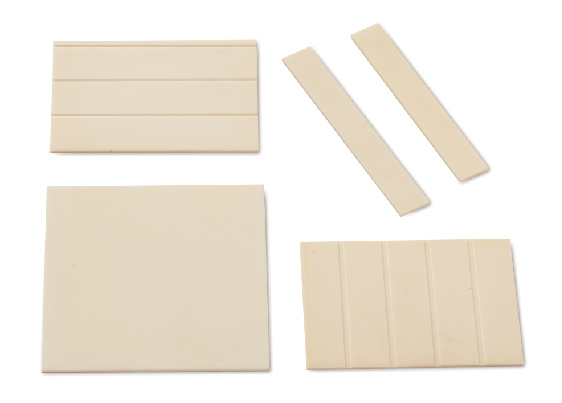
Ceramic furnace setters, made from high-quality materials such as corundum-mullite and zirconia, play a critical role in facilitating advanced sintering technology in orthopedic implant production:
- Thermal Stability and Uniform Heating: Ceramic setters offer excellent thermal stability, ensuring uniform heating throughout the sintering process and minimizing the risk of thermal gradients that could affect the quality of the implants.
- Thermal Shock Resistance: Ceramic setters are capable of withstanding rapid heating and cooling cycles without deformation or cracking, which is crucial for achieving consistent sintering results and maintaining the integrity of orthopedic implants.
- Precision and Reliability: Ceramic furnace setters allow for precise control over sintering conditions, enabling manufacturers to achieve strict tolerances and repeatable results when producing orthopedic implants.
Embracing the Future of Orthopedic Implant Technology
As orthopedic implant technology continues to evolve, the integration of advanced sintering technology with ceramic furnace setters is expected to drive innovation and excellence in patient care. By harnessing the capabilities of these cutting-edge technologies, orthopedic manufacturers can not only deliver implants that meet the highest standards of quality and performance but also improve the lives of patients worldwide.
In the dynamic landscape of orthopedic medicine, the enhancement of the implant production process stands as a testament to a commitment to innovation, precision, and patient-centered care. Led by advanced sintering technology and ceramic furnace setters, the future of orthopedic implant technology holds infinite possibilities, bringing hope and healing to those in need.

Leave a Reply