Aluminum Nitride: The Rise of a High-Performance Refractory Material
As materials science advances, so too does the demand for refractory materials that can withstand extreme environments—high temperatures, aggressive chemicals, and intense thermal cycling. Among these materials, aluminum nitride (AlN) has emerged as a particularly promising candidate due to its unique combination of thermal, mechanical, and electrical properties. Traditionally known for its applications in the electronics industry, AlN is now being recognized for its potential as a high-performance refractory material in metallurgical, aerospace, and energy sectors.
-
What is Aluminum Nitride?
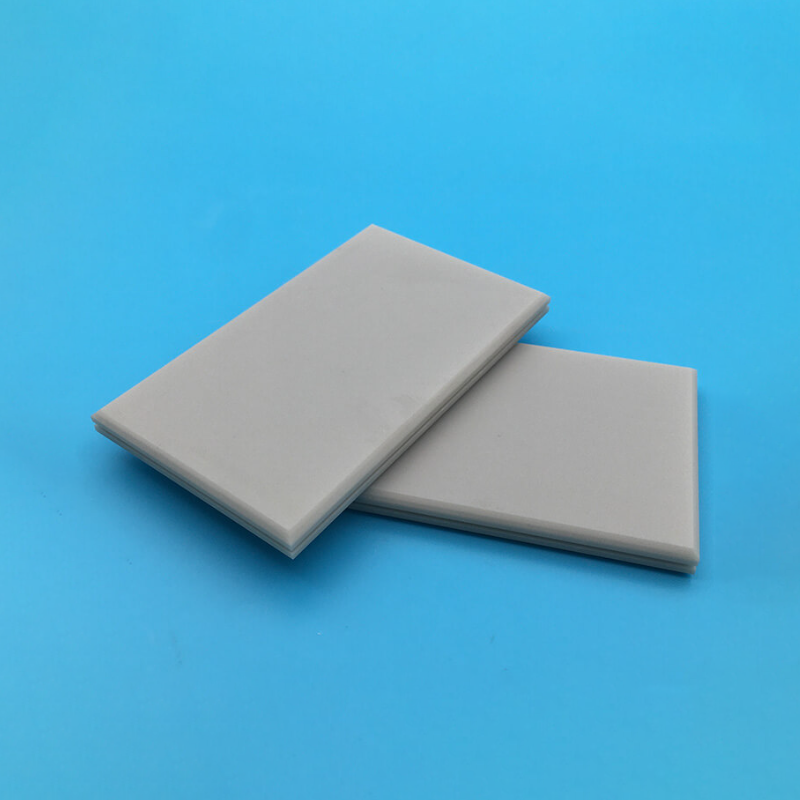
Aluminum nitride (AlN) is a ceramic compound composed of aluminum and nitrogen. It crystallizes in a wurtzite-type hexagonal structure and is characterized by high thermal conductivity, low thermal expansion, and excellent electrical insulation. These properties make it distinct from conventional refractory materials such as alumina (Al₂O₃), silicon carbide (SiC), or zirconia (ZrO₂).
Chemical Formula: AlN
Melting Point: ~2200 °C
Thermal Conductivity: Up to 285 W/m·K (theoretical, depending on purity and microstructure)
Coefficient of Thermal Expansion (CTE): ~4.5 × 10⁻⁶ /K
Electrical Resistivity: >10¹³ Ω·cm
Crystal Structure: Wurtzite (hexagonal)
-
Key Properties of AlN as a Refractory Material
High Thermal Conductivity
One of the most remarkable features of AlN is its exceptionally high thermal conductivity, which can exceed 200 W/m·K in dense, high-purity ceramics. This surpasses many metals and nearly all ceramic materials. Such high conductivity ensures rapid heat dissipation and minimizes thermal gradients in high-temperature systems, reducing thermal stress and risk of fracture.
Low Thermal Expansion
AlN exhibits a low coefficient of thermal expansion, which enhances its resistance to thermal shock—an essential characteristic for materials exposed to rapid heating and cooling cycles. Compared to materials like zirconia, which have high thermal expansion and lower thermal conductivity, AlN offers superior dimensional stability.
Chemical Stability
AlN is chemically stable in inert or reducing atmospheres and can withstand high temperatures without decomposing or reacting with most refractory metals. However, it can hydrolyze in humid environments at elevated temperatures, forming ammonia and alumina. Surface treatments or protective atmospheres are typically used to mitigate this.
Mechanical Strength and Wear Resistance
Though not as hard as boron carbide or silicon nitride, AlN still exhibits good mechanical strength, making it suitable for load-bearing applications at elevated temperatures. Its abrasion resistance is beneficial in contact environments involving molten metals or particulate erosion.
- Applications of AlN in Refractory Technology
- Metallurgical Crucibles and Linings
Due to its non-wettability with molten aluminum and some ferrous alloys, AlN is being used in crucibles, ladles, and lining materials in specialized metallurgical processes. Its resistance to chemical attack and thermal shock makes it a reliable choice in vacuum induction furnaces and aluminum refining equipment.
- High-Temperature Insulation and Fixtures
AlN’s combination of thermal conductivity and electrical insulation is ideal for supporting components in high-temperature electrical or plasma environments. It is often used in hot-zone components in semiconductor processing equipment or ion implantation chambers.
- Advanced Ceramics and Composites
AlN is being integrated into ceramic-matrix composites (CMCs) to enhance their thermal and mechanical performance. These composites find use in aerospace and nuclear applications where performance under simultaneous thermal and mechanical stress is critical.
-
Comparison with Other Refractory Materials
| Property | AlN | Al₂O₃ | SiC | ZrO₂ |
| Thermal Conductivity (W/m·K) | 140–285 | 30 | 120 | ~2 |
| CTE (×10⁻⁶ /K) | 4.5 | 8.5 | 4.0 | 10.3 |
| Electrical Resistivity (Ω·cm) | >10¹³ | >10¹⁴ | ~10⁴ | Insulating |
| Max Use Temp (°C) | ~1800 | ~1700 | ~1600 | ~2400 (but low conductivity) |
From this comparison, AlN clearly excels in thermal conductivity and low expansion—two vital criteria for materials in high-temperature, high-precision environments.
-
Challenges and Limitations
Despite its advantages, the widespread adoption of AlN in refractory applications is limited by:
Cost of Raw Materials: High-purity aluminum and controlled nitridation increase production costs.
Processing Complexity: AlN requires sintering under nitrogen or in a vacuum to avoid decomposition.
Hydrolytic Instability: Exposure to moisture at elevated temperatures may lead to surface degradation.
Researchers are actively exploring dopants, surface coatings, and composite strategies to mitigate these issues and expand AlN’s applicability.
-
Conclusion: A Material with Strategic Potential
Aluminum nitride is much more than just a ceramic for electronic substrates. As a high-performance refractory material, it offers a rare combination of properties: high thermal conductivity, excellent thermal shock resistance, and robust mechanical and chemical stability. Although it still faces challenges related to processing cost and environmental sensitivity, ongoing advancements in powder synthesis, sintering technologies, and composite integration are rapidly overcoming these barriers.
As industries seek materials that can push the boundaries of temperature, stress, and environmental resistance, AlN stands out as a strategic solution for next-generation refractory applications.

Leave a Reply