
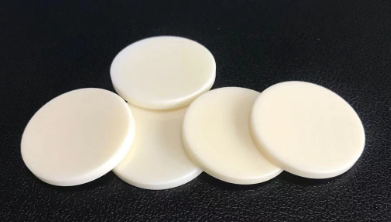
The Silent Enabler: Alumina Ceramic in Electronics
Behind every sleek smartphone, every efficient electric vehicle, and every powerful server lies an ecosystem of critical components operating unseen. Among the most fundamental of these is alumina ceramic-a material that forms the very physical and thermal foundatin of modern electronics.
More than just a passive container, it is an active enabler of performance, reliability, and miniaturization. This blog explores why alumina (Al₂O₃), particularly in its high-purity (>96%) forms, is indispensable to the electronics industry.
- The Perfect Substrate: The Bedrock of Circuitry
The most iconic application of alumina in electronics is as a substrate-the flat, robust platform upon which electronic circuits are built. Whether it’s a simple resistor network or a complex hybrid microcircuit, alumina provides the ideal stage. Its qualifications are unmatched:
Electrical Insulation: With extremely high volume resistivity (>10¹⁴ Ω·cm), it prevents unwanted current flow between conductive tracks, ensuring circuit integrity.
Thermal Management: This is its superpower. Alumina’s relatively high thermal conductivity (20-30 W/m·K) acts as a heat sink, effectively drawing heat away from power-hungry chips like LEDs, RF transistors, and power modules. This prevents overheating, a primary cause of device failure and performance throttling.
Dimensional Stability: It exhibits minimal thermal expansion and maintains its shape and flatness even under thermal cycling. This is crucial for maintaining the precise alignment of soldered components and fine conductive lines.
Excellent Surface Finish: It can be fired to a very smooth, impervious surface, allowing for the precise deposition of thin-film or thick-film conductive pastes (like gold or silver) to create intricate circuit patterns.
From consumer electronics to aerospace avionics, alumina substrates are the unsung heroes ensuring circuits stay cool, connected, and reliable.
- The Protective Package: Hermetic Sealing
When a semiconductor chip is too sensitive for the open air-vulnerable to moisture, dust, or corrosive gases-it is placed in a hermetic package. Alumina is the material of choice for these protective enclosures, often co-fired with metal feedthrough pins (using tungsten or molybdenum metallization).
The alumina package provides a robust, inert shell that can be brazed shut, creating a near-perfect vacuum or controlled atmosphere inside. This is absolutely critical for:
Micro-Electro-Mechanical Systems (MEMS): Such as accelerometers and gyroscopes, which contain tiny, fragile moving parts.
High-Reliability Military/Aerospace Chips: That must operate for decades in harsh conditions.
Medical Implant Electronics: Where biocompatibility and a perfect moisture barrier are non-negotiable.
- The Insulating Workhorse: From Spark Plugs to Sensors
Beyond microelectronics, alumina’s insulating properties are leveraged in countless electro-mechanical components:
Spark Plug Insulators: The white ceramic body of a spark plug is almost always alumina. It must insulate 40,000+ volts at high temperature while resisting corrosion from fuel combustion byproducts. No other material offers this combination cost-effectively.
Sensor Bodies and Insulators: In oxygen sensors (lambda sensors) in automotive exhaust systems, alumina forms the protective tube and insulating substrate for the sensing element, operating in brutally hot and corrosive environments.
RF/Microwave Windows: In radar systems and communication equipment, alumina’s favorable dielectric properties (stable dielectric constant, low loss tangent) allow it to act as a transparent “window” for radio frequencies, protecting sensitive internal components from the elements without distorting the signal.
- The Thermal Management Champion
As electronics push for more power in smaller packages (a trend known as increased power density), thermal management becomes the limiting factor. Alumina is increasingly used as:
Heat Spreaders and Insulators: Directly attached to hot components to laterally dissipate heat.
Ceramic Heater Substrates: Thick-film resistive heaters are printed directly onto alumina plates, which then heat uniformly and efficiently in printers, industrial equipment, and precision instruments.
Insulating Standoffs and Shims: Providing structural support and electrical isolation while conducting heat away from hot spots.
Why Not Other Materials?
It’s logical to ask why alumina reigns supreme. The alternatives have specific shortcomings:
PCB Laminates (FR-4): Cheap and versatile, but poor thermal conductors and unsuitable for high temperatures or high frequencies.
Beryllium Oxide (BeO): Has superb thermal conductivity (~300 W/m·K) but is toxic in powder form, raising serious manufacturing and safety concerns.
Aluminum Nitride (AlN): Excellent thermal conductor (~150-200 W/m·K) and is gaining ground for high-power applications, but it is more expensive and mechanically weaker than alumina.
Polymers: Good insulators but fail on thermal conductivity, dimensional stability, and high-temperature performance.
Alumina sits in the sweet spot of performance, reliability, manufacturability, and cost for the vast majority of electronic applications.
Conclusion: An Indispensable Foundation
Alumina ceramic is far more than a simple component in electronics; it is a foundational material that enables the industry’s core trends: miniaturization, increased power, and enhanced reliability. By masterfully combining electrical insulation with thermal conduction, mechanical strength with dimensional stability, it solves the fundamental paradox of electronics: managing the heat generated by the flow of electrons.
As long as devices require power, computation, and connectivity, alumina will remain an indispensable, if often invisible, pillar of the electronic world. In our next blog, we will explore how this versatile material takes on a profoundly different role inside the human body, in Medical Applications of Alumina Ceramics.

Leave a Reply