
From Powder to Performance: The Manufacturing Journey of Alumina Ceramics
Imagine transforming a fine, white powder into a component hard enough to armor a vehicle, stable enough to carry a microchip at 500°C, and inert enough to serve as a human hip joint for decades. This is the alchemy of alumina ceramic manufacturing-a meticulous, multi-stage process where precision and control are paramount. While the final product appears monolithic and simple, its creation is a sophisticated ballet of materials science and engineering. This blog takes you through the key steps that bring high-performance alumina ceramics to life.
Stage 1: The Foundation – Powder Preparation
It all begins with the raw material: aluminum oxide powder. Not all powders are created equal. For technical ceramics, the purity (from 96% to 99.99% Al₂O₃), particle size (typically sub-micron to a few microns), and particle size distribution are critically controlled. High-purity powders are synthesized from refined aluminum precursors.
Key step: Additive Mixing. Pure alumina powder alone will not sinter into a strong, dense part. Small percentages of sintering aids-such as magnesia (MgO), silica (SiO₂), or calcia (CaO)-are uniformly mixed in. These additives, often less than 1% by weight, play a crucial role. They control grain growth during the high-temperature firing phase. Uncontrolled grain growth leads to large, weak microstructures prone to cracking. Sintering aids migrate to the grain boundaries, pinning them and promoting the formation of a fine-grained, dense, and strong final ceramic.
Binders and plasticizers may also be added at this stage to give the powder “green strength” for shaping and to allow for ejection from molds.
Stage 2: Shaping – Giving Form to the Powder
The prepared powder mix must be formed into a “green body”-an unfired, fragile preform of the final part. The chosen method depends on the part’s complexity, required precision, and production volume.
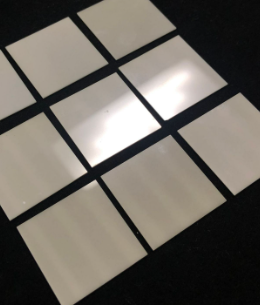
Dry Pressing (Uniaxial or Isostatic): The most common method for simple, axisymmetric shapes like substrates, tiles, or crucibles. Powder is fed into a hardened steel or carbide die and compacted under high pressure (50-200 MPa). Uniaxial pressing applies force from one or two directions, while Cold Isostatic Pressing (CIP) applies uniform pressure from all sides via a fluid-filled chamber, resulting in a more homogeneous green body with fewer density gradients. Dry pressing is fast, cost-effective, and yields good dimensional control.
Injection Molding: For complex, near-net-shape geometries with thin walls or intricate details. The alumina powder is mixed with a high-percentage thermoplastic binder to form a viscous feedstock. This is injected into a mold under high pressure, similar to plastic injection molding. The binder is then carefully removed in a separate, slow process called debinding before sintering. This method is excellent for mass-producing complex parts but involves longer cycle times.
Slip Casting: Used for hollow or large, complex shapes like tubes or labware. A stable suspension (a “slip”) of alumina powder in water is poured into a porous plaster mold. The plaster absorbs the water, leaving a layer of solid alumina particles on the mold wall. Once the desired thickness is achieved, the excess slip is poured out, and the green part is dried and removed. It’s a slower process but highly versatile for specific geometries.
Stage 3: The Transformation – Sintering
This is the heart of the process, where the magic happens. The fragile green body is heated in a high-temperature kiln or furnace to a point just below its melting point (typically 1600°C to 1800°C, depending on purity). During sintering, several key phenomena occur:
Binder Burnout: Any remaining organic additives are volatilized and removed, usually in a lower-temperature pre-sintering step.
Densification: The high temperature drives atomic diffusion. Particles begin to bond at their contact points, and pores gradually shrink. The material consolidates, shrinking significantly (10-20% linearly) and gaining its trademark density and strength.
Microstructure Development: The final grain structure-the size, shape, and distribution of the aluminum oxide crystals-is locked in. A fine, uniform grain structure, controlled by the initial powder size and sintering aids, yields the best mechanical properties.
The sintering atmosphere (air, hydrogen, or vacuum) and the precise temperature/time profile are tightly controlled to achieve the desired final density (often >99% of theoretical) without defects.
Stage 4: Finishing – Precision Machining
After sintering, the part is hard and dense but rarely in its final dimensional tolerances or surface finish. This is where diamond grinding comes in. Since alumina is harder than almost all materials except diamond, machining is done with diamond-impregnated wheels, drills, and tools.
Post-sinter machining is critical for:
Achieving precise dimensional tolerances (to microns).
Creating sharp edges, holes, or specific surface textures.
Improving surface finish for wear or sealing applications (e.g., for medical implants).
This step is expensive and time-consuming, which is why “near-net-shape” forming during Stages 1 & 2 is so highly valued to minimize material waste and machining cost.
Stage 5: Quality Assurance – The Final Check
Before shipment, parts undergo rigorous inspection. This includes:
Dimensional verification using micrometers, CMMs (Coordinate Measuring Machines), and laser scanners.
Non-destructive testing like ultrasound to check for internal cracks or voids.
Property testing on sample batches, measuring hardness, strength, and dielectric properties.
Conclusion: A Process of Refinement
The manufacturing of alumina ceramics is a testament to the principle that extreme performance requires extreme control. From the nano-scale chemistry of powder additives to the macro-scale precision of diamond grinding, every step is designed to master the inherent brittleness of the material and coax out its extraordinary properties. Understanding this journey not only explains why high-performance ceramics have their cost but also illuminates the path forward for innovation-through improved powder synthesis, advanced forming techniques like additive manufacturing (3D printing), and smarter sintering technologies. In our next post, we will put these properties under the microscope and examine the Key Properties of Alumina Ceramic in detail.

Leave a Reply