Beyond Dense Bricks: The Rise of 1800°C Alumina Foam Ceramics as the New Frontier in Ultra-High Temperature Insulation
For decades, the design of ultra-high temperature furnaces-those operating above 1600°C and pushing toward 1800°C-has been constrained by an unsatisfactory trade-off. Engineers could choose dense, heavy refractories such as corundum bricks or alumina hollow sphere bricks, which offered structural integrity and chemical stability but incurred massive energy penalties due to high thermal mass and poor insulation .
Alternatively, they could specify lightweight alumina fiberboards, which delivered excellent energy efficiency but suffered from poor corrosion resistance, mechanical fragility, and a tendency to “dust” or vitrify over time, necessitating frequent and costly replacement .
The emergence of 1800°C-class alumina foam ceramics over the past five years represents a fundamental rupture with this compromise. These materials are not incremental improvements upon existing products; they are a distinct materials class, engineered at the microstructural level to simultaneously deliver the refractoriness of dense alumina, the thermal efficiency of fibers, and a service life measured in years rather than months .
Defining the 1800°C Alumina Foam Ceramic
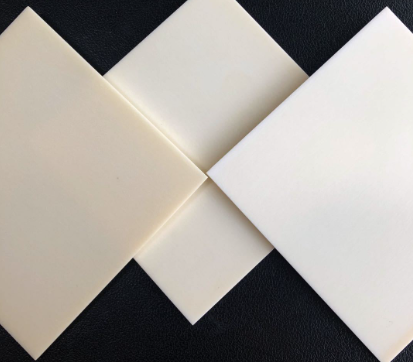
What precisely constitutes an “1800-type” alumina foam ceramic? The designation is not merely aspirational but denotes verifiable performance thresholds. Commercial products now available from manufacturers such as Suzhou Huiteng New Material and Jiangsu Heteng Thermal Equipment achieve a maximum service temperature of 1800°C, with demonstrated long-term stability at 1750°C . This places them in a performance tier previously accessible only to dense sintered alumina or fusion-cast blocks-but at a fraction of the density.
The microstructural architecture of these materials is deliberately engineered. Unlike conventional insulating firebricks, which achieve porosity through the combustion of organic fugitives, alumina foam ceramics employ direct foaming or replica techniques to create a network of uniform, interconnected, micron-scale pores . This cellular structure is not merely empty space; it is a designed metamaterial in which solid struts of high-purity α-Al₂O₃ bear mechanical load while the extensive pore network provides exceptional thermal resistance.
Critically, the pore size distribution is controlled within narrow tolerances. Microporous and nanoscale porosity contributes to scattering of infrared radiation-the dominant heat transfer mechanism at temperatures exceeding 1000°C-while larger cells reduce bulk density and thermal conductivity . The result is a material that thermally behaves like a fiber product (thermal conductivity reported as low as 0.6 W/m·K at 1400°C for analogous foamed alumnias) but structurally behaves like a rigid ceramic .
Performance Benchmarking: Systematic Superiority
The performance advantages of 1800°C alumina foam ceramics are best understood through direct, quantitative comparison with incumbent technologies.
*Against dense corundum bricks (ρ ≈ 3.0 g/cm³) and alumina hollow sphere bricks (ρ ≈ 1.5 g/cm³):* Alumina foam ceramics exhibit bulk densities in the range of 0.5–0.7 g/cm³-comparable to fiberboards and approximately one-fifth that of dense alumina .
This density reduction translates directly into energy savings. Documented field performance indicates that furnaces lined with foam ceramics consume >50% less energy than those using hollow sphere brick linings, with corresponding acceleration of heating and cooling cycles due to dramatically reduced thermal mass .
*Against alumina fiberboards (ρ ≈ 0.4–0.7 g/cm³):* Here the comparison is not energy efficiency-both material classes are broadly comparable in thermal performance-but durability and chemical resistance. Fiberboards are susceptible to attack by alkalis, water vapor, and molten fluxes; they progressively devitrify, shed particulates, and lose structural integrity .
Alumina foam ceramics exhibit cold crushing strengths of approximately 6 MPa and retain ~3 MPa at operating temperature, values that are “significantly superior” to fiber-based products . In applications involving corrosive atmospheres or mechanical abrasion-such as rare earth oxide calcination or glass melting-foam ceramics demonstrate service lives “several times” longer than fiberboards .
Solving the “Pain Points” of the Furnace Industry
The terminology employed by refractory engineers when discussing traditional lightweight materials is revealing. Fiberboards are described as lacking durability; dense bricks are characterized as “energy-intensive” and thermally sluggish . These are not minor inconveniences but systemic limitations that have constrained furnace design for decades.
The adoption of 1800°C alumina foam ceramics resolves both categories of constraint simultaneously. For the furnace manufacturer, these materials enable thinner hot-face linings with equivalent or superior thermal performance, reducing overall furnace footprint and material costs. For the end user, the combination of energy efficiency and extended service life yields compelling total-cost-of-ownership economics.
Although the upfront material cost may exceed that of hollow sphere bricks, the >50% energy reduction and multi-year replacement intervals typically deliver payback periods measured in months .
Emerging Microstructural Innovations: The Next Generation
Current commercial products, impressive as they are, represent only the first generation of engineered alumina foam ceramics. Research and development pipelines point toward a second wave of materials with even more sophisticated architectures.
One promising direction involves the in-situ generation of secondary reinforcement phases within the foam struts. The incorporation of aluminum powder into ceramic slurries exploits the Kirkendall effect during sintering: differential diffusion rates create hollow alumina microspheres at pore strut junctions and triple points, generating a “hierarchical pore structure” that enhances mechanical strength without increasing density .
Research led by Professor Yang Jinlong’s group at Tsinghua University has demonstrated alumina foams with 90% porosity achieving compressive strengths of 14.8 MPa-an extraordinary value that fundamentally challenges the conventional inverse relationship between porosity and strength .
Parallel efforts are exploring fiber reinforcement within the foam matrix. Alumina fiber-toughened alumina foam ceramics, now entering commercial production, combine the lightweight characteristics of foamed structures with the crack-bridging and energy-dissipation mechanisms of discontinuous fiber reinforcement . These hybrid materials retain the 1750°C temperature capability of monolithic foams while offering enhanced damage tolerance and thermal shock resistance.
Application Domains: From Laboratory to Heavy Industry
The addressable market for 1800°C alumina foam ceramics has expanded far beyond the laboratory furnaces where they first gained acceptance. Current applications span:
Advanced ceramics sintering: Firing of silicon nitride, silicon carbide, and transparent ceramics requiring precisely controlled atmospheres up to 1800°C .
Single crystal growth and annealing: Crucible supports and after-heaters for sapphire and silicon crystal furnaces .
Rare earth processing: Calcination of rare earth oxides, where resistance to aggressive chemistries is essential .
Aerospace and defense: High-temperature thermal structures and test facility linings .
Dental and medical ceramics: Sintering trays for zirconia restorations, where high purity eliminates gaseous emissions and color contamination .
Conclusion: A Materials Paradigm Shift
The rise of 1800°C alumina foam ceramics is not merely a product substitution trend but a paradigm shift in how engineers approach ultra-high temperature thermal management. For the first time, a single material class offers the refractoriness of dense oxide ceramics, the thermal efficiency of fibrous insulators, and the structural robustness required for long-term industrial service.
This convergence of performance attributes is not accidental. It results from deliberate microstructural engineering-the design of pore networks, the management of grain boundary chemistry, and the incorporation of reinforcing phases at multiple length scales.
As manufacturing processes mature and production volumes increase, the cost position of these materials will continue to improve, accelerating their displacement of legacy refractories.
The 1800°C alumina foam ceramic is, in essence, the material that the high-temperature industries have been waiting for: a lightweight, durable, energy-efficient refractory that asks no compromises. Its ascendancy is not merely probable; it is already underway.

Leave a Reply