
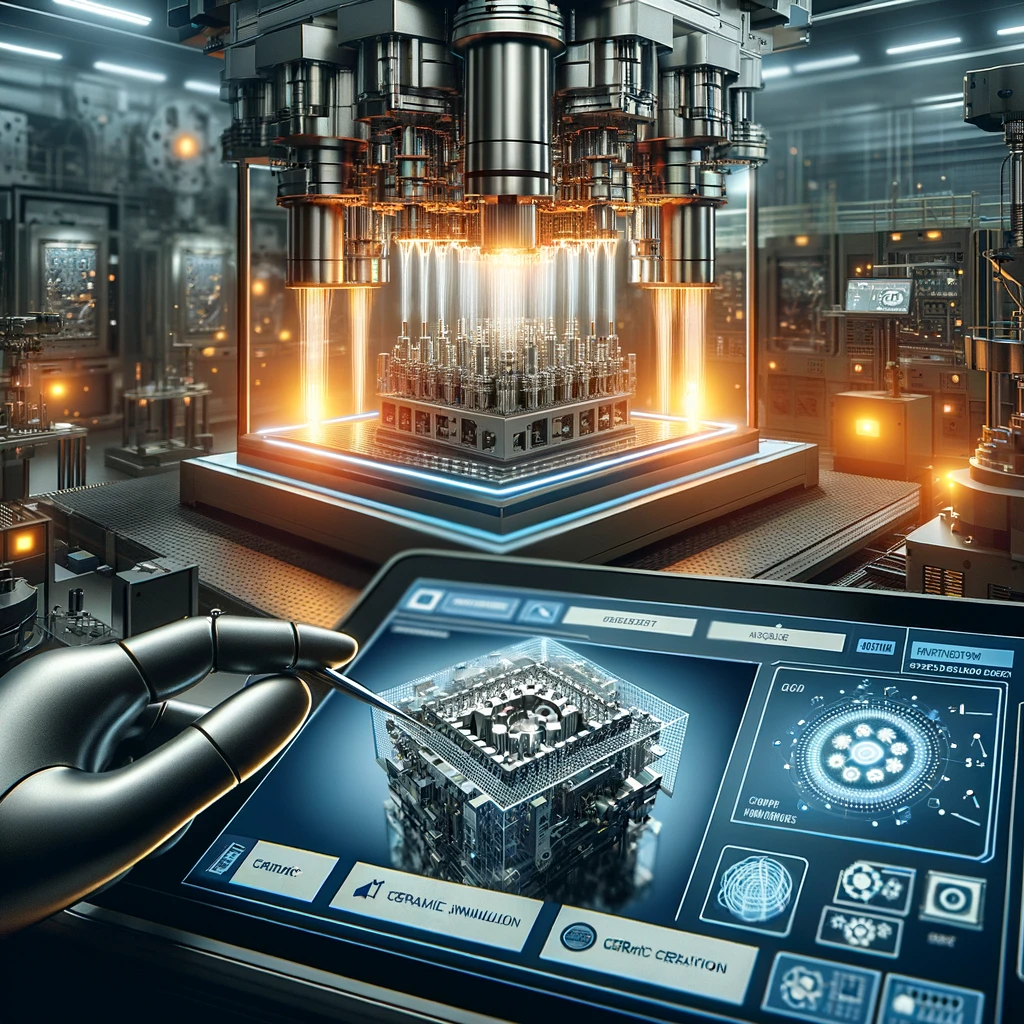
Unveiling the Precision and Potential of Ceramic Injection Molding (CIM)
Introduction
Ceramic Injection Molding (CIM) represents the fusion of two powerful technologies: the well-known, versatile injection molding process used in plastics and the unique properties of ceramics. This technology allows the production of complex, high-precision ceramic components used in various high-tech industries such as aerospace, biomedical, electronics, and automotive. CIM not only bridges the gap between the art of ceramics and industrial production but also provides scalable solutions for manufacturing complex ceramic parts with superior performance.
Understanding the Ceramic Injection Molding Process
The CIM process can be broken down into several distinct stages, each crucial to ensuring the quality and functionality of the final product:
- Raw Material Preparation: The process starts with the preparation of raw materials, a mixture of ceramic powders (such as alumina, zirconia, or silicon carbide) and polymer binders. These binders act as carriers and molders, allowing the ceramic powders to be shaped as easily as plastics.
- Injection Molding: The raw material is heated until the binder becomes liquid, and then injected into a precision mold under high pressure. This step forms the green body—a part in its initial shape, before sintering.
- Debinding: After molding, the green body undergoes debinding to carefully remove the binder. Debinding can be achieved through thermal debinding (burning off the binder) or chemical debinding (dissolving the binder).
- Sintering: The debound part is then sintered in a high-temperature furnace, where the ceramic particles fuse into a dense, strong final product. Sintering is the key process for enhancing the ceramic’s mechanical properties, such as strength and durability.
Challenges of Ceramic Injection Molding
While CIM offers numerous advantages, the process also presents challenges that require careful handling:
- Shrinkage and Precision: One of the major challenges in CIM is controlling the shrinkage that occurs during sintering. Ceramic parts can shrink by as much as 20%, requiring precise calculations and mold designs to ensure that the final parts meet the specifications.
- Material Characteristics: Handling and processing ceramic materials require specialized knowledge, particularly because ceramics are more brittle and harder to process than metals or polymers.
Advantages of Ceramic Injection Molding
Despite these challenges, CIM’s advantages make it an indispensable process in modern manufacturing:
- Complex Geometries: CIM can produce components with complex shapes that are difficult or impossible to achieve through traditional ceramic forming methods.
- Scalability: The process is highly scalable, suitable for high-volume production without sacrificing consistency or quality of parts.
- Material Versatility: CIM is compatible with a wide range of ceramic materials, providing manufacturers with flexibility to select materials based on desired properties such as thermal resistance, biocompatibility, or electrical insulation.
Future Outlook
The future of CIM is vibrant and promising. Advances in materials science and process technologies are expected to further enhance CIM’s capabilities. Innovations such as the use of nanoceramics and the integration of CIM with additive manufacturing technologies will open up new possibilities for the design and functionality of ceramic components.
Conclusion
Ceramic Injection Molding is a complex process that combines the efficiency of injection molding with the superior quality of ceramics, providing a powerful manufacturing solution for producing complex, high-performance ceramic parts. As technology advances, CIM is expected to expand its influence, driving innovation across industries that rely on high-quality ceramic components.
![Aluminium Nitride Tray [MH-ALNC995 -AluminiumNitride]](https://moatcity.com/wp-content/uploads/2024/10/111.jpg)
![Silicon Carbide Board [MH-KX-SiC]](https://moatcity.com/wp-content/uploads/2024/10/1728636817408.png)

Leave a Reply