
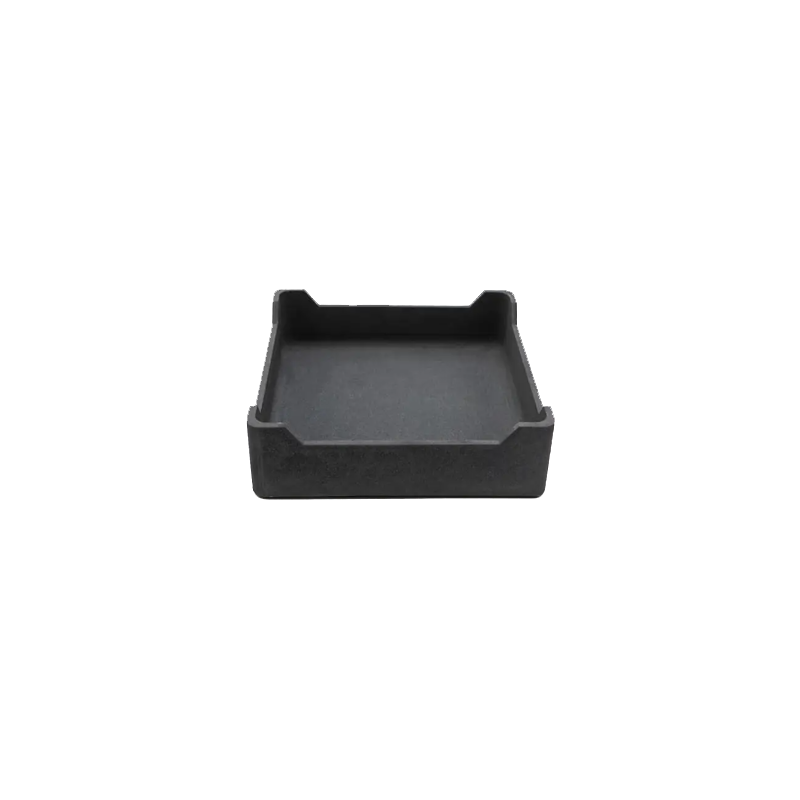
Unmatched Strength at Scorching Temperatures: The Mechanical Properties of R-SiC
In the realm of high-temperature materials, a common and often catastrophic failure mode is the rapid degradation of mechanical strength as temperatures soar. Metals creep and soften, many oxides become plastic, and performance plummets. Recrystallized Silicon Carbide (R-SiC) defies this conventional wisdom, exhibiting a mechanical performance profile that is not only exceptional at room temperature but actually improves in the searing heat of an industrial furnace. This unparalleled behavior is the cornerstone of its success in load-bearing applications. This blog post will provide a rigorous, in-depth analysis of the mechanical properties of R-SiC, exploring the data, the underlying materials science, and the practical implications for engineers and designers.
The mechanical characterization of any ceramic begins with its strength at ambient temperature, typically measured by the Modulus of Rupture (MOR) or transverse rupture strength. This is a measure of the maximum stress a material can withstand in a bending test before it fractures. For R-SiC, typical room temperature MOR values range from 100 to 150 Megapascals (MPa). While this is significantly lower than that of high-strength engineering steels, it is important to contextualize this value. Firstly, it is more than adequate for the structural roles it is designed for, such as supporting kiln furniture. Secondly, and more importantly, this value is just the starting point. Unlike metals, which have a distinct yield point followed by plastic deformation, R-SiC, like all advanced ceramics, is a brittle material. It obeys Hooke’s Law almost to the point of fracture, exhibiting linear elastic behavior with no plastic yielding. This means its fracture is sudden and catastrophic, a design consideration that must be accounted for through careful engineering and factor of safety calculations.
The truly remarkable behavior of R-SiC emerges as the temperature rises. When most materials are weakening, R-SiC’s strength increases, peaking at around 1600°C. Its hot modulus of rupture (HMOR) can be 20-30% higher than its room temperature value. This counterintuitive phenomenon is a direct consequence of its unique, bond-free microstructure and the nature of ceramic materials. At room temperature, the microstructure of R-SiC contains microscopic flaws—tiny cracks, pores, and internal stresses—introduced during the manufacturing process. These flaws act as stress concentrators, initiating failure at a globally applied stress that is well below the theoretical strength of the atomic bonds.
As the temperature increases, several key mechanisms come into play that alleviate these limitations. Firstly, the thermal energy provides enough activation for localized stress relaxation at the atomic level near the tips of these micro-cracks. This process, often described as microplasticity, effectively blunts the sharp crack tips, reducing their potency as stress concentrators. Secondly, the thermal expansion of the SiC grains can induce compressive stresses that help to close microcracks. Furthermore, the differential thermal expansion between grains can cause them to interlock more tightly, enhancing load transfer. The result is that a higher global stress must be applied to overcome these mitigating effects and propagate a crack, leading to the observed increase in measured strength. It is a process of healing the inherent weaknesses of the room-temperature structure. Beyond its peak, typically around 1600-1650°C, other mechanisms like grain boundary sliding and creep begin to dominate, and the strength gradually decreases. However, it retains useful strength up to its practical service limit of about 1650-1750°C in oxidizing atmospheres, far exceeding the capabilities of bonded SiC materials.
This leads to another critical property: exceptional creep resistance. Creep is the time-dependent, permanent deformation of a material under a constant load at high temperature. It is the primary failure mechanism for metals and bonded refractories in long-term high-temperature service. R-SiC’s defense against creep is its pure, covalent bond structure and the absence of a secondary bonding phase. In nitride- or oxide-bonded SiC, the glassy or crystalline bond phase can soften and become viscous at high temperatures, providing a pathway for grains to slide past each other. In R-SiC, the direct SiC-SiC grain bonds are immensely strong and stable. Deformation can only occur by much slower, energy-intensive mechanisms like dislocation motion or diffusion-controlled grain boundary sliding, which are negligible at typical service temperatures. This makes R-SiC the material of choice for applications like radiant tubes or support beams that must bear structural loads for thousands of hours without sagging or distorting.
The hardness of R-SiC is another notable property. On the Mohs scale of mineral hardness, it scores a 9.5, surpassed only by diamonds (10) and boron carbide (9.75). This extreme hardness translates into outstanding abrasion and erosion resistance. In environments where flying ash, abrasive dust, or flowing particulate matter are present, such as in cement kiln hoods or waste incineration plants, R-SiC components will maintain their dimensional integrity far longer than softer refractory materials.
However, this hardness and brittleness come with a trade-off: low fracture toughness. Fracture toughness (KIC) is a measure of a material’s resistance to crack propagation. R-SiC’s toughness is typically in the range of 3.0-4.0 MPa·m¹/². This is low compared to metals (e.g., steel can be 50+ MPa·m¹/²) and even some other advanced ceramics like zirconia (which can be engineered for values over 10 MPa·m¹/² through transformation toughening). This means that while R-SiC is very strong, any pre-existing flaw or impact damage can easily become a critical crack leading to failure. This is not a weakness of the material per se, but a fundamental characteristic of strong, covalent ceramics that must be designed around. It necessitates careful handling, the avoidance of sharp impact, and engineering designs that minimize stress concentrations (e.g., using generous radii on corners).
In practical terms, the mechanical properties of R-SiC make it the undisputed champion for high-temperature, load-bearing applications. A comparison table tells a compelling story:
| Property | R-SiC | Nitride-Bonded SiC | High-Alumina Ceramic |
| Max. Use Temp. (Oxidizing) | ~1650-1750°C | ~1500°C | ~1500-1600°C |
| MOR @ 1000°C | Increases to peak | Decreases | Decreases significantly |
| Creep Resistance | Exceptional | Good (limited by bond) | Poor (glass phase softens) |
| Fracture Toughness | Low (3-4 MPa·m¹/²) | Low-Moderate | Low-Moderate |
In conclusion, the mechanical profile of R-SiC is a story of quality over quantity. Its room-temperature strength, while good, is not its headline act. Its defining feature is the retention and even enhancement of that strength under the most extreme thermal conditions, coupled with a near-absolute resistance to deformation over time. This unique combination of properties—high hot strength, superb creep resistance, and extreme hardness—is what allows engineers to push the boundaries of thermal process efficiency, reliability, and longevity. It is a material that doesn’t just survive the inferno; it is empowered by it.

Leave a Reply