
Understanding the Sintering Process in 3D Printing: Why Sintering is Crucial?
With the rapid development of 3D printing technology in manufacturing, its application in ceramics has become one of the key technologies for custom manufacturing, high-precision production, and rapid prototyping. The advantage of 3D printing ceramics lies in its ability to create complex geometries, but the printed “green body” still requires the sintering process to meet the final product requirements. Sintering not only affects the physical properties of the ceramic but also determines its microstructure and mechanical strength.
This article delves into why sintering is necessary for 3D printed ceramic products, the common materials used in 3D ceramic printing, and the critical role of sintering supports (also known as sintering plates) in the process.
1. Why Does 3D Printed Ceramic Need Sintering?
In 3D printing ceramics, the printed products are typically composed of fine ceramic powders (such as alumina, zirconia, etc.) and are known as “green bodies” before sintering. These green bodies are still in a loose, fragile state and cannot withstand external stresses or thermal changes. The sintering process is the key step where the ceramic powders are heated to a high temperature to promote diffusion and bonding, ultimately forming the final product. Here are the core reasons why sintering is essential in 3D printed ceramics:
1.1 Enhancing Mechanical Strength and Toughness
Sintering involves heating the ceramic green body, causing the ceramic particles to bond together, which improves the density and mechanical strength of the material. After sintering, ceramic materials typically exhibit higher hardness, compressive strength, and wear resistance, making them suitable for demanding applications such as industrial components, dental materials, and more.
1.2 Improving Microstructure and Porosity
Sintering not only improves the strength of the ceramic but also enhances its microstructure and reduces porosity. During sintering, the ceramic particles undergo diffusion, filling the pores and increasing the material’s density. This process can also control the size and distribution of pores to optimize specific physical properties such as thermal conductivity, electrical conductivity, or resistance to permeability.
1.3 Relieving Internal Stresses and Preventing Deformation
During 3D printing, ceramic parts may develop internal stresses due to uneven cooling or temperature differences between layers. These stresses can lead to cracks or deformation. Sintering helps alleviate these internal stresses by gradually heating and cooling the material, ensuring that the final product maintains its shape stability. By carefully controlling the sintering parameters, deformation and cracking risks can be minimized.
2. Common Materials for 3D Printed Ceramics
The quality and performance of 3D printed ceramics largely depend on the materials chosen. Based on different application needs, the common ceramic materials for 3D printing usually possess high thermal stability, strength, and wear resistance. Below are some of the widely used materials in 3D ceramic printing:
2.1 Alumina (Al₂O₃)
Alumina is a high-strength, wear-resistant ceramic material with excellent electrical insulation and high-temperature resistance. It is widely used in 3D printing for high-precision manufacturing, such as automotive engine parts, industrial wear-resistant materials, and electronic components. Due to its high sintering temperature characteristics, alumina is one of the most commonly used materials in 3D printed ceramics.
2.2 Zirconia (ZrO₂)
Zirconia is a high-performance ceramic material with exceptional crack resistance, high-temperature resistance, and chemical stability. It is particularly suitable for the production of precision medical devices and wear-resistant parts. Its higher density and strength make it an ideal choice for dental materials and dental restorations.
2.3 Sillimanite (Al₂SiO₅)
Sillimanite, particularly Sillimanite-Mullite composites, is used in applications requiring high thermal stability and resistance to thermal shock. It performs excellently under high-temperature conditions and is ideal for high-temperature ceramics and flame-spraying equipment in industrial applications.
2.4 Composite Ceramics
In addition to single-material ceramics, 3D printing also uses composite ceramic materials that combine different ceramic powders or additives to enhance material properties. Common composite materials include alumina and silicate-based ceramics, which are used in aerospace, automotive, and nuclear applications, offering improved strength, corrosion resistance, and wear resistance.
3. Why Do 3D Printed Ceramic Products Need Sintering Supports?
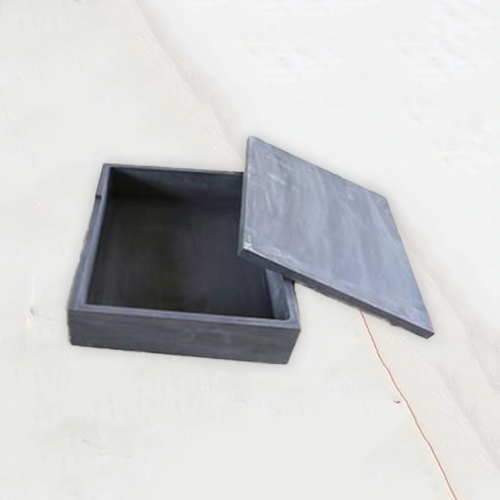
During the sintering process of 3D printed ceramic products, sintering supports (also called sintering plates) play a critical role. Since ceramic materials shrink and expand with temperature changes during sintering, sintering supports are necessary to ensure the stability and quality of the ceramic parts throughout the process.
3.1 Preventing Deformation and Cracking
During sintering, ceramic parts shrink as they are heated, and if not properly supported, they may deform or crack due to uneven shrinkage or internal stresses. Sintering supports provide a stable platform for the ceramic parts, ensuring that their shape remains intact and preventing deformation during the high-temperature sintering process.
3.2 Enhancing Sintering Quality and Product Performance
Sintering supports also help in ensuring even heat distribution during sintering. By preventing temperature gradients from developing, sintering supports improve the sintering process, reduce the formation of pores or cracks, and ensure that the ceramic products achieve higher density and better mechanical properties.
3.3 Increasing Sintering Efficiency
Sintering supports contribute to the overall efficiency of the sintering process. They reduce direct contact between ceramic parts and other objects, preventing sticking or unwanted bonding. Additionally, using sintering supports can optimize the space within the sintering furnace, reducing sintering cycle times and improving production efficiency.
4. Conclusion
In the production of 3D printed ceramics, sintering is an essential process that directly affects the final product’s strength, density, and shape stability. Sintering ensures that ceramic particles bond to form a solid structure, which enhances the material’s mechanical properties and thermal stability. Choosing the right ceramic material, as well as using sintering supports, are key factors in ensuring the successful sintering of ceramic products and achieving high-quality results.
As 3D printing technology continues to evolve, sintering techniques are being optimized. By understanding the sintering process and incorporating the appropriate materials and support techniques, 3D printed ceramics can be further improved to meet the demands of custom, precision, and high-performance applications.

Leave a Reply