
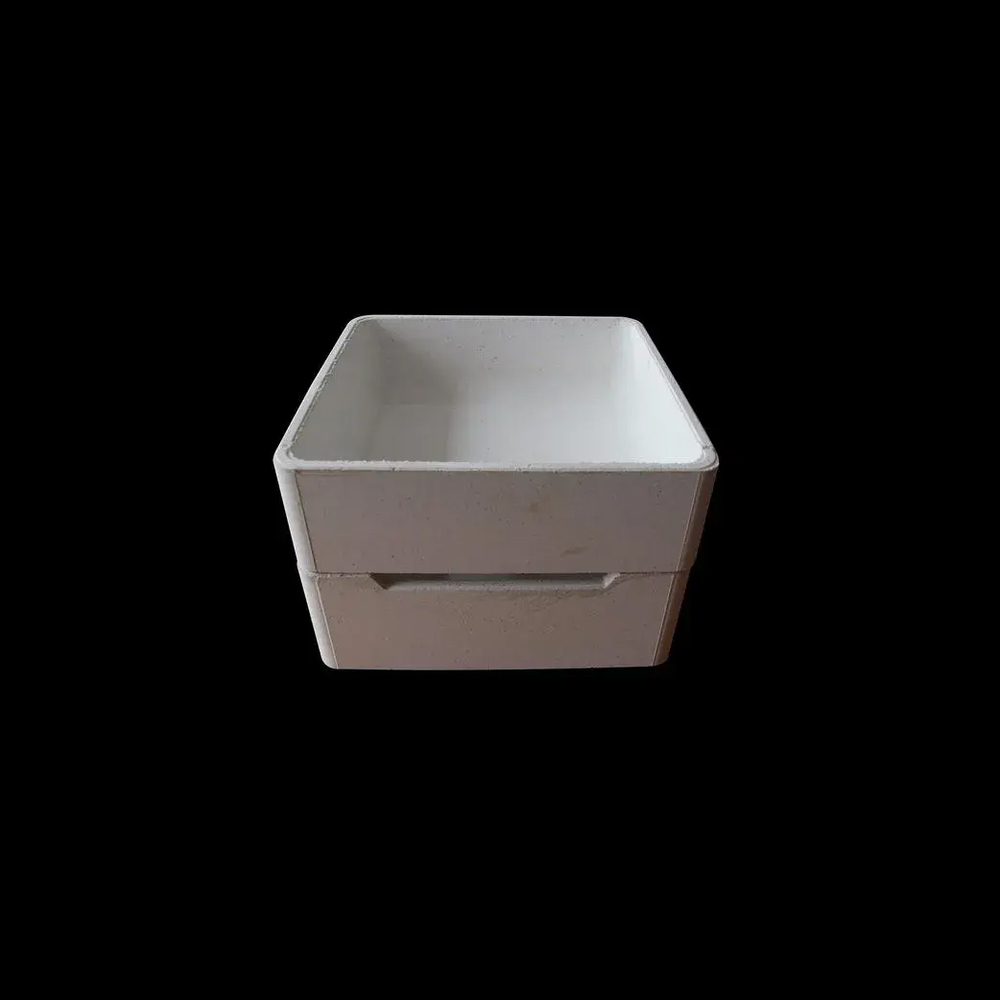
Typical Applications of Silicon Carbide Saggers in the Ceramic Industry
As a high-performance refractory material, silicon carbide (SiC) saggers are widely used in the ceramic industry, especially during high-temperature firing processes. With their excellent heat resistance, oxidation resistance, and high strength, SiC saggers have become the preferred choice for many ceramic manufacturers. This article explores the typical applications of silicon carbide saggers in the ceramic industry, analyzing their advantages in the production process and areas for improvement.
1. Performance Advantages of Silicon Carbide Saggers
The firing process in the ceramic industry requires a high-temperature environment, which demands excellent performance from refractory materials. Silicon carbide saggers, with their unique physical and chemical properties, can meet these demands effectively.
High-temperature resistance: SiC saggers can withstand temperatures as high as 1400°C or more while maintaining structural stability. This is crucial for the high-temperature sintering process in ceramic firing.
High thermal conductivity: Compared to traditional alumina saggers, silicon carbide has a much higher thermal conductivity, which helps distribute heat evenly within the sagger, ensuring uniform heating of ceramic products and reducing the risk of cracking or deformation during the firing process.
Oxidation resistance: Silicon carbide exhibits excellent oxidation resistance. Even when exposed to high-temperature oxygen-rich environments for extended periods, it effectively prevents surface oxidation, prolonging the service life of the sagger.
Thermal shock resistance: Silicon carbide saggers can withstand rapid temperature changes without cracking or breaking, which is particularly important when firing complex-shaped ceramic products that require fast heating and cooling cycles.
2. Applications of Silicon Carbide Saggers in Ceramic Firing
Ceramic firing is the core process in ceramic manufacturing, determining the hardness, strength, and surface quality of the final product. During firing, ceramic blanks need to undergo multiple heating and cooling cycles in a high-temperature kiln. In this process, silicon carbide saggers offer several significant advantages.
(1) Protecting the Blank
SiC saggers provide a relatively enclosed and stable environment for the ceramic blank, preventing direct contact with the flame. This helps avoid flame contamination or uneven heating during firing, which is especially important for ceramic products with high surface quality requirements, such as glazed ceramics.
(2) Optimizing the Firing Process
Manufacturers often face issues like product deformation or cracking due to uneven heating during firing. The high thermal conductivity and thermal stability of SiC saggers help control the temperature gradient, ensuring uniform heating of ceramic products and significantly reducing the rejection rate.
(3) Adapting to Various Firing Conditions
Ceramic products vary greatly in type, and the firing environments can differ accordingly. Whether in an oxidizing atmosphere, reducing atmosphere, or even in vacuum conditions, SiC saggers can maintain stable performance, making them suitable for firing a wide range of ceramic products.
3. Economic Benefits of Silicon Carbide Saggers
In addition to their technical advantages, silicon carbide saggers can bring significant economic benefits to ceramic manufacturers.
Longer service life: The oxidation resistance and thermal shock resistance of SiC saggers greatly extend their service life compared to traditional materials. This reduces the frequency of sagger replacement and minimizes downtime, lowering production costs.
Reduced energy consumption: Due to the high thermal conductivity of silicon carbide, heat is more efficiently transferred to ceramic products, reducing heat loss during firing. In a high-energy-consuming process like ceramic production, this translates to significant energy savings and cost reduction.
Lower rejection rates: By improving heat distribution during firing, SiC saggers help reduce the number of defective products, increasing the yield and profitability for manufacturers.
4. Case Study: Successful Application in a Ceramic Manufacturing Company
One large ceramic manufacturer primarily produces high-end glazed tiles, which require a smooth, flawless surface. However, the company frequently encountered issues such as glaze damage and product deformation when using traditional refractory saggers, leading to a defect rate as high as 15%.
After introducing silicon carbide saggers, the company optimized its production process and reduced the defect rate to less than 5%. The key improvements were:
Uniform heating: The high thermal conductivity of SiC saggers ensured even temperature distribution during firing, minimizing deformation and cracking caused by localized overheating.
Extended service life: The durability of SiC saggers significantly reduced the frequency of sagger replacement, allowing the production line to operate continuously for longer periods, thus lowering maintenance costs.
Reduced energy consumption: The improved thermal conductivity of the saggers led to a 10% reduction in overall kiln energy consumption, saving the company substantial energy costs annually.
5. Conclusion
Silicon carbide saggers not only solve many technical challenges in the ceramic manufacturing process but also bring significant economic benefits to manufacturers. Their excellent properties, such as high-temperature resistance, oxidation resistance, and thermal shock resistance, make them the ideal choice for optimizing production processes and improving product quality.
For ceramic manufacturers, selecting the right refractory material can enhance product quality while also reducing production costs through increased efficiency, lower defect rates, and decreased energy consumption. Silicon carbide saggers are undoubtedly an important tool for driving efficiency and technological innovation in the ceramic industry.

Leave a Reply