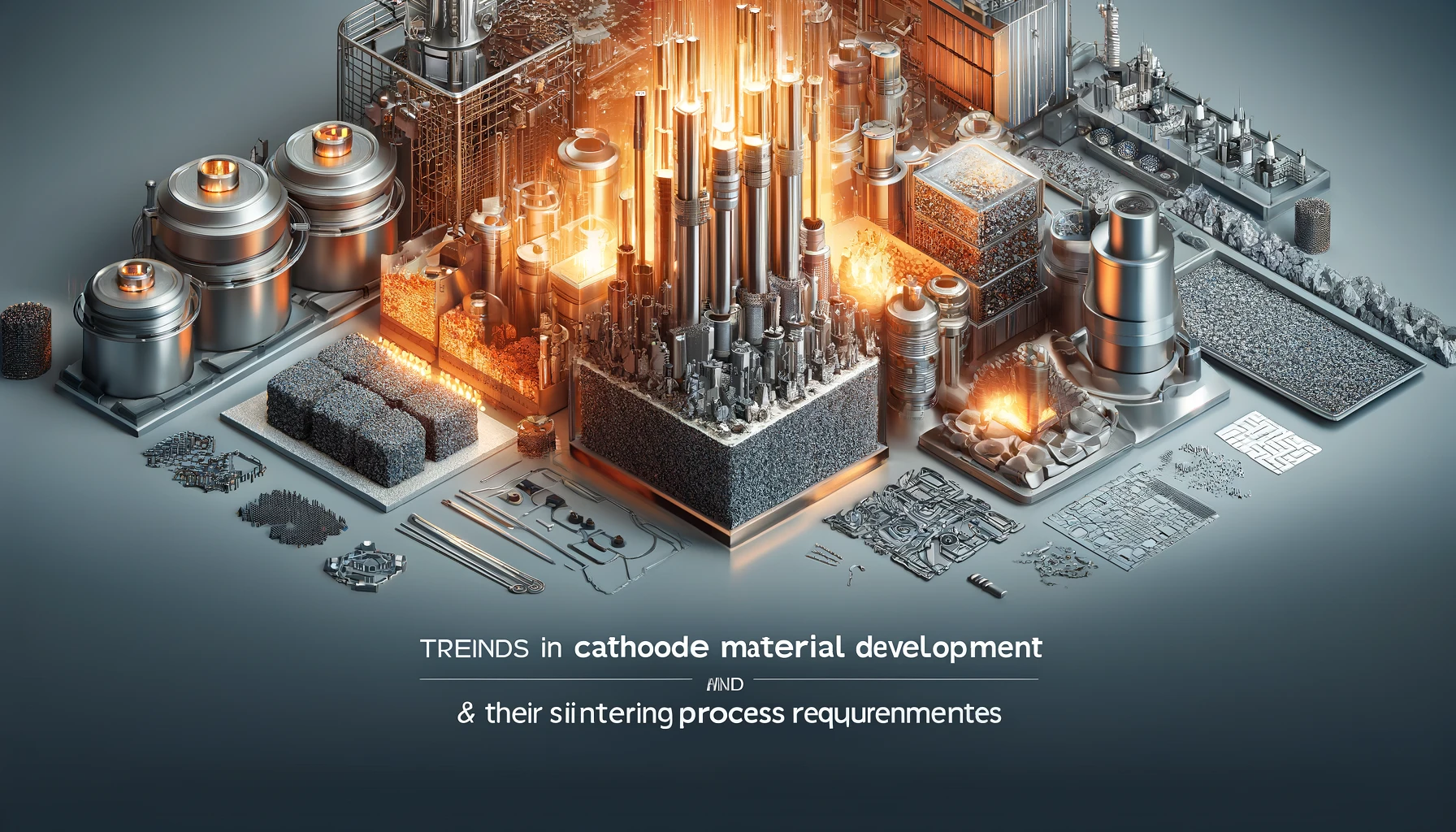
Trends in Cathode Materials Development and Their Sintering Process Requirements
Introduction:
The performance of lithium-ion batteries is highly dependent on the characteristics of the cathode materials used. Key aspects such as energy density, lifespan, and safety are directly influenced by the properties of the cathode materials. As the demand for high-performance batteries continues to rise, significant advancements are being made in the development of cathode materials. Among these, high-nickel materials such as NCM811 (Nickel Cobalt Manganese) and NCA (Nickel Cobalt Aluminum) are leading the way. Understanding their unique properties and the specific requirements of their sintering processes is crucial for optimizing battery production and performance.
Characteristics and Advantages of High-Nickel Materials
NCM811 and NCA Properties
NCM811 and NCA are high-nickel cathode materials that are at the forefront of the next-generation lithium-ion battery development. These materials are characterized by their high nickel content, which offers several advantages:
- Higher Energy Density: The increased nickel content in NCM811 and NCA results in higher energy density, allowing the battery to store more energy. This leads to longer driving ranges or runtime for electric vehicles (EVs) and other applications requiring high energy output.
- Cost-Effectiveness: By reducing the amount of cobalt, which is expensive and has a fragile supply chain, these materials help lower the overall cost of the battery.
- Performance Stability: Both NCM811 and NCA exhibit excellent electrochemical performance, making them suitable for demanding applications like electric vehicles and large-scale energy storage systems.
Sintering Process Requirements
To produce high-quality NCM811 and NCA cathode materials, the sintering process must be precisely controlled. Sintering is a key step in the manufacturing process where powder materials are heated to form solid blocks without melting. This process significantly affects the final properties of the material, such as particle size, crystallinity, and phase purity.
Key Factors in the Sintering Process
Sintering Temperature, Time, and Atmosphere
- Temperature: The sintering temperature must be strictly controlled to optimize the structure and electrochemical performance of the cathode material. Too high a temperature can lead to unnecessary phase changes, while too low a temperature may result in incomplete reactions.
- Time: The duration of the sintering process is also critical. Sufficient time is needed to allow for the development of the desired crystal structure, but extended time can lead to grain growth, which may reduce material performance.
- Atmosphere: The atmosphere during the sintering process, typically controlled with gases like oxygen or nitrogen, affects the oxidation state of the metal ions in the cathode material. Proper control of the sintering environment is essential to achieve the desired stoichiometry and phase composition.
Impact of Crucibles (Sintering Trays) on the Sintering Process
The crucible or sintering tray used during the process can significantly affect the quality and consistency of the cathode material. Traditionally, alumina or magnesia crucibles are used, but the development of Silicon Carbide (SiC) crucibles has introduced new possibilities. SiC crucibles offer several advantages:
- Thermal Conductivity: Silicon Carbide crucibles have excellent thermal conductivity, ensuring uniform temperature distribution across the material, which results in consistent sintering.
- Mechanical Strength: The high mechanical strength of SiC crucibles reduces the risk of deformation and breakage during the sintering process, improving the reliability and efficiency of the production line.
- Chemical Stability: The chemical inertness of SiC crucibles prevents contamination of the cathode material, ensuring high purity and performance.
Conclusion
Developing new cathode materials, especially high-nickel materials like NCM811 and NCA, requires careful attention to the sintering process. Optimizing sintering temperature, time, and environment, as well as using advanced sintering trays such as Silicon Carbide crucibles, is crucial to achieving the desired material performance. As the demand for high-performance lithium-ion batteries continues to grow, improving sintering technology and materials will play an increasingly important role. Innovations in these areas will drive the development of the next generation of battery technologies, meeting the growing demand for energy density, cost-effectiveness, and overall performance.
![Silicon Carbide Saggars for Lithium Batteries [MH-LNY-LH-SiC73]](https://moatcity.com/wp-content/uploads/2024/10/01111.jpg)

Leave a Reply