
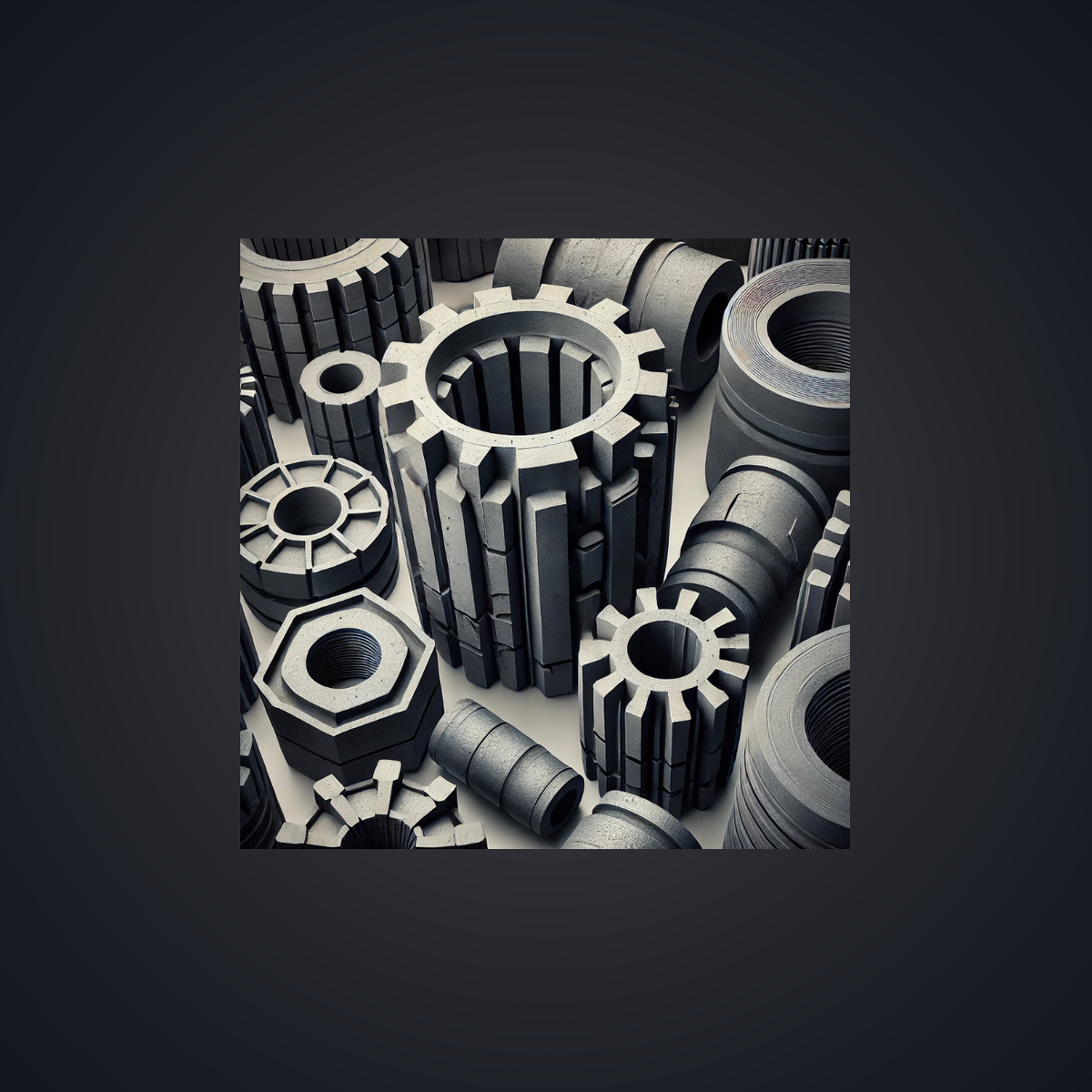
The Path to a Sustainable Future: Silicon Carbide Saggars in Lithium Battery Manufacturing
As global environmental issues become increasingly severe, sustainable development has become a consensus across all industries. Lithium batteries, as the core component of new energy technology, have a significant environmental impact during their production process. In lithium battery manufacturing, the use of saggars is a critical process that should not be overlooked. Silicon carbide (SiC) saggars, with their excellent performance, play a crucial role not only in improving production efficiency but also in promoting environmental protection and sustainable development. This article explores the sustainable development and recycling strategies of SiC saggars in lithium battery manufacturing, pointing the way for a greener production future in the industry.
1. Environmental Characteristics of Silicon Carbide
Silicon carbide is an environmentally friendly material with excellent properties. First, SiC saggars are highly durable and corrosion-resistant, making them less prone to damage during use, which reduces waste generation. Second, SiC saggars maintain excellent stability at high temperatures and do not release harmful substances during the production process, thus minimizing environmental pollution. Additionally, the production process of SiC saggars is relatively eco-friendly, with low energy consumption and minimal emissions of waste gases and wastewater. For these reasons, SiC saggars are increasingly regarded as environmentally friendly materials in lithium battery production.
2. Extending Equipment Lifespan and Resource Conservation
The high durability of SiC saggars not only reduces the frequency of replacement but also significantly extends the lifespan of production equipment. Compared to traditional materials, SiC saggars are less prone to wear and deformation during high-temperature processes, allowing them to maintain their performance even after multiple uses. This characteristic can significantly save resources: companies can reduce the frequency of purchasing new saggars, lower replacement and maintenance costs, and minimize production downtime caused by equipment failures. The advantage of extending equipment lifespan brings long-term benefits not only in terms of economic efficiency but also in resource conservation and environmental protection.
3. Reducing Carbon Emissions: The Role of SiC Saggars in Energy Conservation and Emission Reduction
Under the global pressure to reduce carbon emissions, lithium battery manufacturers need to find more ways to conserve energy. The high thermal conductivity of SiC saggars ensures more uniform and efficient heating and cooling during production, thereby reducing energy waste. As SiC saggars have good thermal conductivity, they shorten the sintering time and reduce energy consumption. This not only helps companies save on energy costs but also significantly reduces carbon emissions in the production process, contributing to the achievement of green production goals.
4. Recycling Strategies for SiC Saggars
The recycling of SiC saggars is a vital route to achieving sustainable production. Once the lifespan of SiC saggars ends, they do not necessarily need to be discarded; they can be repaired or recycled for continued use. For example, lightly damaged saggars can be repaired to extend their lifespan, while discarded saggars can be crushed and reprocessed to be used again in the production of new saggars or other industrial applications. This recycling strategy helps companies significantly reduce raw material procurement costs, effectively decrease industrial waste emissions, and further promote green production.
5. Economic and Environmental Benefits of SiC Saggars
The sustainable development of SiC saggars is not only reflected in their environmental performance but also in their significant economic potential. By extending the lifespan of saggars and implementing recycling, companies can significantly lower production costs and improve market competitiveness. Additionally, SiC saggars’ performance in reducing carbon emissions and energy consumption enables companies to better align with the global trend of green production, gaining more customer favor. In the long run, investing in SiC saggars is not only environmentally responsible but also a strong guarantee for the sustainable development of companies.
Conclusion
The sustainable development and recycling of SiC saggars in lithium battery production point the way for greener manufacturing in the industry. By fully leveraging the environmental properties of silicon carbide, extending equipment lifespan, reducing carbon emissions, and implementing effective recycling strategies, lithium battery manufacturers can significantly reduce their environmental impact while improving economic efficiency. This approach aligns with the global trend of sustainable development, providing a solid foundation for companies in an increasingly competitive market. In the future, with continuous technological advancements and growing market demand, the role of SiC saggars in green production will become even more important, driving the lithium battery industry towards a more eco-friendly and sustainable future.
![Silicon Carbide Saggars for Lithium Batteries [MH-LNY-LH-SiC73]](https://moatcity.com/wp-content/uploads/2024/10/01111.jpg)

Leave a Reply