
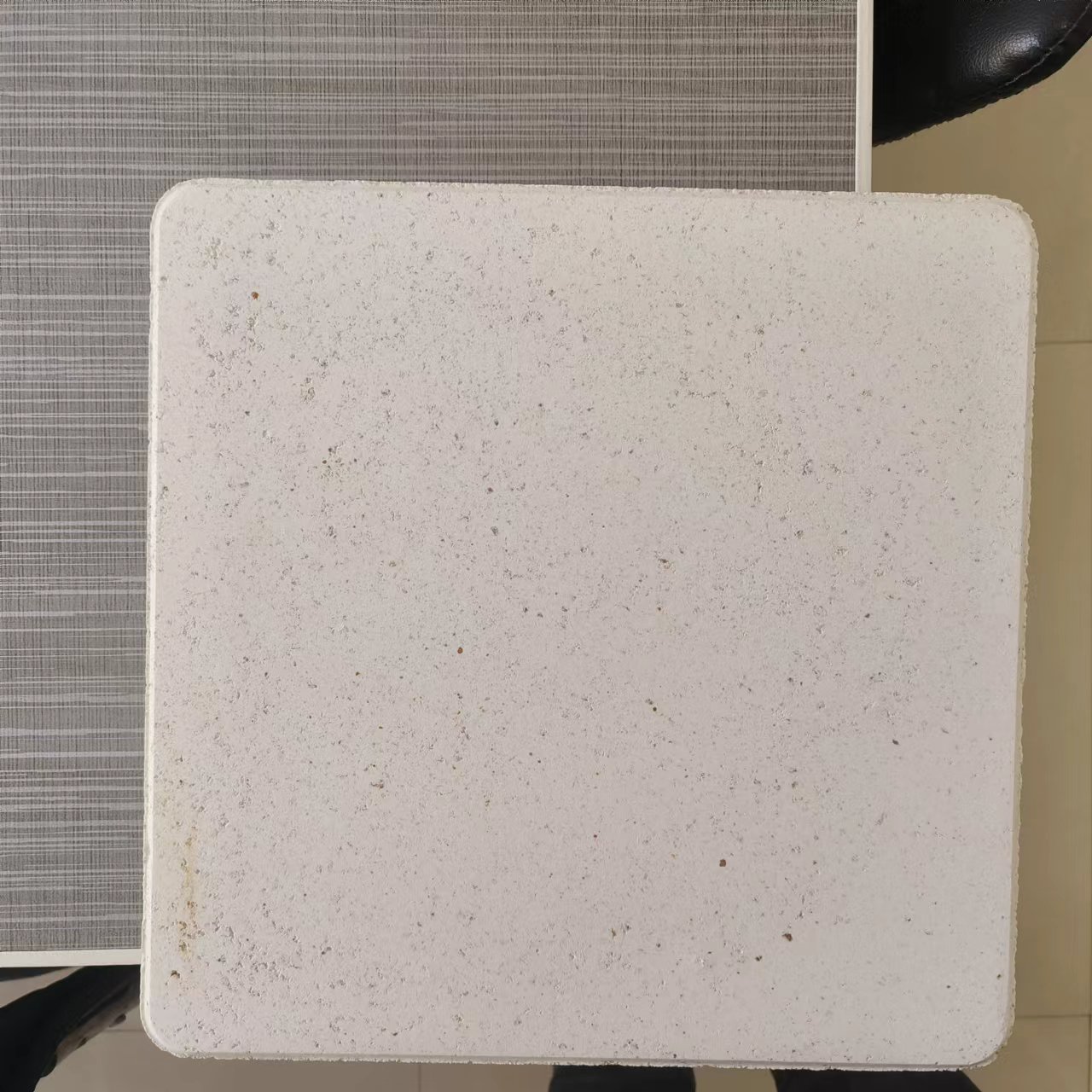
The Manufacturing Process of Andalusite Refractory Plates: From Raw Material to Finished Product Introduction
Andalusite refractory plates are highly regarded in high-temperature industrial applications due to their exceptional thermal stability, mechanical strength, and chemical resistance. Understanding their manufacturing process helps reveal their superior properties and industrial importance. This article provides a detailed overview of the manufacturing process of andalusite refractory plates, from raw material selection to the final product, and explores the key techniques and process controls at each step.
Raw Material Selection and Processing
The first step in manufacturing high-performance andalusite refractory plates is selecting and processing high-quality raw materials.
- Source Identification: Andalusite ore is primarily sourced from South Africa, France, and China, regions known for their high-purity deposits. The selection of high-quality ore is the first step in ensuring the final product’s quality.
- Purity Requirements: The andalusite ore used for manufacturing refractory plates must have high Al₂O₃ (alumina) and SiO₂ (silica) content, with minimal impurities such as Fe₂O₃ (iron oxide) and TiO₂ (titanium oxide).
- Pre-treatment Process: The ore undergoes initial crushing and grinding, followed by magnetic separation to remove iron impurities, ensuring the final product’s purity and performance stability.
Material Processing
Pre-treated andalusite ore needs further processing to obtain materials suitable for forming.
- Grinding and Sieving: The andalusite ore is further ground into a fine powder, ensuring uniform particle size. This step is crucial for the material’s uniformity and the final product’s performance.
- Mixing Process: The andalusite powder is mixed with appropriate binders and additives, which may include clay, alumina cement, and silica fume, to enhance the mixture’s plasticity and bonding strength. Precise mixing ensures the stability and consistency of the final product.
- Batching Precision Control: Strict control over batching ensures that each batch of the mixture has precise component proportions, which is vital for maintaining the consistency of the final product’s quality.
Forming Process
The mixed material needs to be formed into specific shapes for subsequent processing.
- Pressing: The common forming method is pressing, where the mixed material is placed in molds and compacted under high pressure to form high-density, uniform plates. This method ensures the product’s structural integrity and strength.
- Extrusion: For specific applications, extrusion is used to form long andalusite refractory plates, which are then cut to the desired size. This method is suitable for continuous production and specific shapes.
- Slip Casting: For complex shapes, the slip casting method is used, where the mixed slurry is poured into molds to set. This method is particularly suitable for producing custom-shaped refractory plates.
Drying Process
Formed plates need to be dried to remove moisture and enhance the material’s mechanical properties.
- Initial Drying: Initial drying is done at ambient temperature to gradually evaporate moisture and prevent cracking due to rapid drying.
- Kiln Drying: Final drying is done in kilns, where the temperature is gradually increased to ensure uniform moisture removal from both the interior and surface of the plates. Precise temperature and time control is critical for ensuring drying effectiveness and material quality.
High-Temperature Firing
Dried plates need to be fired at high temperatures to achieve the desired physical and chemical properties.
- Kiln Type Selection: Various kiln types, such as tunnel kilns and rotary kilns, are used based on production needs.
- Firing Temperature and Soaking Time: The firing temperature typically ranges from 1400°C to 1600°C, with the soaking time adjusted according to the material composition and performance requirements. High-temperature firing induces phase transformations within the material, forming a high-strength microstructure.
- Firing Atmosphere Control: During firing, the kiln atmosphere (such as oxidizing or reducing) is controlled to adjust the material’s final properties, such as thermal shock resistance and corrosion resistance.
Post-Firing Treatments
Fired plates may require further processing to ensure their performance meets specific application requirements.
- Mechanical Processing: The fired plates are cut, ground, and polished to achieve the desired dimensions and surface finish.
- Coating Treatments: For special applications, a protective coating may be applied to the plate surface to enhance its chemical resistance and thermal stability.
- Quality Inspection: Rigorous quality inspections, including dimensional accuracy, mechanical strength, thermal stability, and chemical resistance tests, are conducted to ensure each plate meets the standards.
Packaging and Logistics
After all processing and inspections, the plates are carefully packaged and managed through efficient logistics to ensure safe transport and delivery.
- Safe Packaging: Foam, cardboard, and wooden crates are used to provide cushioning and support, preventing damage during transportation.
- Labeling and Tracking: Each package is labeled with detailed information, including product specifications, batch numbers, and handling instructions, ensuring traceability and proper use.
- Logistics Management: An efficient logistics management system ensures the plates are delivered safely and on time, maintaining product quality and customer satisfaction.
Conclusion
The manufacturing process of andalusite refractory plates involves several critical steps, from raw material selection to final product packaging. Each step is meticulously controlled to ensure the highest quality and performance of the plates. By understanding this process, industries can better appreciate the value of andalusite refractory plates and their importance in high-temperature applications.
![Andalusite Pusher Tray [MM-LY-HZ75]](https://moatcity.com/wp-content/uploads/2024/10/222-2.jpg)

Leave a Reply