
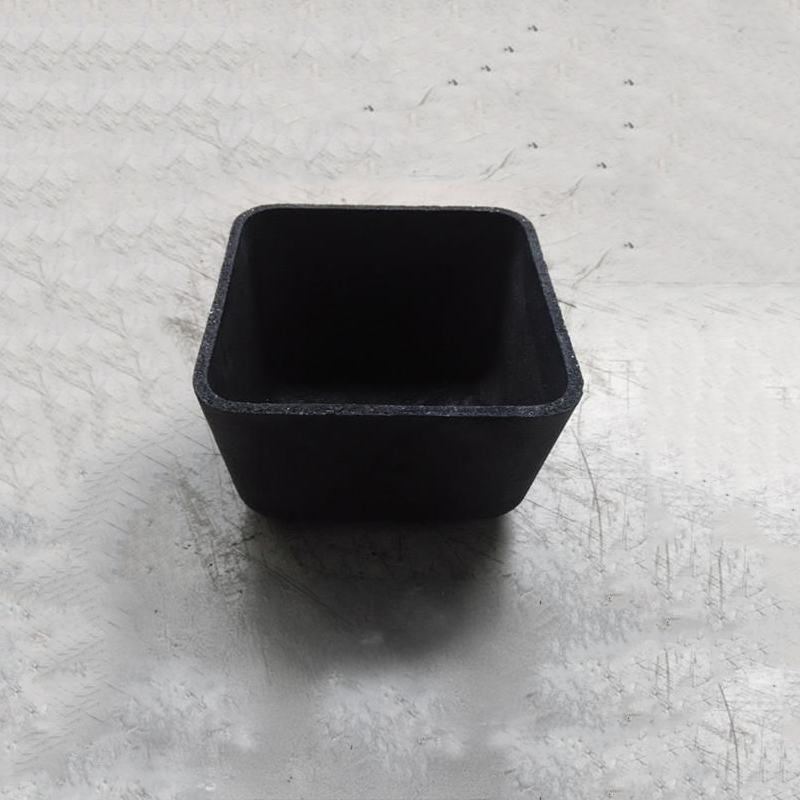
The Latest Developments in Recrystallized Silicon Carbide Research
As the demand for high-performance materials continues to grow, recrystallized silicon carbide (R-SiC), with its superior physical properties, has found widespread applications in high-temperature industries, chemical processing, and the semiconductor sector. In recent years, significant breakthroughs have been made in R-SiC research, particularly in terms of manufacturing processes, purity enhancements, and new application areas. These advancements are laying the foundation for broader future applications.
Technological Breakthroughs in Purity Enhancement of Recrystallized Silicon Carbide
The purity of recrystallized silicon carbide directly impacts its performance in high-end applications, such as in semiconductor manufacturing and electronic components. Recently, researchers have achieved significant improvements in R-SiC purity through various technical methods.
New Purification Processes
Traditional R-SiC manufacturing processes often introduce minor impurities, limiting its use in the semiconductor industry. Recent developments in vapor deposition methods and chemical vapor deposition (CVD) have drastically reduced impurity levels, achieving purity levels of over 99.999%. This advancement not only improves material performance but also lowers production costs.
New Powder Metallurgy Techniques
By refining powder metallurgy techniques, researchers have enabled R-SiC sintering at lower temperatures, which not only improves the material’s purity but also reduces energy consumption. This technological advancement has paved the way for R-SiC’s use in high-end manufacturing, such as in semiconductors and optoelectronic devices.
These breakthroughs in purity enhancement lay the groundwork for the application of high-purity R-SiC, particularly in situations requiring high electrical performance and thermal stability, such as power electronics and high-temperature sensors.
Innovations in Recrystallized Silicon Carbide Manufacturing Processes
Advancements in production processes are key to expanding the widespread use of R-SiC. In recent years, several innovative manufacturing techniques have emerged.
Advanced 3D Printing Technology
3D printing has become a hot topic in material manufacturing, and research on the 3D printing of R-SiC is underway. This technology allows for the layer-by-layer deposition of R-SiC to create complex shapes, greatly enhancing design flexibility. Compared to traditional mold forming, 3D printing reduces material waste, shortens production cycles, and opens the door to custom manufacturing.
Plasma Sintering Technology
Spark plasma sintering (SPS) is an emerging rapid sintering process that can sinter R-SiC powders into solid components in a very short time under high temperatures. This technique significantly increases the material’s density while avoiding micro-porosity introduced by traditional sintering, improving the mechanical and thermal conductivity properties of R-SiC.
These innovations in manufacturing processes not only improve the production efficiency of R-SiC but also open new avenues for its application in complex structural components and precision parts.
Applications of Recrystallized Silicon Carbide in Frontier Fields
As the performance of R-SiC continues to improve, its application areas are expanding. Some cutting-edge technological fields, particularly in high-tech equipment and high-performance devices, are already exploring the potential of R-SiC.
Aerospace Applications
With its exceptional high-temperature stability and lightweight properties, R-SiC is gaining traction in the aerospace sector. For example, in rocket nozzles and high-temperature components, R-SiC can withstand extreme heat while maintaining excellent mechanical properties.
Nuclear Industry Applications
R-SiC holds significant potential in the nuclear industry, particularly as a material for nuclear reactors. Its strong radiation resistance and high-temperature stability allow R-SiC to maintain structural integrity in highly radioactive and high-temperature environments, making it a promising material for future nuclear reactors.
5G Communication Equipment
With the development of 5G technology, high-frequency, high-power electronic devices require better heat dissipation materials. R-SiC, as a highly efficient thermal conductor, has become an ideal cooling material in high-power 5G communication devices, helping to improve device efficiency and stability.
Future Technological Trends and Challenges
Although significant progress has been made in R-SiC research, there are still some technological challenges and opportunities for future development. Here are some possible future technological trends:
Cost Reduction through Process Optimization
Despite the performance advantages of R-SiC, its production cost remains relatively high, particularly for high-purity R-SiC materials. Therefore, further optimization of production processes and reducing production costs will be a major focus of future research. By improving efficiency and reducing raw material consumption, the cost of R-SiC is expected to gradually decrease, promoting its application in more fields.
Development of Nano-Structured R-SiC
Researchers are exploring the production of nano-structured R-SiC, which could exhibit higher strength and special properties. Nano-structured R-SiC has the potential to outperform in terms of wear resistance, toughness, and thermal conductivity, supporting the next generation of high-end manufacturing.
Development of Composite Materials
Another important trend for the future is the development of composite materials combining R-SiC with other high-performance materials. These composites would combine the advantages of each material, displaying excellent properties in a wider range of industrial applications.
Conclusion
The latest research developments in recrystallized silicon carbide demonstrate that as technology continues to evolve, R-SiC’s application prospects in high-end manufacturing and high-tech fields are growing rapidly. Whether in improving material purity, optimizing manufacturing processes, or expanding into frontier applications, R-SiC shows immense potential. In the future, as technology progresses and costs decrease, R-SiC is expected to see widespread use in even more industries.

Leave a Reply