The Importance of Cordierite-Mullite Saggers in Lithium Battery Cathode Material Development
In the current lithium battery market, the selection of cathode materials is crucial. With the advancement of technology, the performance of lithium batteries continues to improve, and the innovation and optimization of cathode materials have further enhanced the performance of these batteries. The choice of materials not only affects battery capacity but also directly impacts the battery’s lifespan and safety. In this context, cordierite-mullite saggars play an indispensable role in the preparation of cathode materials.
The Evolution of Lithium Battery Cathode Materials
Let’s begin by exploring the development of lithium battery cathode materials, from the early use of lithium cobalt oxide (LiCoO2) to the current use of ternary materials (nickel cobalt manganese, NCM; nickel cobalt aluminum, NCA) and lithium iron phosphate (LiFePO4). Each new material has brought significant improvements to battery performance. Lithium cobalt oxide offers high energy density but is limited by the scarcity of cobalt, safety concerns, and expensive costs. Ternary materials strike a balance between energy density and safety, while lithium iron phosphate is favored for its excellent safety and long cycle life.
The Role of Sintering in Cathode Material Preparation
The preparation of these materials requires high-temperature sintering, where raw materials are heated to a certain degree to fuse them into a solid form. This process requires precise temperature control and a stable environment to ensure that the materials achieve the desired properties. This is where cordierite-mullite saggars come into play.
Advantages of Cordierite-Mullite Saggars
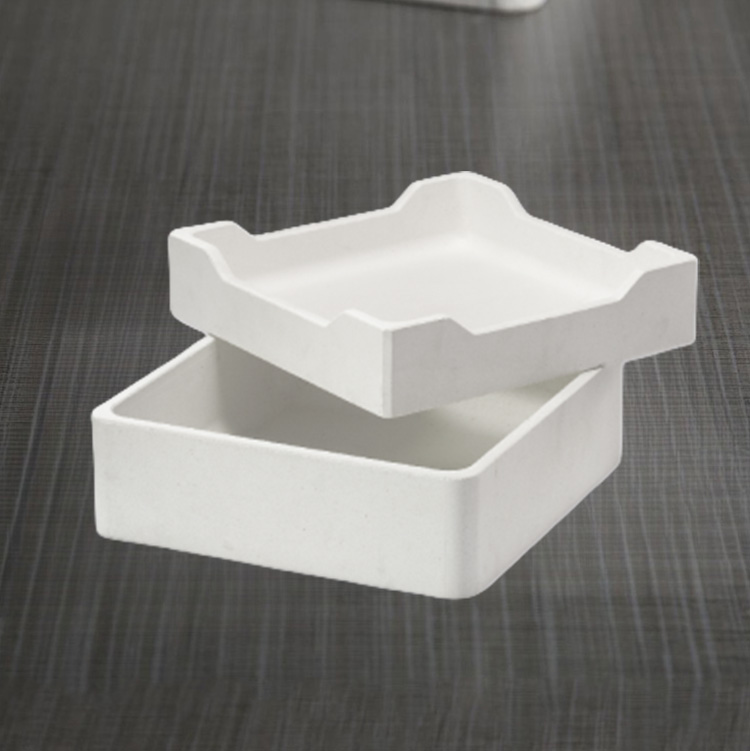
Cordierite-mullite saggars are high-temperature ceramic materials known for their excellent thermal stability and corrosion resistance. They provide a stable high-temperature environment during sintering, ensuring that no unwanted chemical reactions occur, thus preserving the purity and performance of the materials.
- Thermal Stability: Cordierite-mullite saggars have excellent thermal stability, ensuring that the materials do not deform during the high-temperature sintering process, which ensures uniform sintering. This uniformity is crucial for achieving consistent product quality.
- Corrosion Resistance: The corrosion resistance of cordierite-mullite saggars is critical. Under high temperatures, some components of the cathode materials may react with common containers, leading to performance degradation. Cordierite-mullite saggars effectively prevent such reactions, preserving the integrity of the materials.
- Chemical Stability: The chemical stability of these saggars ensures that no unwanted chemical reactions occur during sintering. This is especially important for maintaining the purity of high-performance materials like NCM and NCA, which are highly sensitive to contamination.
- Durability: The durability of mullite saggars reduces the frequency of replacement and maintenance, thus lowering the overall production costs for manufacturers.
Practical Applications and Industry Benefits
For lithium battery manufacturers, selecting the right sintering container can significantly improve production efficiency and product quality. Cordierite-mullite saggars, with their robust durability under high temperatures, have become the preferred choice.
- Efficiency: The use of mullite saggars can reduce the number of defects in the final product, thereby improving yield and reducing waste. This efficiency translates into lower production costs and increased profitability.
- Quality Assurance: The stable performance of the saggars ensures that each batch of cathode material meets specification requirements, thereby enhancing the overall performance and reliability of the batteries.
Future Prospects
As lithium battery technology continues to evolve, cordierite-mullite saggars are expected to demonstrate unique advantages in even more fields, helping the lithium battery industry reach new heights. The growing demand for higher energy density, longer battery life, and better safety will drive the demand for higher-quality, more reliable sintering containers.
Conclusion
The development of lithium battery cathode materials relies on the support of cordierite-mullite saggars. Whether it is improving the purity of materials or ensuring stability during the sintering process, cordierite-mullite saggars play an irreplaceable role. As technology advances, these saggars will remain an essential part of the progress of lithium battery technology.
![Cordierite Mullite Saggars for Lithium Battery Industry [MH-LNY-LH-CM54]](https://moatcity.com/wp-content/uploads/2024/10/02.png)


Leave a Reply