The Impact of Silicon Carbide Saggars' High Thermal Conductivity on Lithium Battery Production
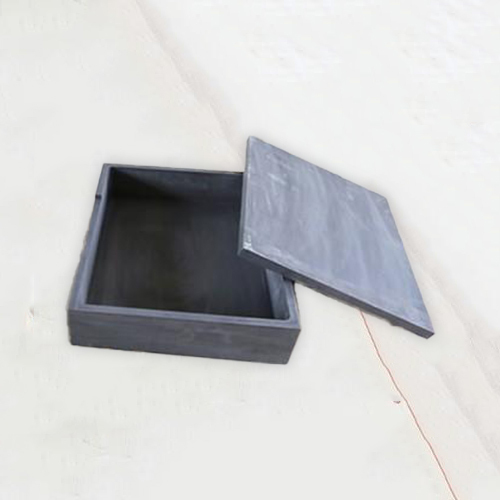
Temperature control is a key factor that affects the quality and performance of lithium batteries during production. Each stage of the production process requires strict temperature management, especially during the sintering of electrode materials, where temperature uniformity directly determines the final product’s electrochemical performance. Silicon carbide (SiC) saggars, with their excellent high thermal conductivity, have become crucial materials for enhancing lithium battery production efficiency and product quality. This article will explore the various impacts of SiC saggars’ high thermal conductivity on lithium battery production.
Temperature Management Requirements in Lithium Battery Production
Lithium battery production is a highly complex and precise process, particularly in the sintering of electrode materials, where uniform temperature distribution is critical for ensuring material uniformity. Uneven temperature can lead to differences in the internal structure of electrode materials, affecting battery capacity, consistency, and cycle life. Therefore, achieving uniform heat distribution during production is a significant challenge for battery manufacturers.
Advantages of Silicon Carbide Saggars’ Thermal Conductivity
Silicon carbide saggars have outstanding thermal conductivity, significantly higher than traditional saggar materials such as mullite and alumina. Specifically, SiC saggars can quickly and evenly transfer heat, making the temperature more uniform throughout the sintering process. This efficient heat transfer not only ensures consistency in the sintering of electrode materials but also reduces internal stress caused by temperature gradients, preventing material cracking and deformation.
Improving Production Efficiency and Reducing Energy Consumption
The high thermal conductivity of SiC saggars directly impacts the efficiency of lithium battery production. Because SiC saggars can quickly transfer and evenly distribute heat, production lines can reach the required sintering temperature in a shorter time, significantly shortening the production cycle. Faster heating and more uniform temperature distribution mean reduced energy consumption during production, lowering production costs. For large-scale lithium battery manufacturers, this efficiency improvement is particularly important, as it not only increases production capacity but also maintains a cost advantage in a competitive market.
Enhancing Product Quality and Consistency
The high thermal conductivity of silicon carbide (SiC) saggars plays a critical role in enhancing the product quality of lithium batteries. Temperature uniformity directly affects the crystal structure and micro-homogeneity of the electrode materials, which in turn influences the electrochemical performance of the battery. By improving temperature control precision during the sintering process, SiC saggars ensure that each batch of battery materials meets the same high-quality standards. This consistency is especially crucial in high-end markets such as electric vehicles, where it can significantly improve the reliability of the final product and customer satisfaction.
Reducing Product Defects and Rework Rate
Due to the superior thermal conductivity of SiC saggars, the temperature gradient during the sintering process is greatly reduced. This effectively lowers internal stresses in the battery materials and minimizes defects such as cracking and deformation caused by uneven temperatures. As a result, the yield rate is increased, and rework and material waste are reduced, further lowering production costs. For enterprises, reducing the defect rate and rework directly translates to higher profit margins and greater market competitiveness.
Future Application Prospects: Materials to Meet Higher Performance Demands
As lithium battery technology continues to advance, the market’s demand for higher battery performance is growing. Emerging technologies like solid-state batteries and high-energy-density batteries have increasingly stringent temperature control requirements during production. SiC saggars, with their excellent thermal conductivity, show immense potential in these emerging fields. In the future, as these new battery technologies continue to mature, SiC saggars will play an increasingly vital role in enhancing process stability and product quality.
Conclusion
The high thermal conductivity of silicon carbide saggars plays an irreplaceable role in lithium battery production. By improving heat transfer efficiency, SiC saggars not only boost production efficiency and reduce energy consumption but also significantly improve product quality and consistency. As lithium battery technology continues to evolve, the application of SiC saggars will become more widespread, providing key support for the production of high-performance batteries and helping enterprises achieve greater success in the global market.
![Silicon Carbide Saggars for Lithium Batteries [MH-LNY-LH-SiC73]](https://moatcity.com/wp-content/uploads/2024/10/01111.jpg)

Leave a Reply