The Critical Role of Silicon Carbide Saggars in Lithium Battery Production
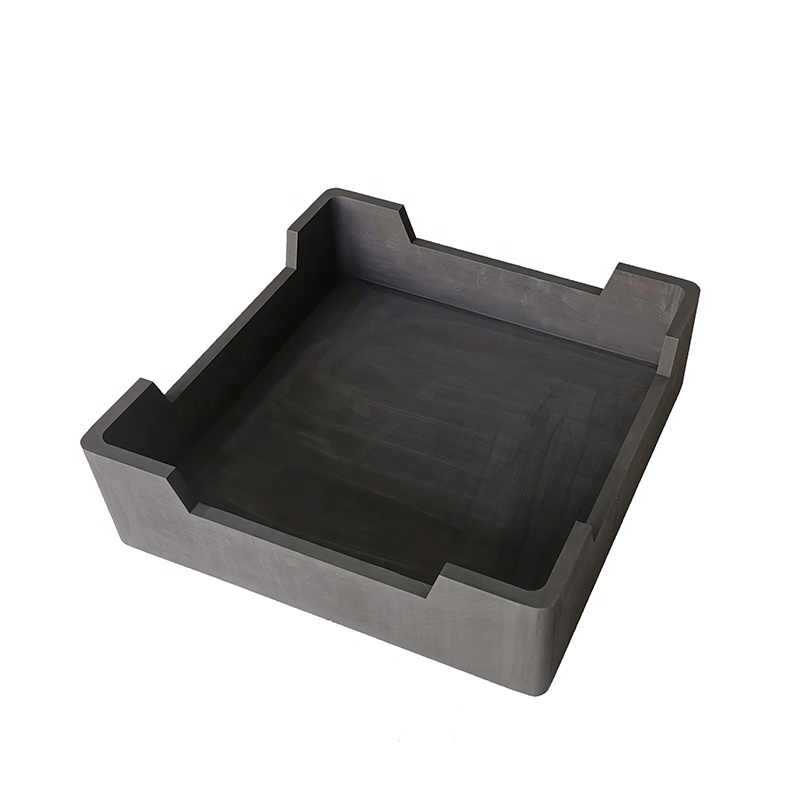
Lithium batteries, as core components of the global energy revolution, are widely used in electric vehicles, renewable energy storage, consumer electronics, and various other fields. With the continuous advancement of lithium battery technology, the demands on the production process are also increasing. In this context, saggars play a crucial auxiliary role in the sintering process, directly affecting the quality and production efficiency of battery materials. Silicon carbide saggars, with their excellent performance, have gradually become an indispensable part of lithium battery production.
Material Characteristics of Silicon Carbide Saggars
Silicon carbide (SiC) is a compound composed of carbon and silicon, renowned for its unique physical and chemical properties. Silicon carbide is extremely hard and wear-resistant, with hardness approaching that of diamond, and it maintains its mechanical strength at high temperatures without deforming. Additionally, the chemical inertness of silicon carbide ensures its stability in extreme environments, with excellent corrosion and oxidation resistance. These material characteristics make silicon carbide saggars highly suitable for high-temperature and harsh chemical environments, making them the preferred choice for lithium battery production.
High-Temperature Stability: Ensuring the Quality of Battery Material Sintering
The sintering of lithium battery electrode materials typically requires extremely high temperatures, often exceeding 1000°C. In such high-temperature environments, the saggar material must maintain its shape and dimensional stability to ensure uniform sintering of the electrode materials. Silicon carbide saggars have the advantage of a low coefficient of thermal expansion and a high melting point (over 2700°C), ensuring that they neither expand nor contract at high temperatures, thus preventing structural defects in the electrode materials caused by temperature fluctuations during the sintering process. This high-temperature stability not only improves the density and mechanical strength of the battery materials but also significantly enhances the overall performance and lifespan of the battery.
Thermal Conductivity: Enhancing Production Efficiency
Another notable feature of silicon carbide saggars is their excellent thermal conductivity. Compared to traditional mullite saggars, silicon carbide saggars exhibit superior thermal conductivity, enabling faster and more uniform heat transfer. In the sintering process of lithium battery materials, uniform heat distribution is crucial to avoid localized overheating or insufficient sintering caused by temperature imbalances. Silicon carbide saggars ensure consistent temperature during the entire sintering process through efficient heat transfer, improving the quality of the sintered battery materials. This helps enhance battery capacity and energy density while reducing sintering time, significantly increasing production efficiency.
Chemical Corrosion Resistance: Extending Saggar Lifespan
The chemical reactions in lithium battery production often involve corrosive substances such as strong acids and bases, which impose stringent requirements on the corrosion resistance of saggar materials. Silicon carbide saggars exhibit excellent chemical corrosion resistance and can be used for extended periods in both acidic and alkaline environments without significant chemical degradation. This corrosion resistance not only extends the lifespan of the saggars and reduces the frequency of replacements but also minimizes the risk of contamination in the production line caused by material corrosion, ensuring the purity of the battery materials and the cleanliness of the production environment.
Improving Production Efficiency and Economic Benefits
In large-scale lithium battery production, the long lifespan and high efficiency of silicon carbide saggars bring significant economic benefits. First, the high durability of silicon carbide saggars greatly reduces the frequency of replacements, minimizing downtime and material costs. Second, the excellent thermal conductivity of silicon carbide saggars shortens each production cycle, further increasing the overall production capacity of the production line. This is particularly beneficial for manufacturers who need to produce large volumes of lithium batteries in a short period of time. Furthermore, the low maintenance requirements and high reliability of silicon carbide saggars reduce the risk of unexpected shutdowns, ensuring stable and continuous production.
Future Applications and Development Prospects
As lithium battery technology continues to advance and market demand grows, silicon carbide saggars will play an increasingly important role in future lithium battery production. Emerging battery technologies, such as solid-state batteries and high-energy-density batteries, place even higher demands on saggar materials, and silicon carbide saggars, with their superior material properties, are likely to play a key role in these new technologies.
Moreover, with the continuous innovation in silicon carbide material technology, the performance of silicon carbide saggars will further improve in the future. For example, through optimization of nanostructures and the introduction of composite materials, the thermal conductivity and mechanical strength of silicon carbide saggars are expected to reach new heights, meeting the demands for higher temperatures and more complex production environments.
Conclusion
Silicon carbide saggars, with their excellent high-temperature stability, thermal conductivity, and chemical corrosion resistance, have become an essential material in lithium battery production. By improving the quality of battery material sintering and production efficiency, silicon carbide saggars provide strong support for the technological advancement and market expansion of the lithium battery industry. In the future of lithium battery production, silicon carbide saggars have a broad application prospect, and their role in advancing the energy revolution will become even more significant. Enterprises that seize the opportunity to apply this material will not only enhance their market competitiveness but also secure a favorable position in the global energy transition.
![Silicon Carbide Saggars for Lithium Batteries [MH-LNY-LH-SiC73]](https://moatcity.com/wp-content/uploads/2024/10/01111.jpg)

Leave a Reply