
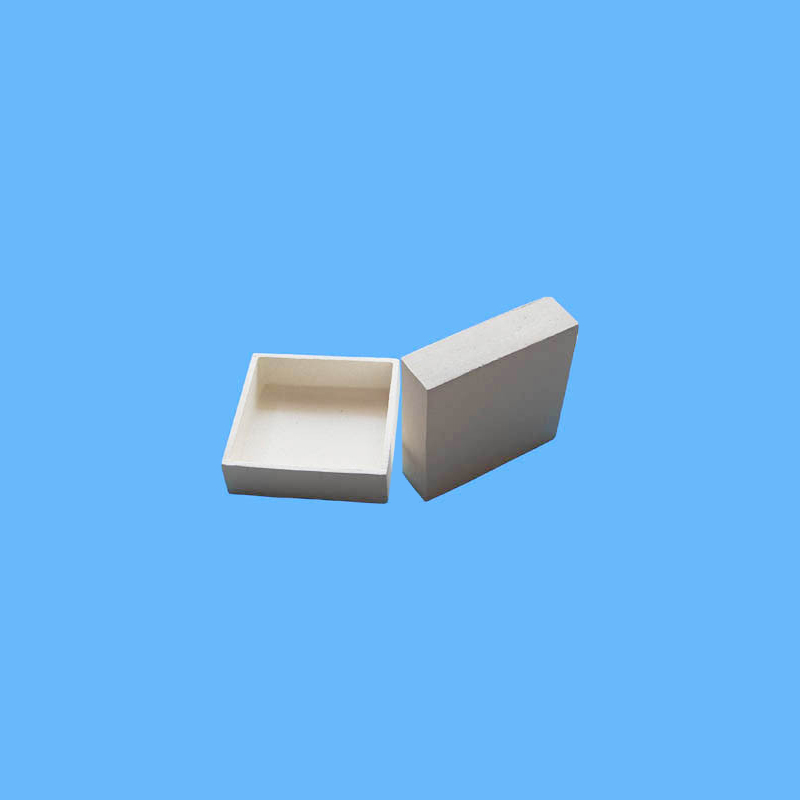
The Applications of Corundum-Mullite in Industry
Corundum-mullite (3Al₂O₃·2SiO₂) is widely used in various industrial fields due to its excellent refractory properties and chemical stability. This article will explore specific applications of corundum-mullite in industries such as metallurgy, ceramics, glass, petrochemicals, and steel casting, highlighting its unique performance advantages and significant contributions to industrial production.
1. Metallurgy
In the metallurgy industry, corundum-mullite is commonly used as linings for high-temperature furnaces, including electric arc furnaces and induction furnaces. With a refractoriness that can exceed 1700°C, corundum-mullite exhibits outstanding structural stability under extreme conditions, effectively preventing deformation and melting of the furnace body. The excellent thermal conductivity of this material ensures more uniform temperature distribution within the furnace, thereby enhancing smelting efficiency.
Many steel mills utilize corundum-mullite linings to extend the lifespan of furnaces and reduce maintenance costs. Additionally, in the casting process, corundum-mullite is used as a mold material, ensuring dimensional precision and surface quality of castings due to its superior wear resistance and high-temperature characteristics, which minimize production defects.
2. Ceramics
In the ceramics manufacturing process, the choice of lining material for high-temperature kilns is crucial for production efficiency and product quality. Corundum-mullite is favored for its exceptional thermal shock stability, allowing it to maintain structural integrity under frequent temperature changes within the kiln, avoiding cracking and spalling. High-temperature kilns typically operate at temperatures between 1200°C and 1400°C, and corundum-mullite can easily withstand such extreme environments.
Moreover, the chemical resistance of corundum-mullite protects it from the corrosive effects of various chemical components within the kiln, further extending its service life. Its application in ceramics production not only improves manufacturing efficiency but also significantly reduces maintenance frequency and costs.
3. Glass Manufacturing
In glass manufacturing, the furnace is a critical piece of equipment, and its performance directly impacts melting efficiency and product quality. Corundum-mullite is widely used as the lining material for furnaces due to its good thermal conductivity and high-temperature resistance. The high temperatures involved in the melting process place stringent demands on materials, and corundum-mullite maintains stable physical properties, effectively preventing reactions between molten glass and the lining material, thus ensuring the purity and quality of the glass.
By employing corundum-mullite, many glass manufacturers have successfully enhanced melting efficiency and reduced energy consumption. Additionally, its wear resistance helps furnaces maintain optimal performance during prolonged high-temperature operations, further increasing production cost-effectiveness.
4. Petrochemicals
The petroleum refining and chemical processing industries often involve high temperatures, high pressures, and complex chemical environments. In this field, corundum-mullite is extensively used as linings for reactors and supports for catalysts. Its high heat resistance and corrosion resistance allow it to perform stably under harsh conditions, significantly enhancing the overall stability and safety of the equipment.
For instance, in catalytic cracking processes, corundum-mullite provides excellent support for catalysts, maintaining their effectiveness at high temperatures. Moreover, the chemical inertness of corundum-mullite ensures that it does not interfere with various chemical reactions, allowing for smooth processes and optimal catalyst performance.
5. Steel Casting
In steel casting, the application of corundum-mullite is equally significant. As a material for molds and pouring systems, corundum-mullite’s high wear resistance and excellent high-temperature strength contribute to improving the quality and efficiency of castings. Using corundum-mullite molds can reduce casting defects, such as porosity and cracking, ensuring product consistency and reliability.
Furthermore, corundum-mullite can maintain its shape during rapid cooling and heating, enhancing overall casting efficiency. The advantages of this material have led to its widespread use in modern steel casting industries, becoming an important tool for improving production efficiency and reducing costs.
Conclusion
In summary, corundum-mullite demonstrates unique performance advantages across various industrial fields. Whether in metallurgy, ceramics, glass, petrochemicals, or steel casting, corundum-mullite provides reliable support for industrial production through its high refractoriness, thermal stability, corrosion resistance, and good mechanical strength. As technology continues to develop, it is expected that the applications of corundum-mullite will further expand, offering more innovative solutions for industries. This will not only enhance production efficiency but also promote sustainable development, helping the industry adapt to future challenges.

Leave a Reply