Sintering the Future: Transforming Electronic Components with Ceramic Furnace Setters
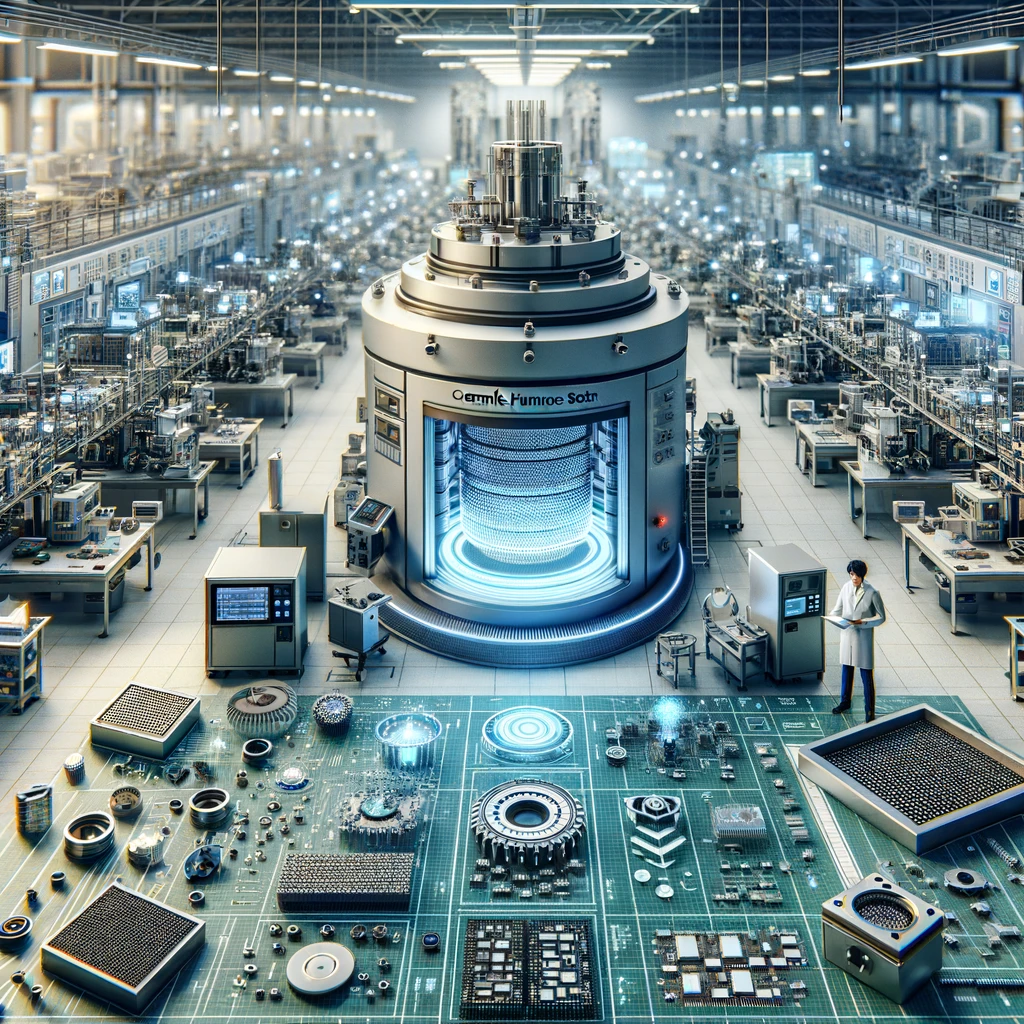
In the intricate world of electronics manufacturing, precision and reliability are paramount. From substrates that form the foundation of circuits to capacitors and varistors that fine-tune electrical signals, every component plays a crucial role in shaping the performance and functionality of electronic devices. At the heart of the production of these critical components lies the transformative process known as sintering, guided by the expertise of ceramic furnace setters. Let’s explore how, driven by ceramic furnace setters, sintering is revolutionizing the manufacturing of electronic components and powering future technologies.
Unveiling the Sintering Process in Electronic Components
Sintering is a process that compacts and forms materials by heating them to temperatures below their melting points, a foundational technology in the manufacturing of electronic components. By carefully calibrating the temperature and pressure applied to the materials, sintering promotes particle bonding, resulting in solid structures with enhanced mechanical and electrical properties.
Substrates: The Backbone of Electronic Circuits
Substrates are the foundation of electronic circuits, providing a platform for mounting and connecting semiconductor devices and components. With the meticulous supervision of ceramic furnace setters, sintering helps produce ceramic substrates with precise dimensions, excellent thermal conductivity, and electrical insulation properties. Through sintering, manufacturers can achieve the strict tolerances and uniform material characteristics required for high-performance electronic components.
Capacitors: Storing Energy, Driving Innovation
Capacitors play a critical role in storing and releasing electrical energy within electronic circuits. Under the supervision of ceramic furnace setters, sintering can create capacitors with optimized capacitance, rated voltage, and temperature stability (including ceramic dielectric and electrode materials). By controlling the sintering process, manufacturers can tailor capacitor characteristics to meet the specific requirements of various applications, from consumer electronics to automotive systems and renewable energy technologies.
Varistors: Protecting from Surges
Varistors are protective devices that dissipate overvoltage and shield electronic equipment from transient overvoltage and power surges. Guided by the expertise of ceramic furnace setters, sintering technology is used to produce varistor elements made from metal oxide ceramics (such as zinc oxide), which exhibit nonlinear resistance characteristics. With precise sintering parameters, manufacturers can achieve varistors with predictable voltage clamping characteristics and reliable performance under various operating conditions.
Advancements in Sintering Technology
As electronic devices become more compact, energy-efficient, and feature-rich, the demand for advanced sintering technologies continues to rise. Additive manufacturing processes (such as selective laser sintering and inkjet printing) have opened new avenues for creating complex electronic components with unparalleled precision and customization. Under the guidance of ceramic furnace setters, these innovative technologies enable designers to create intricate geometries and functional gradients, unlocking new possibilities for the next generation of electronic devices.
Driving Innovation and Sustainability
Beyond enhancing performance and functionality, sintering, under the guidance of ceramic furnace setters, plays a key role in driving innovation and sustainability across the electronics industry. By optimizing material usage, reducing waste, and simplifying production processes, sintering contributes to the development of eco-friendly electronic components, minimizing environmental impact. Furthermore, ongoing research and development efforts, guided by ceramic furnace setters, focus on exploring alternative materials and new sintering methods to address emerging challenges and opportunities in electronics manufacturing.
Conclusion
In the ever-evolving field of electronics manufacturing, sintering technology, supported by the expertise of ceramic furnace setters, has become a catalyst for innovation and progress. From substrates and capacitors to varistors and beyond, the transformative power of sintering is reshaping the electronic components that power our interconnected world. As technologies advance and new frontiers emerge, the collaboration between sintering techniques and the skilled guidance of ceramic furnace setters will continue to drive breakthroughs, propelling the development of smarter, more efficient, and more sustainable electronic devices for generations to come.

Leave a Reply