
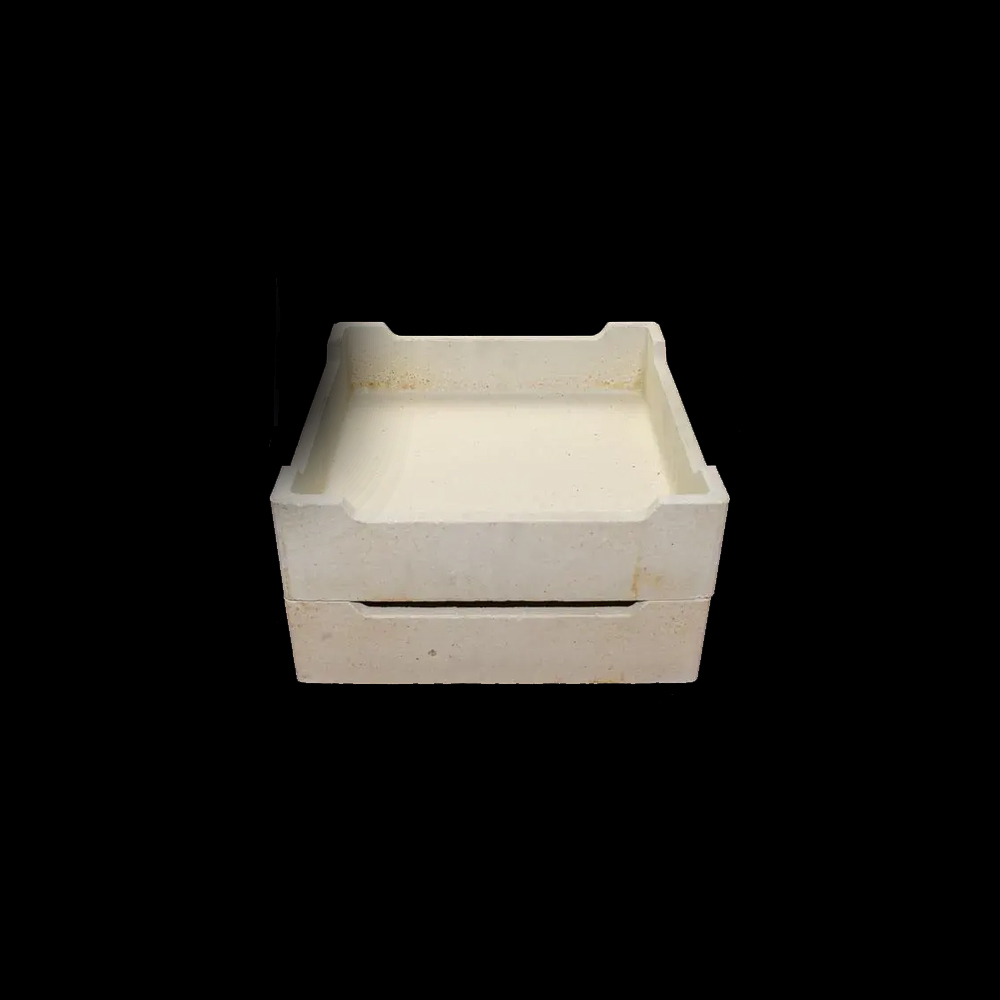
Research on the Improvement of Thermal Shock Resistance in Aluminum Nitride Refractory Materials
Aluminum nitride (AlN) is an important ceramic material known for its excellent thermal conductivity, good electrical insulation properties, and high-temperature resistance. It has found wide applications in various fields, including electronics, aerospace, and metallurgy. However, one key challenge faced by aluminum nitride in high-temperature applications is its thermal shock resistance. Thermal resistance refers to a material’s ability to withstand cracking and breaking when subjected to rapid temperature changes. This property is crucial for the safety and reliability of materials. This article explores the thermal shock resistance of aluminum nitride, current research findings, and future improvement directions, aiming to provide valuable references for researchers and engineers in related fields.
1. Thermal Shock Characteristics of Aluminum Nitride
The thermal shock characteristics of aluminum nitride are influenced by various factors, including its microstructure, coefficient of thermal expansion, and thermal conductivity. In high-temperature environments, aluminum nitride exhibits a relatively low coefficient of thermal expansion, which minimizes deformation during thermal changes. However, under rapid cooling or heating, uneven internal stress distributions can lead to micro-cracking, adversely affecting both the mechanical properties and overall integrity of the material. Thus, enhancing the thermal shock resistance of aluminum nitride is of paramount importance.
2. Research Directions for Improving Thermal Shock Resistance
To address the thermal shock resistance issue in aluminum nitride, researchers have conducted in-depth studies in several areas:
2.1 Microstructure Optimization
The microstructure of aluminum nitride directly affects its thermal shock resistance. By adjusting sintering temperatures and times, researchers have found that material density can be significantly improved. For instance, increasing the sintering temperature can promote particle fusion and reduce porosity, which lowers internal stress concentrations. This optimization not only enhances thermal shock performance but also increases the overall strength of aluminum nitride.
2.2 Use of Additives
Incorporating other materials, such as silicon nitride, alumina, and barium zirconate, into aluminum nitride is another effective strategy for enhancing thermal shock resistance. Studies have shown that these additives can form composite materials that improve the toughness and thermal stability of aluminum nitride. For example, the addition of barium zirconate increases the material’s ductility, reducing the likelihood of crack formation due to temperature fluctuations. Furthermore, these additives can interact with the aluminum nitride matrix to create a more uniform microstructure, thereby further enhancing thermal shock resistance.
2.3 Surface Treatment Technologies
Modern surface treatment technologies offer new avenues for improving the thermal resistance of aluminum nitride. By applying coatings or composite treatments to the surface of aluminum nitride, protective layers can be formed that reduce thermal stress concentrations. For instance, using chemical vapor deposition (CVD) to deposit a heat-resistant coating on aluminum nitride not only enhances its thermal resistance but also effectively prevents the propagation of surface cracks. The effectiveness of these methods has been confirmed in multiple studies, providing feasible solutions for improving the thermal shock resistance of aluminum nitride.
3. Research Cases and Findings
Recent years have seen significant advancements in research on the thermal shock resistance of aluminum nitride. For example, a research team successfully improved the material’s thermal resistance by adding an appropriate amount of barium zirconate (BaZrO3) to aluminum nitride. After conducting multiple high-temperature quenching experiments, the modified aluminum nitride samples demonstrated a significantly reduced crack formation rate and exhibited superior physical properties and structural integrity. Additionally, another research team employed laser sintering technology to create a novel aluminum nitride composite material, which showed notable improvements in both thermal shock resistance and high-temperature strength. These findings not only provide a theoretical basis for the practical application of aluminum nitride but also lay the groundwork for further material development.
4. Challenges and Future Directions
Despite the significant research achievements, several challenges remain in enhancing the thermal resistance of aluminum nitride. First, the consistency and uniformity of the material need to be addressed. Ensuring that aluminum nitride produced on a large scale maintains consistent performance is a major challenge in current research. Secondly, finding ways to improve thermal shock resistance while maintaining other desirable properties of aluminum nitride (such as thermal conductivity and chemical stability) is another critical issue. Therefore, future research can focus on the following directions:
Exploring New Composite Materials: Developing new composite materials by designing composite systems with different components to leverage the synergistic effects of materials and achieve better thermal shock resistance.
Optimizing Fabrication Processes: Precisely controlling fabrication parameters, such as temperature, atmosphere, and cooling rates, to synthesize high-quality aluminum nitride and ensure its stability at high temperatures.
Conducting Multi-Scale Simulations: Utilizing computational simulation techniques to study the thermal stress distribution and crack propagation in aluminum nitride at the micro-level, providing theoretical guidance for improving thermal shock resistance. This approach can offer a more scientific basis for new material design and help enhance material performance.
Conclusion
As an important refractory material, research on improving the thermal shock resistance of aluminum nitride is crucial for enhancing its reliability in high-temperature applications. Through microstructure optimization, the strategic use of additives, and advanced surface treatment technologies, researchers are continuously exploring new pathways to enhance the performance of aluminum nitride. Despite the challenges, with advancements in materials science and engineering technology, significant breakthroughs in the thermal shock resistance of aluminum nitride are anticipated, paving the way for its more reliable applications in high-tech fields such as aerospace, electronic devices, and metallurgy.

Leave a Reply