
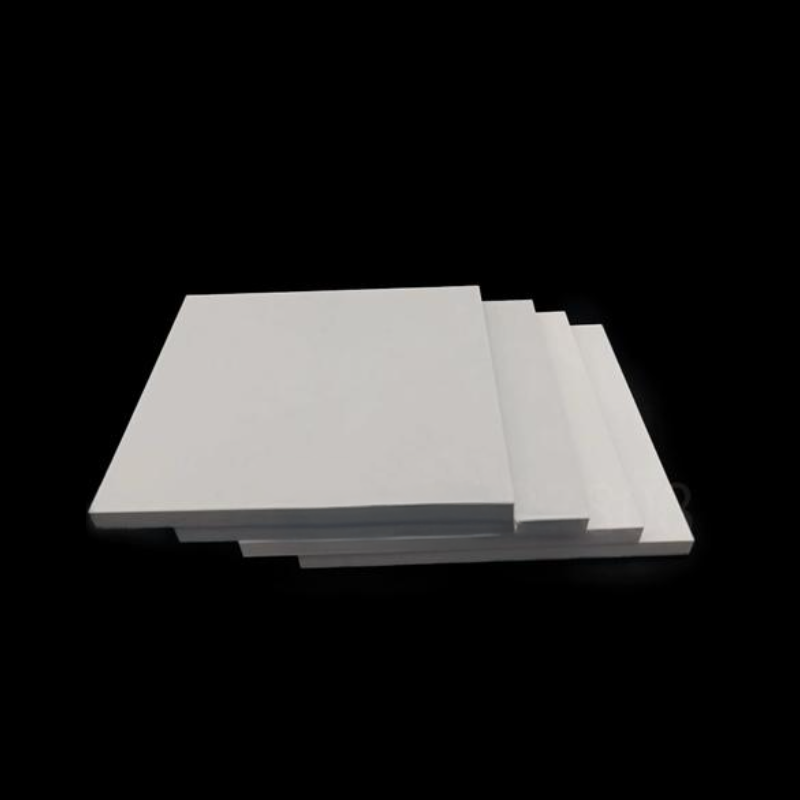
Refractory Properties and Applications of Boron Nitride
In the field of refractory materials, applications of boron nitride (BN) has emerged as a significant functional material due to its exceptional physical and chemical properties. With its high melting point, excellent thermal shock resistance, and oxidation resistance, BN finds widespread use in many industrial fields, particularly in high-temperature environments. This blog will explore the refractory properties of boron nitride in detail and its specific applications in metallurgy, casting, ceramics, and other high-temperature industries.
Analysis of Boron Nitride’s Refractory Properties
1. High Melting Point and Thermal Stability
Boron nitride has a very high melting point, with hexagonal boron nitride (h-BN) melting around 3000°C, while still maintaining structural stability at high temperatures. Compared to traditional refractory materials such as alumina and aluminum silicate, BN performs more effectively in extreme high-temperature environments. Therefore, boron nitride is highly suitable for processes like metal smelting and ceramic sintering that require high-temperature operations.
2. Thermal Shock Resistance
Thermal shock resistance refers to a material’s ability to maintain structural integrity under rapid temperature changes. Boron nitride’s low thermal expansion coefficient (~2.7×10^-6/K) ensures it resists cracking or breaking during sudden heating and cooling. This resistance to thermal shock is particularly important in processes like metallurgy and casting, where BN can withstand rapid cooling in high-temperature operations while retaining its structural stability.
3. Oxidation Resistance
Boron nitride exhibits strong oxidation resistance, particularly in neutral and inert atmospheres. In high-temperature oxidative environments, a thin boron oxide (B₂O₃) layer forms on BN’s surface, acting as a protective barrier and slowing further oxidation. This makes BN ideal for long-term use in oxidative atmospheres, commonly found in high-temperature industrial settings.
Applications of Boron Nitride in Metallurgy and Casting
1. Refractory Coating Material
BN’s corrosion resistance and high-temperature stability make it a common refractory coating material in metallurgy and casting processes. In metal smelting, crucibles and molds are exposed to extreme heat and molten metals, which can accelerate the degradation of traditional materials. A boron nitride coating not only resists molten metal corrosion but also prevents direct contact between molten metals and equipment, extending the lifespan of crucibles and molds.
2. Lubricant for Casting Molds
Due to its layered structure, hexagonal boron nitride exhibits excellent lubricating properties. It is frequently used as a high-temperature lubricant for casting molds, reducing friction between the mold and the metal, minimizing wear, and improving the surface finish of the cast product. This application is particularly important in precision casting processes like die casting and investment casting.
3. Anti-Adhesion Coating in Metallurgy
Boron nitride also serves as an anti-adhesion coating to prevent molten metals from sticking to mold surfaces during casting and metalworking. Its high-temperature stability and non-reactivity make BN an ideal coating material that significantly improves the lifespan of molds and enhances production efficiency.
Applications of Boron Nitride in the Ceramics Industry
1. High-Temperature Kiln Linings
High-temperature kilns are essential in ceramic manufacturing, and the lining materials must withstand sustained high-temperature operations. Boron nitride’s excellent refractory and thermal shock resistance make it an ideal kiln lining material. It can effectively handle temperature fluctuations during the sintering process, maintaining stable kiln conditions and extending the service life of the kiln.
2. Sintering Aid for Ceramics
In some ceramic sintering processes, boron nitride is used as a sintering aid. Its low wettability and excellent anti-adhesion properties prevent ceramic products from sticking to sintering equipment, ensuring a smooth surface finish and increasing the production yield. This application is particularly crucial in the manufacture of high-precision ceramic products.
Applications of Boron Nitride in Other High-Temperature Industries
1. Glass Manufacturing
In the glass industry, boron nitride is often used in equipment that handles molten glass, either as a refractory coating or a protective material. Given that glass has a high melting point and is highly corrosive in its molten state, BN effectively resists corrosion from molten glass. Additionally, BN’s non-stick properties make it ideal for use in glass processing.
2. High-Temperature Furnace Components
Boron nitride is widely used in manufacturing various high-temperature furnace components, such as thermocouple protection tubes, heating elements, and insulators. These components operate under extreme temperatures, and boron nitride’s refractory and insulating properties provide reliable performance, particularly in environments requiring high-temperature insulation.
3. Semiconductor Industry
Boron nitride also finds applications in the semiconductor industry as a high-temperature insulating material. In some precision processes, such as crystal growth or ion implantation, boron nitride provides a stable thermal environment, while its chemical inertness prevents contamination of semiconductor materials.
Comparison Between Boron Nitride and Other Refractory Materials
Compared to traditional refractory materials like alumina, magnesia, and aluminum silicate, boron nitride shows significant advantages in certain high-temperature processes. While boron nitride has a higher cost, its superior performance at high temperatures and longer service life make it cost-effective in some high-demand scenarios. Particularly in molten metal processing, semiconductor manufacturing, and high-temperature coatings, BN outperforms other materials.
| Material | Melting Point (°C) | Thermal Conductivity (W/mK) | Thermal Shock Resistance | Resistance Oxidation Resistance |
|---|---|---|---|---|
| Boron Nitride | ~3000 | 60 | Excellent | Excellent |
| Alumina | 2050 | 35 | Average | Good |
| Magnesia | 2800 | 60 | Good | Average |
| Aluminum | 1600-1700 | 15-30 | Average | Good |
| Silicate |
Conclusion
Boron nitride, with its high melting point, outstanding thermal shock resistance, excellent oxidation resistance, and unique lubricating properties, has become an important material in the refractory industry. Its applications are expanding in metallurgy, casting, ceramics manufacturing, and other high-temperature industries. While its cost is relatively high, the increasing demand and advancements in production technologies suggest that BN will continue to play a significant role in the future of high-temperature materials.
![Boron Nitride Plates/Trays [MH-BNC995T - BoronNitride]](https://moatcity.com/wp-content/uploads/2024/10/氮化硼板.jpg)
![Boron Nitride Saggars [MH-BNC995H - BoronNitride]](https://moatcity.com/wp-content/uploads/2024/12/氮化硼匣钵.png)

Leave a Reply