
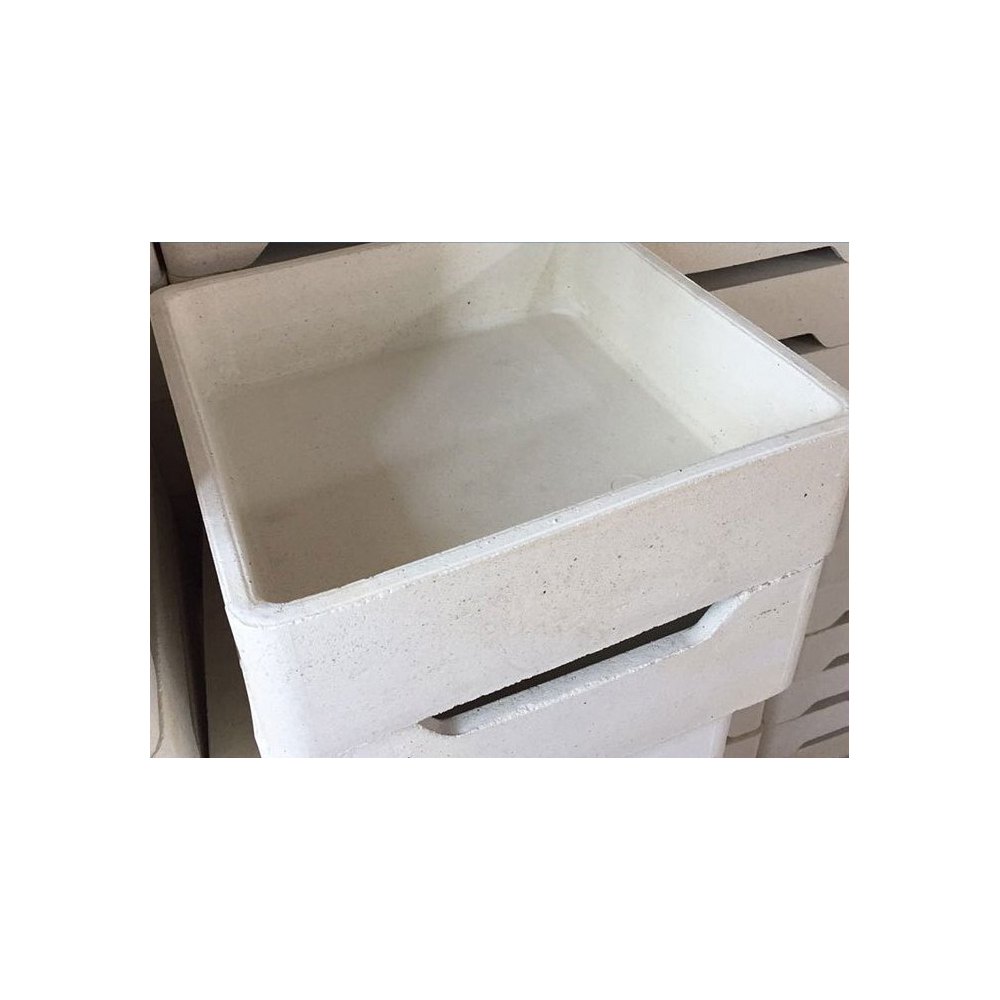
Production Processes and Technological Advances in Recrystallized Silicon Carbide
Recrystallized Silicon Carbide (R-SiC) is a high-performance ceramic material formed through the reaction between carbon and silicon. It is renowned for its exceptional properties, such as high temperature resistance, mechanical strength, corrosion resistance, and thermal conductivity, making it widely used across industries such as metallurgy, aerospace, electronics, and energy. However, producing high-quality recrystallized silicon carbide requires precise control over the manufacturing process. This article delves into the production processes of recrystallized silicon carbide, explores the latest technological advancements, and looks ahead to future developments.
-
Basic Production Processes of Recrystallized Silicon Carbide
The production of recrystallized silicon carbide generally involves several key steps:
1.1 Preparation of Silicon Carbide Powder
The first step in producing recrystallized silicon carbide is the preparation of silicon carbide powder, which is typically made from silicon and carbon sources. Common raw materials include silicon powder, graphite, carbon black, or other carbon materials. The reaction occurs at high temperatures, usually in an electric furnace, and the temperature and duration must be precisely controlled to affect the final quality and particle size of the product.
1.2 Molding and Shaping
After the silicon carbide powder is prepared, it is typically shaped using a molding process. The powder is compacted into the desired shape and then subjected to heat to remove excess organic material and moisture. The precise control of the molding process improves the density and uniformity of the final product.
Common molding techniques include wet molding and dry molding. Wet molding is typically done at lower pressures and is suitable for manufacturing complex shapes. Dry molding is used for high-precision industrial components.
1.3 Sintering and Recrystallization
Sintering is a critical step in the production of recrystallized silicon carbide. In this stage, the molded silicon carbide components are placed in a high-temperature furnace to undergo sintering, with temperatures usually ranging from 1800°C to 2200°C. Through heating, recrystallization occurs, resulting in a dense crystalline structure. The temperature and time during this process significantly influence the final material’s grain size, porosity, and mechanical properties.
Atmosphere control during sintering is also a key factor. Common sintering atmospheres include argon, nitrogen, hydrogen, or a vacuum environment. The choice of atmosphere affects not only the crystal growth of silicon carbide but also its purity and surface quality.
1.4 Surface Treatment and Processing
After sintering, recrystallized silicon carbide usually undergoes surface treatment and further machining to ensure dimensional accuracy and surface quality. Common processing methods include grinding, polishing, and cutting. These processes help remove surface defects and enhance the material’s performance.
-
Current Technological Advances
With the increasing demand for recrystallized silicon, advancements in manufacturing processes have played a crucial role in improving production efficiency and material performance. Recent years have seen the introduction of several innovative technologies in the production of recrystallized silicon carbide.
2.1 Hot Isostatic Pressing (HIP)
Hot Isostatic Pressing (HIP) is a sintering technique that applies uniform pressure in a high-temperature environment. This process significantly reduces porosity and enhances the density of the material, which in turn improves the strength and high-temperature performance of recrystallized silicon carbide. Compared to traditional sintering methods, HIP allows for better material properties at lower temperatures.
2.2 Application of 3D Printing Technology
The introduction of 3D printing technology has opened up new possibilities for the production of recrystallized silicon carbide. 3D printing not only allows for the creation of complex-shaped silicon carbide components but also enables customized production, drastically shortening production cycles and reducing costs. This technology has significant potential in industries such as aerospace, electronics, and healthcare.
2.3 Introduction of Nanotechnology
The introduction of nanotechnology has further enhanced the performance of recrystallized silicon. By controlling the particle size of raw materials, more uniform crystalline structures can be achieved during sintering, leading to improvements in material strength and thermal conductivity. Nanostructured silicon carbide materials not only possess the traditional advantages of silicon carbide but are also being increasingly used in microelectronics, sensors, and other advanced applications.
-
Challenges in Current Production Processes
Despite the significant progress in the production technologies of recrystallized silicon carbide, there are still some challenges:
3.1 High Production Costs
The production process for recrystallized silicon carbide is relatively complex, especially during sintering and recrystallization, where high-temperature equipment and high-purity raw materials are required. As a result, the production cost remains relatively high, which is one of the main factors limiting its widespread adoption.
3.2 Material Consistency and Quality Control
Given the multiple steps involved in the production of recrystallized silicon carbide, slight variations in any of the processes can affect the quality of the final product. Ensuring consistency in every batch is a key challenge in the manufacturing process.
-
Future Development Directions
Although the current production processes have made significant progress, advancements in technology will continue to drive the reduction of production costs and improve quality control. The following are potential future developments in the production of recrystallized silicon carbide:
4.1 Green Production Processes
Amid environmental concerns and the push for energy efficiency, the production processes for recrystallized silicon will evolve toward greener and more sustainable methods. This could involve utilizing more efficient energy sources, reducing carbon emissions, and developing more environmentally friendly raw materials.
4.2 Adaptive Manufacturing Technologies
Adaptive manufacturing technologies that combine intelligent control systems will allow for real-time monitoring and adjustment of process parameters, improving production efficiency and material performance. The application of such technologies will enhance the precision of recrystallized silicon carbide production while reducing manufacturing errors.
4.3 Development of Multifunctional Composite Materials
With the increasing demand for multifunctional materials, the future production of recrystallized silicon carbide will likely extend beyond pure silicon carbide. The development of composite materials, combining silicon carbide with other materials such as ceramics or metals, could provide solutions for extreme environments such as high-temperature, high-corrosion, and high-pressure applications.
Conclusion
Recrystallized silicon carbide, with its excellent physical and chemical properties, is widely used in various industries. While the production technologies have advanced significantly, challenges remain. With continuous technological improvements, the cost of production will decrease, and quality control will become more refined. In the future, the production of recrystallized silicon will become more efficient, sustainable, and precise, enabling its application in even more high-tech fields. As a strategically valuable material, this will play an increasingly important role in the future industrial revolution.

Leave a Reply