Market Demand and Supply Chain Analysis of Silicon Carbide Saggars
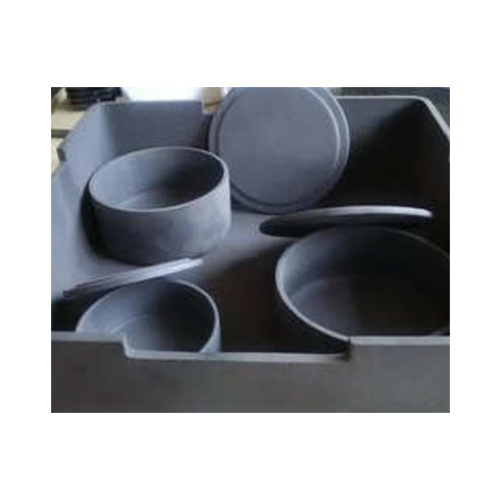
As the global lithium battery market continues to grow rapidly, particularly driven by the electric vehicle (EV) and energy storage sectors, the demand for silicon carbide (SiC) saggars has steadily increased. Due to their excellent high-temperature resistance, corrosion resistance, and high thermal conductivity, SiC saggars have become an indispensable part of lithium battery production. However, with the rising demand, ensuring a stable supply chain and meeting market requirements have become critical challenges within the industry. This article will analyze the current market demand and supply chain structure for SiC saggars, as well as discuss future challenges and strategies for addressing them.
Global Lithium Battery Market Growth
Over the past decade, the global lithium battery market has experienced explosive growth, driven mainly by the demand from electric vehicles, smartphones, and renewable energy storage systems. Particularly, the widespread adoption of electric vehicles has far exceeded expectations, directly driving the demand for high-performance lithium batteries. This increase in demand is reflected not only in the rise in battery production but also in the higher expectations for battery quality and production efficiency. As a key material in the production process, SiC saggars are in high demand because they meet the stringent process requirements of lithium battery manufacturing.
Supply Chain Structure for SiC Saggars
The production of SiC saggars involves several complex steps, including raw material procurement, powder preparation, molding, sintering, post-processing, and final delivery. The stability and efficiency of each step directly impact the smooth functioning of the entire supply chain. Among these, raw material supply is crucial, as SiC requires high purity and precise particle size, which places strict standards on suppliers’ technical capabilities and production capacity. Additionally, the production process requires precision equipment and strict process control to ensure that each batch of SiC saggars meets the desired quality standards.
Drivers of Market Demand
Several factors are currently driving the demand for SiC saggars in the market: First, the rapid development of the electric vehicle industry has led to increasingly high demands for high-performance materials in battery production. Second, the construction of energy storage systems requires large quantities of efficient, long-lifetime lithium batteries, for which SiC saggars are essential to improving battery quality and production efficiency. Finally, the growing global emphasis on environmental protection has made SiC saggars, as an environmentally friendly material, widely recognized, leading to a steady increase in demand.
Challenges and Risks in the Supply Chain
As market demand continues to grow, the SiC saggar supply chain faces multiple challenges. The first is the issue of raw material shortages. The extraction and processing of SiC raw materials require long delivery times, and any disruptions in upstream supply can impact the entire supply chain. Secondly, the complexity of the production process is another challenge. The production of SiC saggars demands high precision in process execution, and any mistakes could lead to a decline in product quality. Furthermore, global logistics uncertainty, especially after events such as the COVID-19 pandemic, could lead to delays and disrupt the supply chain.
Response Strategies and Optimization Plans
To address these challenges and ensure a stable supply chain, businesses need to adopt multiple strategies. First, they can establish long-term partnerships with multiple suppliers to ensure the stability and diversity of raw material supply. Secondly, during the production phase, businesses can invest in advanced production equipment and technology to enhance production efficiency and reduce quality fluctuations. Additionally, companies can optimize inventory management and build emergency reserves to respond to sudden market demand changes. Utilizing digital technologies to enhance supply chain management and ensure end-to-end transparency and traceability can also help improve the responsiveness and flexibility of the supply chain.
Future Outlook: Continued Market Growth and Supply Chain Evolution
Looking ahead, as the electric vehicle and energy storage markets continue to expand, the demand for SiC saggars will keep rising. At the same time, further optimization of the supply chain and technological advancements will help businesses better cope with market changes and challenges. To maintain competitiveness in the global market, companies must continuously innovate, improve product quality, and optimize supply chain management to adapt to an increasingly complex market environment.
Conclusion
As a critical material in lithium battery production, the market demand for SiC saggars is expected to continue growing in the coming years. To navigate the ever-changing market environment, businesses must ensure the stability and efficiency of their supply chains through diversified procurement, technological upgrades, and optimized management. Only by doing so can they maintain a competitive edge, seize growth opportunities, and drive long-term development.
![Silicon Carbide Saggars for Lithium Batteries [MH-LNY-LH-SiC73]](https://moatcity.com/wp-content/uploads/2024/10/01111.jpg)

Leave a Reply