
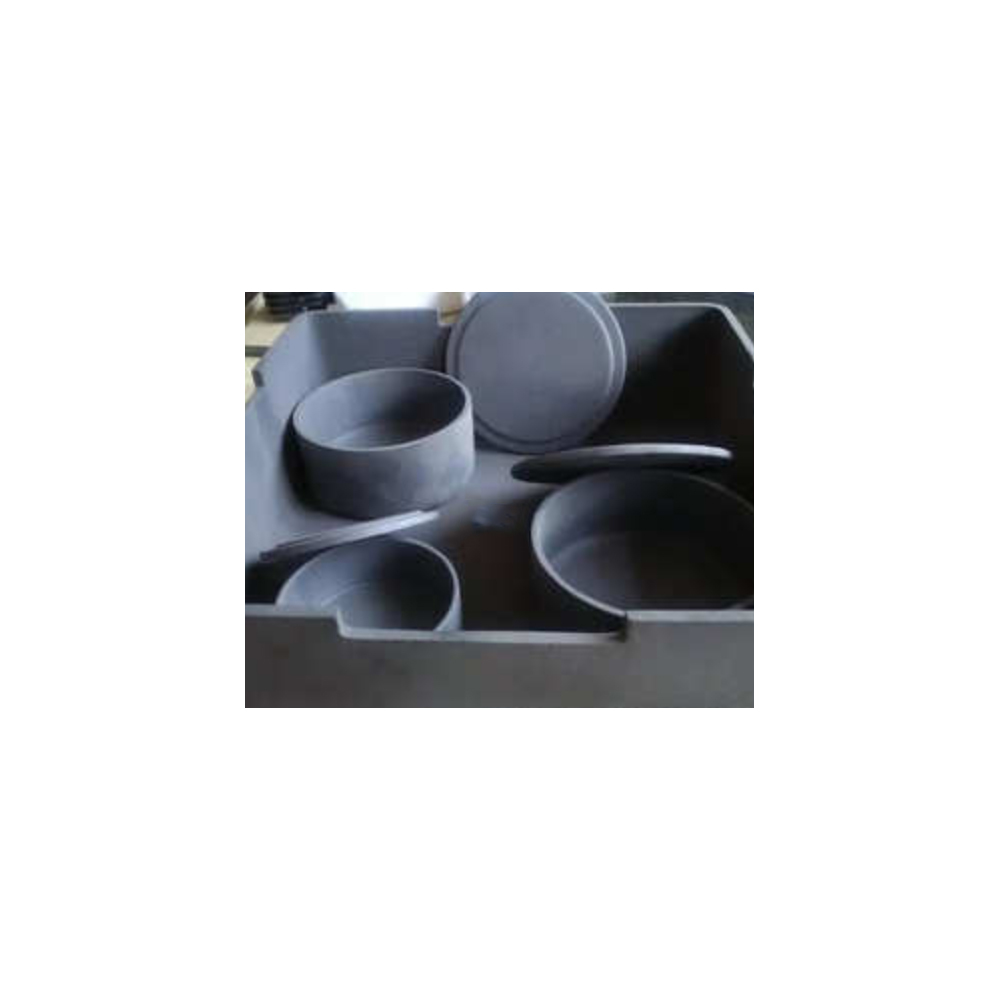
Market Demand and Future Prospects of Andalusite-Mullite Refractory Materials: The "Invisible Champion" in High-Temperature Industries
In the broad field of refractory materials, Andalusite-Mullite (also known as Andalusite-Mullite composite) refractories play a crucial role due to their exceptional high-temperature performance, thermal shock resistance, and chemical stability. However, despite their importance in industries such as metallurgy, ceramics, glass, and others, the market demand for Andalusite-Mullite refractories and their future development potential are often underestimated. In today’s rapidly growing global refractory materials market, Andalusite-Mullite refractories, as an “invisible champion” in the high-temperature sector, are now facing both new opportunities and challenges.
This article will delve into the current market demand for Andalusite-Mullite refractories, explore their application trends in various industrial sectors, and offer insights into their prospects in the context of future technological innovations and green development.
-
Current Market Demand for Andalusite-Mullite Refractory Materials
Andalusite-Mullite refractories are formed through the combination of Andalusite and Mullite under specific processing conditions, offering excellent thermal stability, thermal shock resistance, and chemical durability. These characteristics make them an essential material in several high-temperature and high-pressure industries, including metallurgy, ceramics, glass production, and others.
Strong Demand in the Metallurgical Industry
Andalusite-Mullite refractories play a vital role in steelmaking. The extreme conditions in steel production—such as high temperatures, molten metals, and furnace environments—require refractories to have excellent thermal shock resistance and high-temperature stability. Thanks to their low thermal expansion coefficient and excellent thermal shock resistance, Andalusite-Mullite refractories are ideal for furnace linings and refractory bricks used in blast furnaces, converter furnaces, and electric arc furnaces.
According to market research, the demand for Andalusite-Mullite refractories in the metallurgical industry is steadily rising, driven by continued global steel production growth. In emerging markets such as China and India, with increasing steel output, the demand for Andalusite-Mullite refractories is expected to grow consistently.
Diverse Demand in the Ceramics and Glass Industries
In the ceramics industry, Andalusite-Mullite refractories are widely used in kiln linings and heat-insulating materials due to their high-temperature stability and thermal shock resistance. As the ceramics industry increasingly demands high-performance and high-quality materials, Andalusite-Mullite refractories are becoming essential for improving product performance and manufacturing efficiency.
In the glass industry, Andalusite-Mullite refractories are primarily used in glass melting furnaces and high-temperature melting equipment. With the growing global demand for energy-efficient and environmentally friendly glass products, Andalusite-Mullite refractories, thanks to their excellent high-temperature performance and chemical stability, are becoming the material of choice in advanced glass manufacturing processes.
-
Future Prospects for Andalusite-Mullite Refractory Materials
With the continued growth of high-temperature industries, Andalusite-Mullite refractories have a broad and promising future ahead. The following trends are particularly significant:
Green and Sustainable Development
As global environmental standards continue to tighten, Andalusite-Mullite refractories, due to their outstanding high-temperature performance and low thermal expansion coefficient, have broad application prospects in green metallurgy, eco-friendly ceramics, and other fields. For example, in steelmaking, Andalusite-Mullite refractories help reduce energy consumption and improve furnace temperature control efficiency, thereby contributing to lower carbon emissions and promoting low-carbon and sustainable development.
Potential in Emerging Industries
In addition to traditional metallurgy, ceramics, and glass industries, Andalusite-Mullite refractories are also showing great potential in emerging sectors. For instance, the aerospace industry requires ultra-high-temperature and high-strength refractory materials, and Andalusite-Mullite, as an excellent high-temperature material, is expected to play a significant role in components such as spacecraft, rocket engines, and more. Furthermore, with the rapid development of industries such as new energy vehicles and solar cells, the demand for Andalusite-Mullite refractories in high-temperature processing and materials manufacturing is likely to see substantial growth.
Technological Innovation Driving Market Expansion
Technological innovation is a key driver of the market expansion of Andalusite-Mullite refractories. In recent years, advancements in materials science have significantly enhanced the properties of Andalusite-Mullite refractories. The application of advanced technologies such as nanotechnology and material modification techniques has further optimized their thermal stability, corrosion resistance, and mechanical strength. These innovations will greatly expand the market opportunities for Andalusite-Mullite refractories, opening up new avenues in various high-temperature applications.
-
Challenges Facing Andalusite-Mullite Refractory Materials
Although Andalusite-Mullite refractories have great market potential, they also face several challenges:
Raw Material Supply Fluctuations: The raw materials used to produce Andalusite and Mullite are relatively limited, and fluctuations in the availability and cost of these materials can impact production costs and the price of Andalusite-Mullite refractories.
Environmental Protection and Production Requirements: With increasing environmental regulations, the production process of Andalusite-Mullite refractories must become more environmentally friendly, reducing energy consumption and harmful emissions. This presents higher demands on the production process.
Technical Standards and Quality Control: As Andalusite-Mullite refractories are applied in more diverse industries, they must meet stringent industry standards. Therefore, precise production processes and stringent quality control will be crucial for enhancing competitiveness in the market.
Conclusion:
Andalusite-Mullite refractories, as an “invisible champion” in high-temperature industries, are poised to play an increasingly important role due to their exceptional properties and broad range of applications. With technological innovations and the drive for environmental sustainability, Andalusite-Mullite refractories are set to expand beyond traditional sectors like metallurgy, ceramics, and glass, extending into emerging industries such as new energy, aerospace, and more. Although challenges remain, the remarkable performance and potential of Andalusite-Mullite refractories position them as a significant player in the future of the refractory materials market.

Leave a Reply