
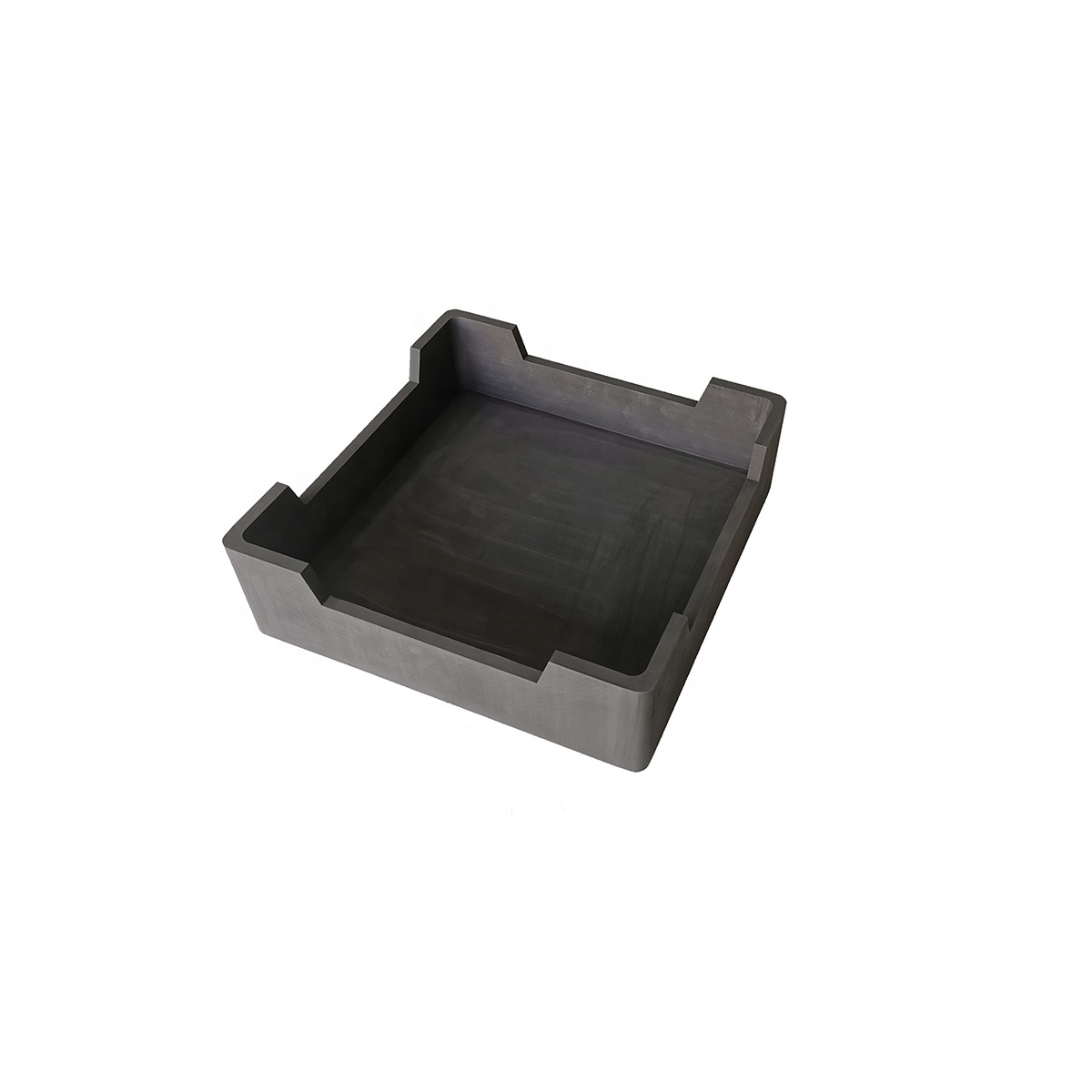
Manufacturing Process and Production Flow of Silicon Carbide Saggars
As a key material with high-temperature resistance and oxidation resistance, silicon carbide saggars are widely used in various high-temperature industries. Their unique properties stem from the production process and material characteristics. In this article, we will delve into the manufacturing process and production flow of silicon carbide saggars, helping readers better understand how these materials are produced, which in turn will aid in understanding their performance and application scenarios.
Selection of Raw Materials for Silicon Carbide Saggars
The main component of silicon carbide saggars is silicon carbide (SiC), a compound formed from silicon and carbon. Due to its extreme hardness and high-temperature resistance, silicon carbide is widely used in refractory materials. The first step in manufacturing silicon carbide saggars is selecting the appropriate raw materials.
Silicon carbide powder
The purity of the silicon carbide powder plays a crucial role in the final performance of the saggars. Typically, silicon carbide powder with a purity of over 99% is used. The particle size of the powder also impacts the final product’s density and mechanical properties.
Binder
Binders are key to ensuring that the powder particles bond and form a solid structure during the manufacturing process. Common binders include both organic and inorganic binders, with the choice depending on the specific production process and desired product performance.
Other auxiliary materials
Depending on the specific process requirements, special additives may be incorporated to enhance the thermal shock resistance, corrosion resistance, or other properties of the saggars.
Molding Process of Silicon Carbide Saggars
Molding is a crucial step in the production of silicon carbide saggars, determining the initial shape and structure of the saggar. The most commonly used molding techniques include:
Dry pressing
In dry pressing, silicon carbide powder is placed in a mold and pressed into shape using mechanical pressure. This method is efficient and offers good control over the shape, making it suitable for mass production.
Isostatic pressing
Isostatic pressing applies uniform pressure from all directions, resulting in saggars with more consistent density and superior mechanical properties. While more expensive, this method produces saggars with more stable performance, making it ideal for high-demand industrial applications.
Slip casting
Slip casting is used for producing saggars with complex shapes. In this process, silicon carbide powder is mixed with a binder to create a slurry, which is then poured into a mold to form the desired shape. While flexible, this process is less efficient and is more suited to custom production.
Drying and Pre-Sintering of Silicon Carbide Saggars
After molding, the saggars are still relatively fragile and require drying and pre-sintering to increase their strength.
Drying
During the drying stage, moisture or volatile organic binders are carefully removed from the saggars. This is typically done in a drying chamber at relatively low temperatures. The key here is to control both temperature and humidity to prevent cracking or warping during the drying process.
Pre-sintering
Pre-sintering involves firing the saggars at a lower temperature to initiate the bonding of the binder, thus improving their mechanical strength and preparing them for final sintering.
High-Temperature Sintering and Finishing
Sintering is the final critical step in the production of silicon carbide saggars. During high-temperature sintering, silicon carbide particles undergo recrystallization, resulting in a dense solid material.
High-temperature sintering
The final sintering temperature for silicon carbide saggars typically ranges between 1500°C and 2000°C. At these temperatures, the silicon carbide particles rearrange and fuse into a cohesive whole. This process is usually carried out in a controlled atmosphere, such as nitrogen or an inert gas, to prevent oxidation of the silicon carbide at high temperatures.
Finishing
After sintering, the saggars often require finishing processes to achieve the required dimensions and surface smoothness. This may include machining, grinding, and polishing. The quality of finishing directly affects the saggars’ performance, particularly in applications requiring high precision.
Quality Inspection and Final Delivery
After completing all manufacturing steps, the silicon carbide saggars undergo stringent quality inspections. The main aspects of inspection include:
Appearance inspection
Checking the saggar for surface defects such as cracks or pores.
Dimensional inspection
Ensuring that the saggar meets the specified dimensions and tolerances.
Physical performance testing
Testing the saggar’s compressive strength, thermal shock resistance, and corrosion resistance to ensure it will perform reliably in actual applications. Only saggars that pass all inspections are delivered to customers for use.
Conclusion
The manufacturing process of silicon carbide saggars is complex, involving multiple steps from raw material selection to molding, drying, sintering, and quality control. Each step is critical and directly impacts the final performance and service life of the saggar. Understanding these production processes helps both manufacturers optimize production and users better appreciate the key factors when selecting and using these materials.
![Silicon Carbide Board [MH-KX-SiC]](https://moatcity.com/wp-content/uploads/2024/10/1728636817408.png)
![Silicon Carbide Saggars for Lithium Batteries [MH-LNY-LH-SiC73]](https://moatcity.com/wp-content/uploads/2024/10/01111.jpg)
![Silicon Nitride Trays [MH-SNC995- Silicon Nitride]](https://moatcity.com/wp-content/uploads/2024/10/111-1.jpg)
![Recrystallized Silicon Carbide Plate [MH-XG-R.SiC99]](https://moatcity.com/wp-content/uploads/2024/10/222-1.jpg)
![Silica bonded Silicon Carbide Kiln Furniture [MH-LNY-Sic+SiO₂]](https://moatcity.com/wp-content/uploads/2024/10/222.jpg)

Leave a Reply