
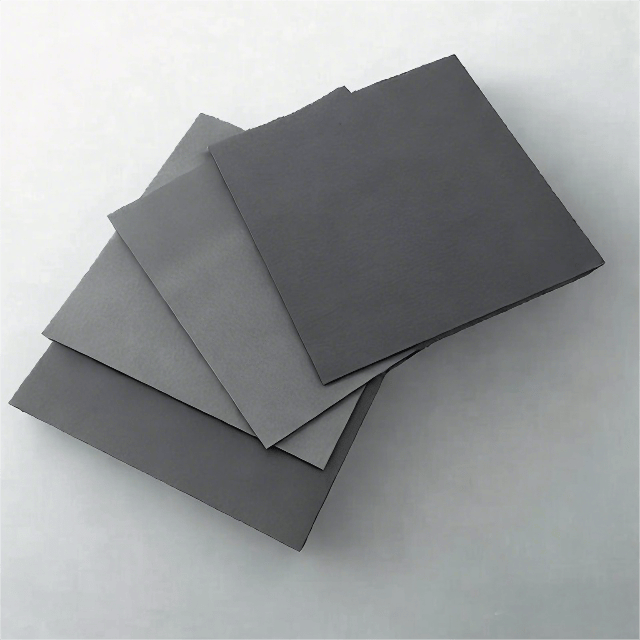
Introduction and Manufacturing Process of Recrystallized Silicon Carbide
In modern high-temperature industries, the performance of refractory materials directly affects production efficiency and equipment longevity. Silicon carbide (SiC), as a high-performance ceramic material, is widely used in metallurgy, ceramics, glass, and other high-temperature sectors due to its excellent thermal stability, thermal shock resistance, corrosion resistance, and high thermal conductivity. Among various SiC-based materials, Recrystallized Silicon Carbide (RSiC) stands out for its unique microstructure and superior overall performance, making it an essential component in advanced refractory applications.
-
Definition and Characteristics of Recrystallized Silicon Carbide
Recrystallized silicon carbide refers to a ceramic material obtained through ultra-high-temperature sintering (typically above 2000°C), resulting in a low-density but highly crystalline and interconnected grain structure. Unlike conventional sintered silicon carbide (e.g., reaction-bonded or self-bonded SiC), RSiC is produced without sintering aids and relies solely on grain-to-grain recrystallization to form a cohesive structure with an open porosity. This microstructure provides excellent gas permeability and outstanding thermal shock resistance, making it particularly suitable for use in heat exchangers, radiant tubes, kiln furniture, saggers, and other high-temperature components.
Key characteristics include:
Excellent structural stability at high temperatures: Maintains integrity even during prolonged use at 1600–1700°C.
High thermal conductivity and low thermal expansion coefficient: Facilitates rapid heat transfer and reduces thermal stress.
Exceptional corrosion resistance: Withstands acidic and basic slags, as well as oxidizing atmospheres.
Crack resistance and thermal shock durability: The porous structure helps relieve thermal stress, extending service life under cyclic heating and cooling.
-
Manufacturing Process
The manufacturing of RSiC depends on raw material purity, particle size distribution, and precise high-temperature sintering control. The standard process includes:
-
a) Raw Material Selection and Pretreatment
High-purity SiC powders (>98% SiC, <0.5% oxide impurities) are selected. A bimodal particle size distribution is typically used: coarse grains form the structural skeleton, while fine particles enhance packing density and green body strength.
-
b) Mixing and Batching
Dry or wet mixing is conducted to ensure homogeneous distribution. Organic binders (e.g., CMC or methylcellulose) may be added to improve green body strength. Temporary sintering aids (which volatilize at high temperatures) can also be introduced to aid the initial bonding process.
-
c) Shaping
Forming methods such as extrusion, dry pressing, and slip casting are employed depending on product shape and dimensional requirements. Pressure and compaction uniformity are critical to avoid density gradients and internal cracks.
-
d) Drying and Pre-sintering
The shaped green bodies are dried under controlled conditions to prevent cracking due to rapid water evaporation. Pre-sintering may be conducted to burn off organic components and strengthen the body before final firing.
-
e) High-Temperature Recrystallization Sintering
This is the core process of RSiC production. Sintering is carried out in a non-pressurized, inert, or slightly reducing atmosphere (e.g., argon or nitrogen), using electric or atmosphere-controlled furnaces at 1950–2200°C. During this stage, SiC grains undergo surface recrystallization and form necks that bond the grains together without densification.
The sintering profile—including heating rate, holding time, and cooling rate—must be carefully controlled to achieve the desired grain growth and open porosity.
-
Microstructure and Property Relationship
Microscopic analysis reveals that RSiC consists primarily of hexagonal β-SiC or α-SiC grains, typically ranging from tens to hundreds of micrometers in size. These grains are interconnected by neck-like structures formed during recrystallization. The material maintains high open porosity (15–25%) and interconnected pore channels.
This unique microstructure results in:
High permeability and thermal conductivity;
Excellent oxidation resistance (due to the formation of a dense surface SiO₂ film);
Exceptional resistance to thermal cycling and mechanical integrity under harsh environments.
-
Application Prospects
Today, RSiC is widely used in:
Kiln furniture such as setter plates, saggars, and shelves;
Gas-fired infrared radiant heaters;
Metallurgical components like troughs and heat exchangers;
Chemical process components, including reactor tubes and support structures.
As industrial demands continue to rise, RSiC is evolving toward multi-functional and intelligent material systems. Its future applications may expand into high-temperature filtration, thermoelectric devices, and next-generation energy-efficient systems.

Leave a Reply