
How to Choose the Right Silicon Carbide Sagger: A Buyer’s Guide
As high-temperature applications grow more sophisticated across industries such as lithium battery materials, powder metallurgy, advanced ceramics, and electronic components, Silicon Carbide (SiC) saggers have become a preferred solution for sintering and thermal containment. But with various materials, shapes, bonding types, and suppliers on the market, how do you choose the right SiC sagger for your specific application?
This buyer’s guide will help you make an informed decision by examining key criteria to consider when sourcing SiC saggers—balancing performance, cost, and operational compatibility.
-
Understand Your Application First
Before choosing a sagger, define your application requirements clearly:
Firing Temperature: What is your peak working temperature?
Atmosphere: Are you operating in air, nitrogen, hydrogen, or vacuum?
Loading Type: Are you sintering powders, pressed parts, or delicate ceramics?
Firing Cycle Frequency: How many cycles do you expect per week or month?
Contamination Sensitivity: Do your products require ultra-clean firing conditions?
Knowing these variables ensures that you match the sagger to the thermal, chemical, and mechanical stresses it will face.
-
Choose the Right Bonding Type
SiC saggers are classified by how the silicon carbide particles are bonded. Each bonding method impacts performance and cost:
-
Pressureless Sintered SiC (SSiC)
Pros: High purity, excellent strength and oxidation resistance, no residual silicon
Ideal For: Lithium battery cathode materials (LFP, NCM), high-value ceramics
Cons: Higher cost due to complex processing
2. Reaction-Bonded SiC (RB-SiC)
Pros: Good strength, lower cost, near-net shaping
Ideal For: Powder metallurgy, ferrites, and general ceramics
Cons: Contains residual silicon, which may react with aggressive atmospheres or materials
3.Nitride-Bonded SiC (NB-SiC)
Pros: Oxidation-resistant, affordable
Ideal For: Lower temperature or gas-fired kilns
Cons: Lower strength and density compared to other types
Your choice depends on both performance needs and budget constraints.
-
Consider the Geometry and Kiln Compatibility
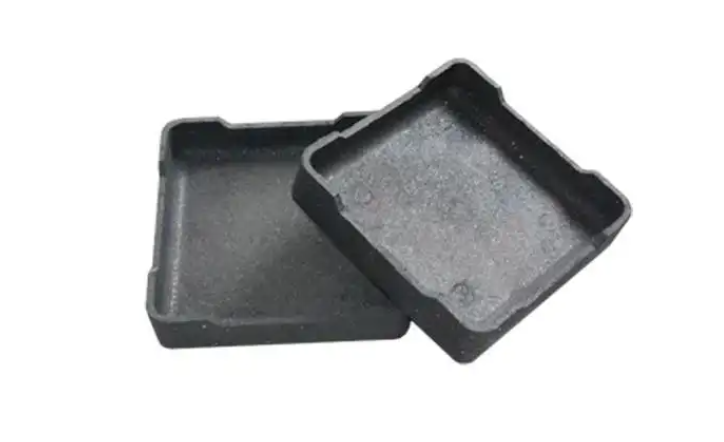
Saggers come in many shapes, including box-type, cylindrical, tray-style, and even custom-shaped forms.
Key factors:
Kiln Type:
Push Plate Kilns prefer low-profile, stackable saggers.
Tunnel and Shuttle Kilns allow for more robust, enclosed saggers.
Product Dimensions: Ensure your sagger’s internal space matches product size, with room for thermal expansion.
Stacking Design: Some applications benefit from interlocking or nesting designs to maximize loading efficiency.
If your process is unique, custom saggers can be manufactured to fit exact size and shape requirements—though they usually require higher minimum order quantities (MOQs).
-
Balance Cost vs. Service Life
While SSiC saggers may be more expensive upfront, they often last 3–5 times longer than RB-SiC or NB-SiC alternatives in harsh conditions. Evaluate total cost of ownership (TCO) rather than just initial price.
Ask your supplier fo
Typical firing cycles lifespan
Performance in similar temperature ranges and atmospheres
Past case studies or field reports from comparable industries
- Chemical Compatibility Matters
Some sintered materials release gases or residues that can react with the sagger.
Lithium compounds: May react with residual free Silicon Carbide sagger in RB-SiC
Fluorides or volatile metals: Can corrode both RB-SiC and NB-SiC
If your materials are chemically aggressive, choose high-density SSiC or ask for protective coatings to improve chemical resistance.
-
Supplier Selection and Quality Assurance
Not all SiC sagger manufacturers offer the same level of consistency. When evaluating suppliers:
Ask for technical datasheets (density, porosity, max temp, modulus)
Confirm ISO certifications or QA programs
Request sample pieces for trial runs
Check delivery times and customization capabilities
Choosing a reputable supplier ensures consistent product quality and better technical support.
-
Additional Considerations
Coatings
For applications involving oxidative or corrosive environments, ask about glazed or alumina-coated surfaces to extend life.
Thermal Expansion Matching
Ensure the sagger’s thermal expansion matches the materials and kiln furniture in your process to prevent warping or cracking.
Reusability & Maintenance
Some SiC saggers are easier to clean and reuse between cycles. This impacts long-term costs and operational efficiency.
Conclusion
Selecting the right Silicon Carbide sagger is not just a purchasing decision—it’s a strategic investment in your thermal process. By aligning your choice with temperature, atmosphere, chemical compatibility, and lifecycle needs, you can optimize both performance and value.
Take the time to understand your process parameters and consult with knowledgeable suppliers. The right SiC sagger can improve product consistency, reduce downtime, and ultimately enhance your production profitability.

Leave a Reply