
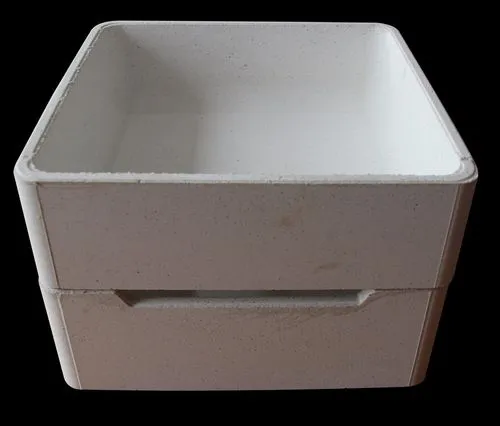
Future Trends of Cordierite-Mullite Saggars in Lithium Battery Cathode Material Production
Introduction
As lithium battery technology continues to advance, the production processes for cathode materials are also evolving. Crucial to the sintering process, andalusite-mullite crucible technology is undergoing significant progress. This article explores the future development trends of andalusite-mullite crucibles in lithium battery cathode material production, focusing on new material development, smart manufacturing, sustainability, market demand, and technological innovation.
New Material Development
The future of andalusite-mullite crucibles lies in the development of higher-performance materials. Current research is focused on integrating nanomaterials and other composite materials to enhance thermal stability, mechanical strength, and chemical resistance.
- Nanomaterial Integration: Adding nanomaterials to andalusite-mullite composites can significantly improve their properties. Nanomaterials can enhance the crucibles’ thermal stability and mechanical strength, making them more durable and efficient.
- Advanced Composites: Developing advanced composite materials that combine the best characteristics of andalusite, mullite, and other high-performance ceramics will give the crucibles superior properties. These composites can provide lower thermal expansion and higher resistance to thermal shock.
Smart Manufacturing
The rise of smart manufacturing technologies will make the production of andalusite-mullite crucibles more precise and efficient, with automation and intelligence being key drivers of this transformation.
- Automation: Automated production lines equipped with advanced robots and control systems can enhance the consistency and quality of crucibles. Automation reduces human error, ensures precise control over manufacturing parameters, and increases production speed.
- Intelligent Technologies: The integration of intelligent technologies such as the Internet of Things (IoT) and Artificial Intelligence (AI) can enable real-time monitoring and optimization of the production process. These technologies can analyze data to predict maintenance needs, optimize energy usage, and improve overall efficiency.
Sustainability and Environmental Concerns
Future crucible manufacturing will place greater emphasis on sustainability and environmental impact. Developing environmentally friendly production processes and recyclable materials will be key areas of focus.
- Eco-friendly Production: Adopting low-energy, low-emission production methods will reduce the environmental impact of crucible manufacturing. This includes using renewable energy sources and optimizing processes to minimize waste and emissions.
- Recyclable Materials: Developing crucibles from recyclable materials or designing easily recyclable crucibles will support the circular economy. This approach not only conserves resources but also aligns with global sustainability goals.
Market Demand and Expansion
With the rapid growth of the electric vehicle (EV) market and energy storage systems, the demand for high-performance lithium batteries, and thus andalusite-mullite crucibles, is expected to rise significantly.
- Electric Vehicles: The booming electric vehicle market, with major automakers focusing on electrification, will drive the demand for high-quality lithium batteries. This will require efficient and reliable cathode material sintering processes, increasing the need for advanced crucibles.
- Energy Storage Systems: With the increasing adoption of renewable energy sources like solar and wind, the demand for efficient energy storage systems is growing. High-performance lithium batteries are crucial for these systems, further driving the need for advanced crucibles.
Technological Innovation
Technological innovation will be a key driver in the development of andalusite-mullite crucibles, with collaboration between research institutions and industry accelerating the development of new technologies.
- Collaborative Research: Partnerships between universities, research institutions, and manufacturers will foster innovation. These collaborations will bring breakthroughs in material science, manufacturing processes, and product design.
- Continuous Improvement: Ongoing research and development will focus on continually improving the performance of crucibles. Innovations in materials, production techniques, and quality control will ensure that crucibles meet the evolving demands of the lithium battery industry.
Case Study: Technological Advancements
A leading lithium battery manufacturer recently collaborated with a research institution to develop the next generation of andalusite-mullite crucibles. Through this collaboration, they created crucibles with enhanced thermal shock resistance and chemical stability. These new crucibles improved the uniformity of cathode material sintering, resulting in higher energy density and longer cycle life for the batteries. This case study highlights the potential of technological innovation to drive industry progress.
Regulatory and Compliance Factors
As environmental regulations tighten worldwide, compliance with these regulations will shape the future of crucible production.
- Regulatory Standards: Adhering to international environmental and safety standards is crucial. Manufacturers need to ensure their production processes and materials meet these standards to avoid penalties and maintain market access.
- Sustainability Certifications: Achieving sustainability certifications will become increasingly important. Certifications like ISO 14001 (Environmental Management Systems) will enhance manufacturers’ reputations and attract environmentally-conscious customers.
Conclusion
The future of andalusite-mullite crucibles in lithium battery cathode material production looks promising. Advances in new materials, smart manufacturing, sustainability, and technological innovation will propel the industry forward. As the demand for high-performance lithium batteries continues to grow, adopting advanced crucibles will be crucial for efficiently and sustainably meeting these needs. Through continuous research, collaboration, and innovation, the industry will continue to evolve, ensuring the production of high-quality lithium batteries that power future technologies.
![Cordierite Mullite Saggars for Lithium Battery Industry [MH-LNY-LH-CM54]](https://moatcity.com/wp-content/uploads/2024/10/02.png)


Leave a Reply