
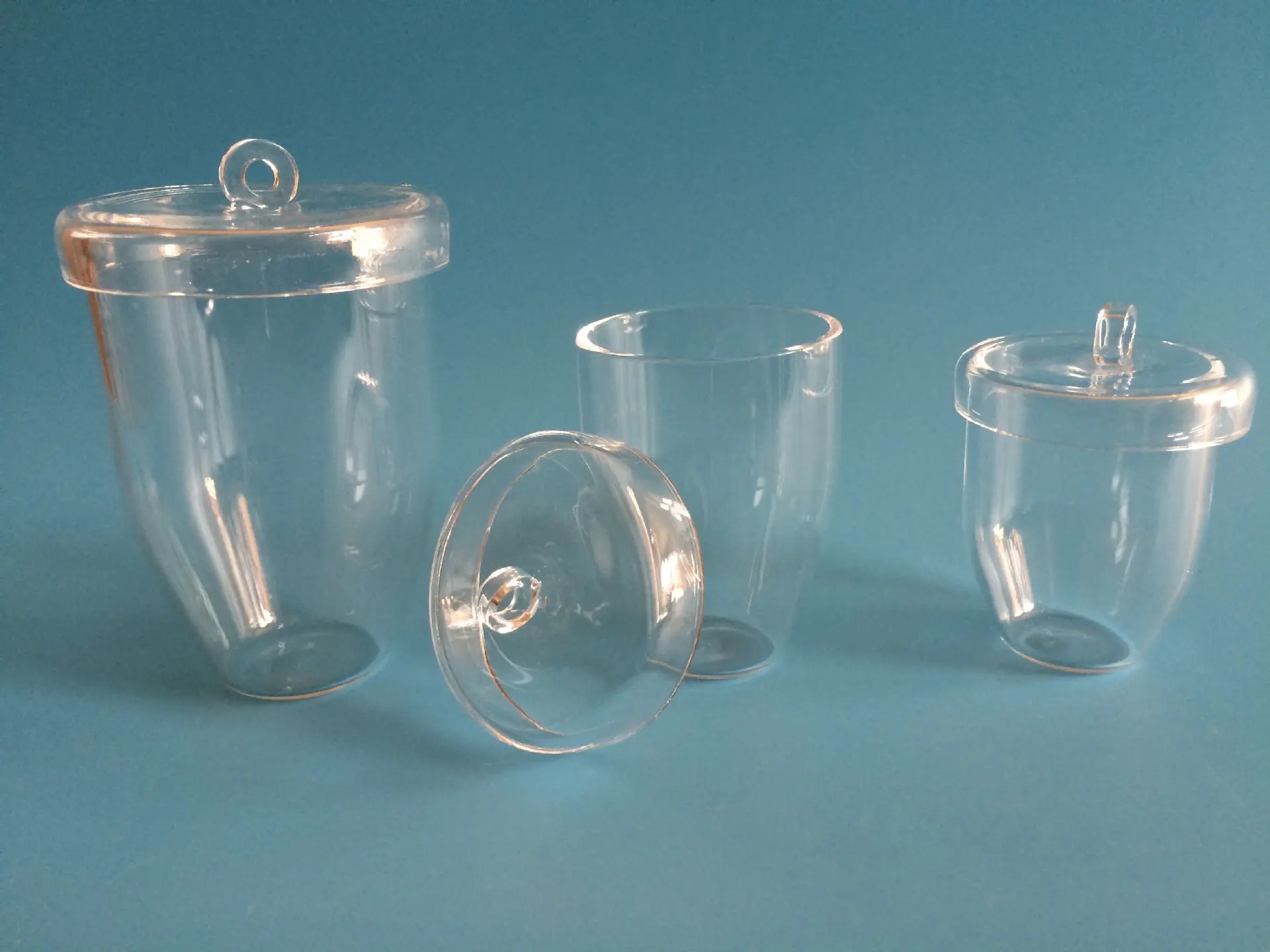
Fused Quartz Crucibles: A Premier Solution for High-Temperature Applications
Melted quartz crucibles are renowned for their exceptional thermal stability, high purity, and outstanding chemical resistance, making them widely used in various high-temperature processes. This blog delves into the production process, advantages, applications, sintering-compatible powders, and temperature suitability of melted quartz crucibles.
Production Process
The production of melted quartz crucibles involves several meticulous steps to ensure high quality and performance:
- Raw Material Selection: High-purity silica (SiO₂) is selected as the raw material. The purity of the silica directly impacts the final product’s performance.
- Melting: Silica is melted at extremely high temperatures (around 2000°C) using an electric arc furnace or gas furnace. This process transforms crystalline silica into non-crystalline (amorphous) melted quartz.
- Molding: The molten quartz is then shaped using various techniques (such as molding or blowing). Precision is required to ensure uniform wall thickness and structural integrity.
- Annealing: The molded crucibles undergo an annealing process to release internal stresses. This involves slow cooling to prevent cracking and ensure dimensional stability.
- Quality Control: Each crucible is inspected for defects, and thermal and mechanical performance tests are conducted to ensure they meet stringent quality standards.
Advantages
Melted quartz crucibles offer several distinct advantages:
- High Thermal Stability: They can withstand rapid temperature changes and remain stable at temperatures up to 1200°C.
- High Purity: Minimal impurities ensure that the crucible does not contaminate the materials being processed.
- Outstanding Chemical Resistance: They are resistant to most acids and alkalis, making them suitable for use in corrosive environments.
- Low Thermal Expansion: The low coefficient of thermal expansion minimizes the risk of thermal shock and cracking.
Applications
Due to their excellent performance, melted quartz crucibles are widely used across various industries and applications:
- Semiconductor Industry: Crucibles are used for silicon wafer production, as they can withstand the high temperatures required for silicon crystal growth.
- Materials Science: Used in the synthesis and processing of high-purity materials and advanced ceramics.
- Laboratory Applications: Crucibles are ideal for high-temperature experiments and chemical reactions.
- Glass Industry: Crucibles are used for producing high-purity glass and specialty glass products.
Sintering-Compatible Powders
Melted quartz crucibles are suitable for sintering a variety of high-temperature powders, including:
- Oxide Ceramics: Such as alumina (Al₂O₃) and zirconia (ZrO₂).
- Non-Oxide Ceramics: Including silicon carbide (SiC) and boron nitride (BN).
- Metals and Alloys: Particularly for metals and alloys that require high purity during the processing.
- Composite Materials: Including ceramic matrix composites and metal matrix composites.
Temperature Suitability
Melted quartz crucibles are designed to operate in high-temperature environments, with the following typical temperature ranges:
- Continuous Use: From 0°C to 1100°C.
- Maximum Use Temperature: Can withstand up to 1200°C for short periods.
Conclusion
Melted quartz crucibles are the preferred solution for high-temperature applications due to their high thermal stability, high purity, and excellent chemical resistance. Whether in the semiconductor industry, materials science, laboratory research, or glass manufacturing, melted quartz crucibles provide reliable performance and durability, supporting a wide range of high-temperature processes and materials development.
![Quartz Saggers [MH-BY-QU-SA99]](https://moatcity.com/wp-content/uploads/2024/10/石英1.jpg)

Leave a Reply