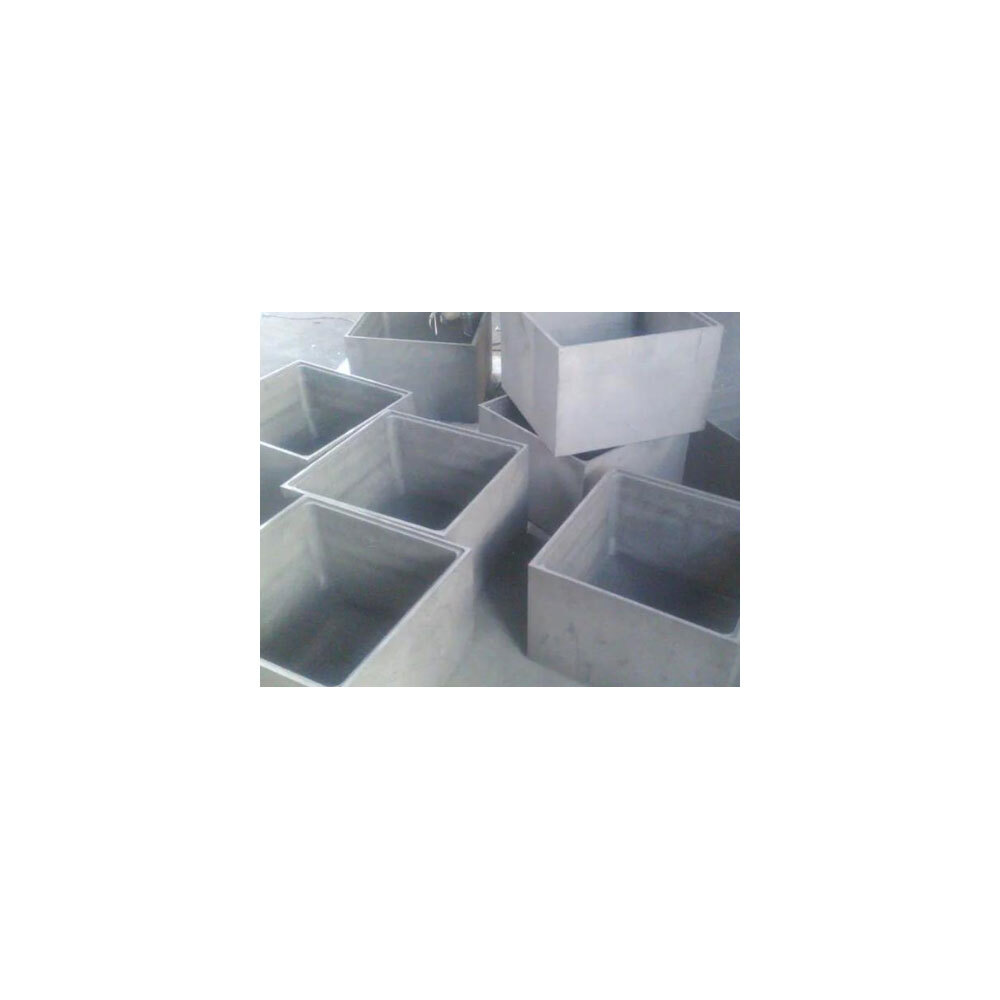
Applications of Boron Nitride Plates in the Semiconductor Industry: A Revolution in High-Performance Materials
The semiconductor industry is the core driver of modern technological development. From smartphones to artificial intelligence, almost all high-tech devices rely on semiconductor technology. However, the semiconductor manufacturing process places extremely stringent demands on materials, especially in high-temperature, high-purity, and high-precision environments. Boron nitride (BN) plates, as a high-performance ceramic material, are playing an increasingly important role in the semiconductor industry due to their unique physical and chemical properties. This article will delve into the applications of boron nitride plates in the semiconductor industry and their technical advantages.
1. Stringent Material Requirements in the Semiconductor Industry
Semiconductor manufacturing is a highly complex process involving multiple steps such as wafer growth, lithography, etching, and deposition. These steps impose extremely high demands on materials:
High Purity: Impurities in materials can severely affect the performance of semiconductor devices.
High-Temperature Stability: Many process steps require high-temperature environments.
Excellent Thermal Conductivity: Efficient heat dissipation is critical to ensuring stable device operation.
Chemical Inertness: Materials must resist corrosion from aggressive gases and chemical reagents.
Boron nitride plates have become an ideal material for semiconductor manufacturing due to their exceptional performance in these areas.
2. Properties and Advantages of Boron Nitride Plates
Boron nitride is a ceramic material composed of boron and nitrogen elements, with the following properties:
High Purity: Boron nitride can be prepared from high-purity raw materials, meeting the semiconductor industry’s strict requirements for impurity content.
High-Temperature Stability: Boron nitride has a melting point of up to 3000°C, maintaining stable physical and chemical properties in high-temperature environments.
Excellent Thermal Conductivity: Boron nitride has a high thermal conductivity (approximately 30-60 W/m·K), enabling effective heat dissipation and preventing device overheating.
Chemical Inertness: Boron nitride exhibits strong resistance to most acids, alkalis, and molten metals.
Electrical Insulation: Boron nitride is an excellent electrical insulating material, suitable for high-voltage environments.
These properties make boron nitride plates highly promising for applications in semiconductor manufacturing.
3. Specific Applications of Boron Nitride Plates in Semiconductor Manufacturing
3.1 Components in Chemical Vapor Deposition (CVD) Equipment
CVD is a critical process in semiconductor manufacturing for thin-film deposition. Due to their high-temperature stability and chemical inertness, boron nitride plates are often used as heaters, insulation plates, and reactor liners in CVD equipment. For example, during the epitaxial growth of silicon wafers, boron nitride plates can withstand high temperatures and resist corrosive gases, ensuring process stability and consistency.
3.2 Semiconductor Wafer Processing
In wafer processing, boron nitride plates are used as carrier plates and fixture materials. Their low thermal expansion coefficient and high thermal conductivity effectively reduce thermal stress, preventing wafer deformation or cracking. Additionally, the insulating properties of boron nitride plates help avoid electrostatic damage to wafers.
3.3 Heat Dissipation Substrates
As the power density of semiconductor devices continues to increase, heat dissipation has become a critical factor limiting performance. Due to their excellent thermal conductivity and insulation properties, boron nitride plates are widely used as heat dissipation substrates for high-power semiconductor devices. For instance, in LEDs and power semiconductor modules, boron nitride plates can efficiently conduct heat, improving device reliability and lifespan.
3.4 Plasma Etching Equipment
In plasma etching processes, boron nitride plates are used as electrodes and insulating components. Their high-temperature resistance and corrosion resistance ensure long-term stable operation of equipment in extreme environments.
4. Comparison of Boron Nitride Plates with Traditional Materials
In the semiconductor industry, boron nitride plates offer significant advantages over traditional materials such as alumina and silicon carbide:
Compared to Alumina: Boron nitride has higher thermal conductivity and a lower thermal expansion coefficient, making it suitable for high-power and high-precision applications.
Compared to Silicon Carbide: Boron nitride offers better insulation properties and stronger chemical inertness, making it suitable for corrosive environments.
However, the higher cost of boron nitride plates limits their large-scale application to some extent. In the future, with improvements in manufacturing processes and cost reductions, boron nitride plates are expected to replace traditional materials in more fields.
5. Technical Challenges and Future Development Directions
Despite their outstanding performance in the semiconductor industry, boron nitride plates still face some technical challenges:
Cost Control: The preparation of high-purity boron nitride powder and complex processes result in higher costs.
Performance Optimization: Further improving the mechanical strength and thermal conductivity of boron nitride plates.
Application Expansion: Developing boron nitride composite materials suitable for new semiconductor processes.
In the future, with advancements in nanotechnology and composite materials, the performance of boron nitride plates will be further enhanced, and their applications in the semiconductor industry will become even more widespread.
6. Conclusion
Boron nitride plates, with their high purity, high-temperature stability, excellent thermal conductivity, and chemical inertness, are playing an increasingly important role in the semiconductor industry. From CVD equipment to wafer processing, from heat dissipation substrates to plasma etching, the applications of boron nitride plates continue to expand. Despite challenges related to cost and technology, with ongoing advancements, boron nitride plates are expected to become an indispensable high-performance material in semiconductor manufacturing, driving the industry to new heights.

Leave a Reply