
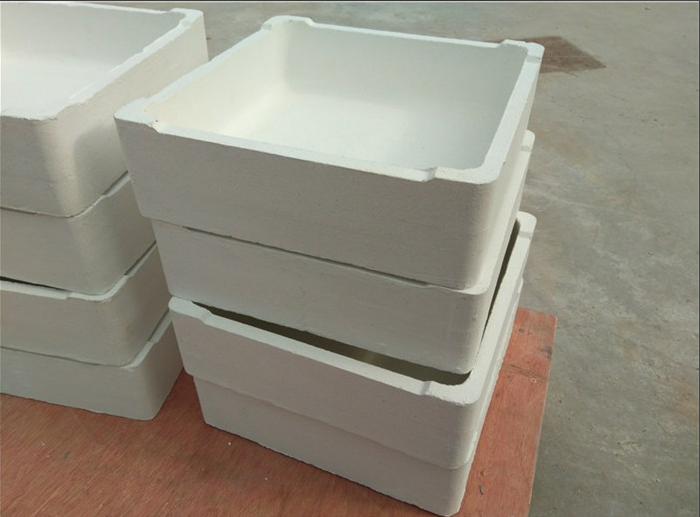
Comparative Performance Analysis: Corundum-Mullite vs. Alumina Saggers
In modern high-temperature processes—ranging from advanced ceramics and powder metallurgy to lithium battery cathode material production—saggers (also known as crucibles or setter boxes) are critical for ensuring consistent sintering outcomes. Two widely used materials for saggers are corundum-mullite composites and dense alumina (Al₂O₃) ceramics. While both offer excellent thermal resistance, they differ significantly in structure, performance characteristics, and cost-effectiveness.
This article provides a technical comparison between corundum-mullites saggers and alumina saggers, focusing on thermal behavior, mechanical integrity, chemical compatibility, and real-world applications.
-
Material Composition and Microstructure
Corundum-Mullite
Corundum-mullites saggers are ceramic composites typically made from:
60–80% corundum (α-Al₂O₃): Provides hardness and high-temperature load resistance
20–40% mullite (3Al₂O₃·2SiO₂): Improves thermal shock resistance and fracture toughness
Microstructure:
Interlocked needle-like mullite grains in a dense corundum matrix
Tailored porosity (typically <18%) and fine grain size distribution
Dense Alumina
High-purity alumina saggers are made from:
≥95% Al₂O₃, often ≥99% for technical ceramics
Minimal silica or glassy phases, ensuring high inertness
Microstructure:
Uniform, dense, and fine-grained α-Al₂O₃ phase
Extremely low porosity (<5%) and high packing density
-
Thermal Properties
| Property | Corundum-Mullite | Alumina (Dense) |
| Maximum operating temperature | ~1,650–1,700 °C | ≥1,700–1,800 °C |
| Thermal conductivity | ~4–6 W/m·K | ~25–35 W/m·K |
| Thermal expansion coefficient | 5.5–6.5 × 10⁻⁶/°C | 8.0–9.0 × 10⁻⁶/°C |
| Thermal shock resistance | High | Moderate to low |
Analysis:
Corundum-mullite saggers offer superior thermal shock resistance, making them ideal for fast-firing kilns or rapid ramp-up cycles. In contrast, dense alumina saggers handle slightly higher maximum temperatures but are more brittle and prone to cracking under thermal stress.
-
Mechanical Performance
| Metric | Corundum-Mullite | Alumina (Dense) |
| Cold crushing strength | 80–120 MPa | 150–250 MPa |
| Flexural strength | ~15–25 MPa | ~25–40 MPa |
| Fracture toughness (K_IC) | ~2.5–3.5 MPa·m^½ | ~2.0–2.5 MPa·m^½ |
| Young’s modulus | 120–160 GPa | 300–400 GPa |
Analysis:
Dense alumina exhibits higher stiffness and strength, which is advantageous under static load at high temperatures. However, it lacks the fracture toughness of corundum mullites, making it more vulnerable to chipping and cracking during handling or thermal cycling.
-
Chemical Compatibility and Contamination Risk
Corundum Mullite:
Low silica volatility
Generally inert to lithium salts, oxides, and fluorides (with proper surface finishing)
Moderate resistance to alkali vapor
High-Purity Alumina:
Highly chemically inert, even at 1,800 °C
Ideal for ultra-pure environments (e.g., electronic ceramics, sapphire growth)
Low ion migration; no glassy phase interactions
Conclusion:
Alumina saggers are preferred in high-purity applications where even trace contamination is unacceptable. Corundum mullites is sufficiently inert for most sintering processes and offers better protection in reactive or fast-cycle atmospheres due to its thermal resilience.
-
Lifecycle Performance and Cost Efficiency
| Factor | Corundum-Mullite | Alumina (Dense) |
| Number of firing cycles | 60–120 (typical) | 40–80 (typical) |
| Resistance to thermal fatigue | Excellent | Fair to good |
| Cost per unit | Medium | High |
| Cost per cycle (total life) | Low to medium | High |
Interpretation:
While alumina saggers last longer in stable, slow-fired kilns, they often fail early under thermal shock. Corundum-mullites saggers, though cheaper, offer greater cost-efficiency in dynamic firing processes, particularly in roller kilns or shuttle kilns with fluctuating temperatures.
-
Use Case Comparison
| Industry | Preferred Sagger Type | Justification |
| Lithium battery cathode (LFP, NCM) | Corundum-mullite | Better thermal cycling tolerance, acceptable chemical resistance |
| Electronic ceramics (PZT, MLCC) | Alumina (≥99%) | Ultra-low impurity content, chemical inertness |
| Technical oxides (ZrO₂, Al₂O₃) | Corundum-mullite or Alumina | Depends on firing curve and sensitivity |
| Metallurgical powder sintering | Corundum-mullite | Higher toughness, better impact resistance during loading |
-
Decision Matrix: Which Should You Choose?
| Criteria | Recommended Material |
| High-purity sintering | High-purity Alumina |
| Fast thermal cycles | Corundum-Mullite |
| Low contamination risk | Alumina (≥99%) |
| Low cost per cycle | Corundum-Mullite |
| Thermal shock resistance | Corundum-Mullite |
| High mechanical load (static) | Alumina |
| Complex kiln environments | Corundum-Mullite |
Conclusion
Both corundum mullites and alumina saggers serve critical roles in high-temperature processing. Alumina offers unmatched chemical purity and mechanical rigidity but struggles in rapid thermal environments. Corundum-mullites, on the other hand, balances thermal resilience, fracture toughness, and cost-effectiveness, making it ideal for most industrial kilns.

Leave a Reply