
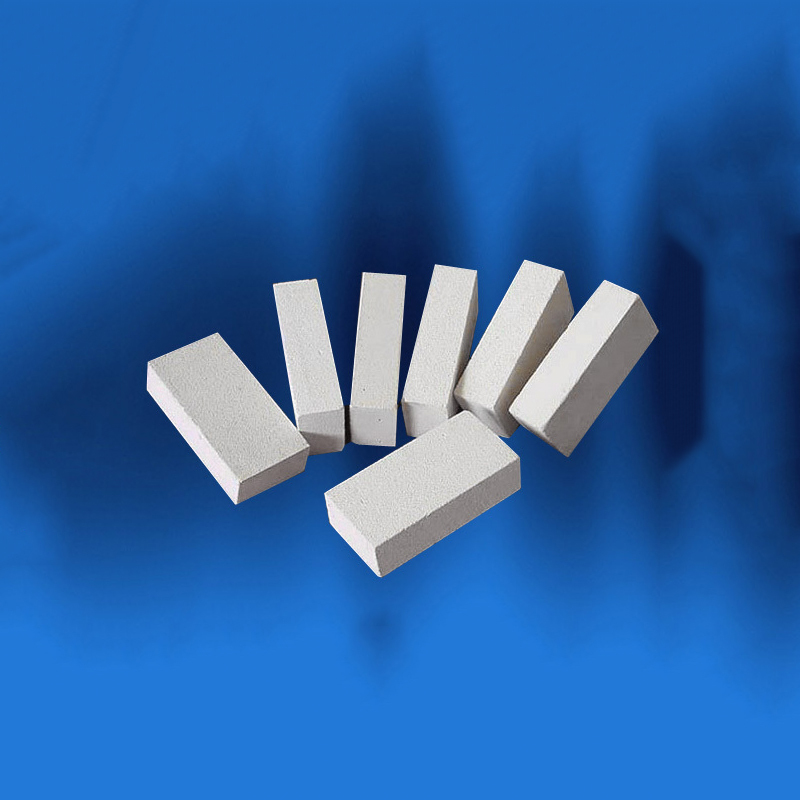
Production Process of Corundum-Mullite
Corundum-mullite (3Al₂O₃·2SiO₂) is an important refractory material known for its excellent high-temperature performance and chemical stability, widely applied in metallurgy, ceramics, glass, and other fields. Understanding its production process is crucial for improving material performance, reducing production costs, and optimizing production workflows. This article will detail the production process of corundum-mullite, including raw material selection, production steps, post-processing techniques, and quality control.
Raw Material Selection
The production of corundum-mullite requires the selection of high-purity raw materials, mainly including:
Bauxite
Bauxite is the primary source of aluminum, rich in aluminum oxides. Choosing high-grade bauxite can not only enhance the purity of the final product but also improve its refractoriness and chemical stability. When selecting bauxite, considerations include aluminum content, impurity composition, and particle size.
Silica Sand
Silica sand is the main source of silicon and must be of high purity and suitable particle size. High-purity silica sand prevents impurities from affecting the final product’s performance and enhances the overall properties of corundum-mullite.
Additives
Sometimes, fluxing agents or binders are added during production to improve the flowability and sintering performance of the material. Common additives include quartz powder and feldspar. These additives can enhance the flowability during sintering, improving the density and strength of the sintered body.
Production Process
The production process of corundum-mullite generally includes the following steps:
Crushing and Grinding
First, bauxite and silica sand are crushed and ground to achieve suitable particle sizes. Typically, the raw materials need to be ground to 150 mesh or finer to ensure uniform reaction during sintering. This step is crucial for the subsequent mixing and forming processes.
Mixing
The crushed bauxite and silica sand are mixed in a specific ratio, usually 3:2 for aluminum to silicon. This ratio is key to producing corundum-mullite, ensuring that the final product’s composition meets design requirements. During mixing, additives can be added as needed to improve material performance. Uniformly mixed materials can enhance the reaction rate during sintering, promoting inter-fusion.
Forming
The mixed materials are then pressed or extruded to form the desired green body. It is essential to control the pressure during forming to ensure the density and strength of the green body. Common forming methods include dry pressing and wet pressing. Dry pressing is suitable for large-scale production, while wet pressing is better for complex-shaped products. Care must be taken to maintain material uniformity during forming to avoid internal defects.
Sintering
The formed green body is subjected to high-temperature sintering to achieve inter-fusion of materials and stabilization of the microstructure. Sintering temperatures typically range from 1450°C to 1650°C, depending on the product’s characteristics and intended use. During sintering, the increased temperature facilitates chemical reactions between bauxite and silica sand, forming a composite structure of corundum and mullite. Controlling the sintering time is also crucial; too long or too short can adversely affect product quality.
Cooling
After sintering, the product must be cooled slowly to avoid thermal shock cracks due to sudden temperature drops. Controlling the cooling process is vital; usually, natural cooling or controlled cooling rates are employed to ensure structural integrity. Slow cooling can also enhance the material’s toughness and reduce internal stress.
Post-Processing Techniques
The post-processing of corundum-mullite includes:
Cutting and Grinding
After sintering, products are cut and ground to achieve the desired dimensions and surface quality based on application requirements. During grinding, care must be taken to control process parameters to ensure good surface finish and dimensional accuracy.
Inspection
Finished products undergo rigorous quality inspection, including physical property tests (e.g., hardness, density, refractoriness) and chemical composition analysis to ensure compliance with design standards. Quality inspection helps identify potential issues and provides feedback for subsequent production.
Packaging
Qualified products are cleaned and dried before packaging to prevent contamination or damage during transportation and storage. Proper packaging effectively protects products and minimizes transport losses.
Quality Control
Quality control is critical throughout the entire production process. Monitoring key parameters (such as temperature, pressure, and composition ratios) at each stage is essential to ensure product consistency and stability. Regular inspection of raw materials is also necessary to ensure they meet production standards. Utilizing advanced testing instruments and techniques (such as X-ray diffraction and scanning electron microscopy) allows for precise evaluation of material properties and structures, providing reliable data for production.
Conclusion
The production process of corundum-mullite involves multiple stages, from raw material selection to sintering and post-processing, with each step significantly impacting the final product’s performance. Mastering this production process not only enhances material properties but also effectively reduces production costs, meeting the high demands for refractory materials across various industries.




Leave a Reply