

Manufacturing Process of Cordierite-Mullite Refractory Materials
Andalusite-mullite is an important refractory material with unique physicochemical properties, making it highly suitable for high-temperature applications. Understanding its production process not only helps improve product quality but also reduces production costs and enhances a company’s competitiveness. This article explores the raw material preparation, production process, and quality control of andalusite-mullite, providing reference and guidance for industry professionals.
Raw Material Preparation
The main raw materials for andalusite-mullite are bauxite and quartz. The selection of high-purity, stable raw materials is crucial for ensuring the performance of the final product.
- Bauxite: Bauxite is the primary aluminum source for andalusite and mullite, and its aluminum content directly affects the aluminum-silicon ratio of the final product. High-quality bauxite typically contains low levels of impurities such as iron, calcium, and sodium, which may negatively affect the refractory performance. Therefore, it is essential to focus on the composition and source of bauxite when selecting it.
- Quartz: Quartz is the primary source of silicon, and its content is also critical. The particle size and purity of quartz directly impact the crystal structure and refractory properties after sintering. In andalusite-mullite preparation, the quartz content is typically controlled between 30% and 50% to ensure an appropriate aluminum-silicon ratio.
During the raw material preparation stage, thorough drying is also required to reduce moisture content, ensuring that no bubbles or cracks occur during subsequent forming and sintering processes.
Production Process
The production process for andalusite-mullite primarily involves the following steps:
1. Forming
Forming is a crucial step in the production process, with two primary methods: pressing and injection molding.
- Pressing: This method is suitable for producing most refractory bricks and typically employs dry or wet pressing techniques. High pressure is applied to the mixture of raw materials in a mold to form the initial body. Pressing results in higher density and strength products but requires advanced equipment.
- Injection Molding: This method is used for producing refractory materials with complex shapes. The raw materials are mixed with a certain amount of water or binder and injected into molds using an injection machine. The advantage of this method is its flexibility in production, but it requires good flowability of the materials.
2. Sintering
After forming, the green body must be sintered to achieve the desired physical and chemical properties. The sintering temperature, time, and atmosphere significantly impact the final product’s performance.
- Sintering Temperature: The sintering temperature for andalusite-mullite is typically between 1300°C and 1600°C. If the temperature is too low, the strength will be insufficient, and the refractory performance will be poor. If the temperature is too high, the product may deform or melt.
- Sintering Time: The appropriate sintering time is crucial for the product’s density and refractory properties. Generally, sintering time ranges from 5 to 10 hours, depending on the product’s specifications and characteristics.
- Sintering Atmosphere: During sintering, an oxygen atmosphere is typically used to avoid adverse reduction reactions that may affect the product’s quality. For certain specialized products, inert atmospheres such as nitrogen or argon may be used to improve product stability.
3. Cooling
After sintering, the product must be cooled. The cooling process should be as slow as possible to prevent thermal cracking caused by rapid temperature changes. The ideal cooling rate is typically between 30°C to 50°C per hour.
Quality Control
Quality control is key to ensuring product performance in the production of andalusite-mullite. Specific measures include:
- Raw Material Inspection: Upon receipt of raw materials, chemical composition analysis and physical performance testing are conducted to ensure they meet production standards.
- Process Monitoring: Continuous monitoring is carried out throughout the production process, including forming, sintering, and cooling stages, to ensure equipment operates normally and the production process remains stable.
- Final Product Testing: The final product undergoes comprehensive performance testing, including refractory performance, compressive strength, and thermal conductivity, to ensure it meets national and industry standards.
Conclusion
The production of andalusite-mullite involves multiple stages, including raw material preparation, forming, sintering, and quality control, with each step having a significant impact on the final product’s performance. By optimizing the production process, companies can enhance the quality of refractory materials, improving their market competitiveness. It is hoped that this article provides valuable reference for industry professionals and promotes further development of andalusite-mullite in the refractory material sector.
Comments (0)
Related Products
 Cordierite Mullite Push Plates for Daily-use Ceramic
 Cordierite Mullite Push Trays For Magnetic Materials and Positive Electrode Material
![Cordierite Mullite Saggars for Lithium Battery Industry [MH-LNY-LH-CM54]](https://moatcity.com/wp-content/uploads/2024/10/02.png) Cordierite Mullite Saggars for Lithium Battery Industry [MH-LNY-LH-CM54]
Cordierite Mullite Saggars for Lithium Battery Industry [MH-LNY-LH-CM54] Cordierite Mullite Saggers for Positive Electrode Material Sintering
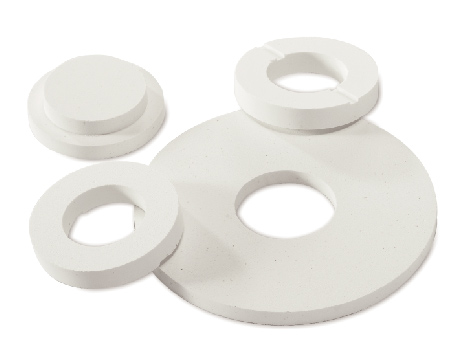 Cordierite Mullite Tiles for Dry Pressing Stainless Steel Powder Metallurgy
 Customized Cordierite-Mullite Kiln Furniture

Leave a Reply