
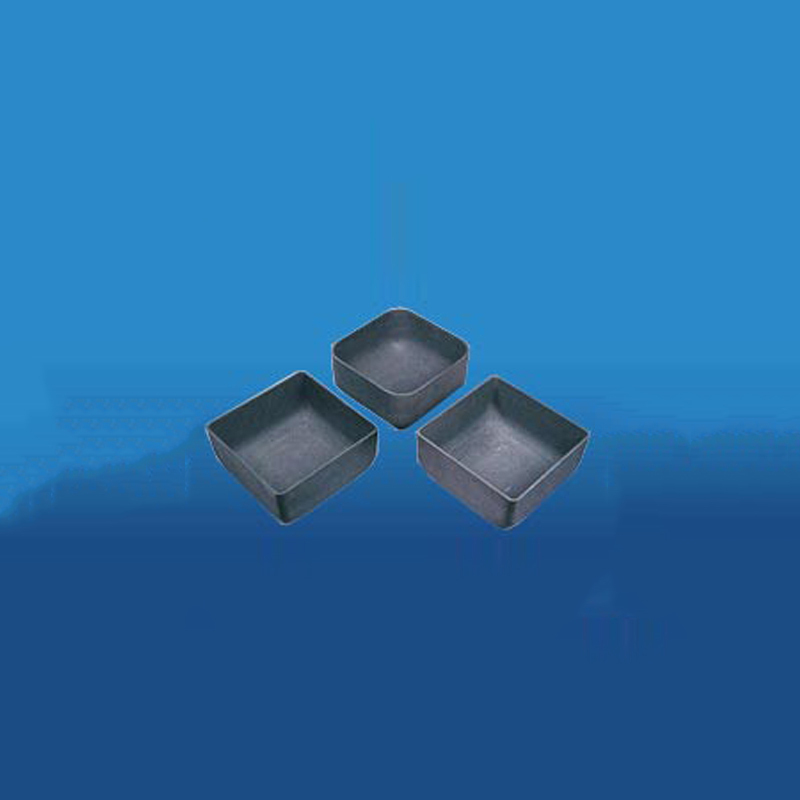
The Manufacturing Process and Advantages of Silicon Carbide Saggars
Silicon carbide saggars are essential materials in lithium battery production. Their outstanding properties result from a precise and complex manufacturing process, with strict control over each step, from raw material selection to molding, sintering, and post-processing, ensuring that the saggars perform optimally in practical applications.
Selection of raw materials
The first step in manufacturing silicon carbide Saggar is selecting high-purity silicon carbide powder. Manufacturers typically use silicon carbide powder with a silicon content of over 99% to ensure that the final product has optimal thermal conductivity and high-temperature resistance. High-purity silicon carbide not only enhances the mechanical strength of the material but also reduces the impact of impurities, improving the chemical stability of the Saggars. This choice of material is critical in subsequent processes, directly affecting the performance and lifespan of the finished product.
Forming Process
The forming process of silicon carbide Saggars determines their shape, size, and density. Common forming methods include cold isostatic pressing and hot pressing. Cold isostatic pressing shapes the powder under high pressure, ensuring uniform density and precise dimensions. Hot pressing, performed at high temperatures, further increases the saggar’s density and mechanical strength. Each method has its advantages, and manufacturers choose the most suitable forming technique based on the specific requirements of the product to ensure stability and thermal conductivity in high-temperature environments.
Sintering Process
Sintering is a crucial step in the manufacturing of silicon carbide Saggars. The molded saggar body needs to be sintered at high temperatures to enhance the internal structure’s strength. The sintering temperature is typically controlled above 2000°C, and the process is conducted in an inert atmosphere or under vacuum to prevent the oxidation of silicon carbide. Precise control of sintering time is also critical, ensuring that the Saggars achieve optimal physical properties.
Post-Processing
After sintering, silicon carbide Saggar usually undergo post-processing, such as mechanical machining and surface coating. Mechanical machining ensures the saggar’s dimensional accuracy, while surface coating enhances its resistance to chemical corrosion and oxidation. These post-processing steps further extend the saggar’s lifespan and overall performance, ensuring long-term stability in high-temperature and chemical environments.
Overall Advantages
Although the manufacturing process of silicon carbide Saggars is complex and costly, their performance in terms of high-temperature stability, thermal conductivity, mechanical strength, and chemical resistance far exceeds that of traditional materials. In large-scale lithium battery production, silicon carbide Saggar significantly improve production efficiency, reduce defect rates, and ultimately provide substantial economic benefits to enterprises. By reducing the frequency of replacements and maintenance needs, silicon carbide Saggar help lower production costs while improving product consistency and quality stability.
Conclusion
The manufacturing process of silicon carbide saggars lays a solid foundation for their excellent performance. With the continuous development of lithium battery technology, silicon carbide saggars will demonstrate their value in more application areas. In the future, with advancements in materials science, the performance of silicon carbide saggars will be further enhanced, and their application scope will become even broader, making them an important force driving the progress of lithium battery production and technology. By adopting silicon carbide saggars, lithium battery manufacturers can not only improve product quality but also gain a greater competitive advantage in the market.
![Silicon Carbide Saggars for Lithium Batteries [MH-LNY-LH-SiC73]](https://moatcity.com/wp-content/uploads/2024/10/01111.jpg)

Leave a Reply