
Unveiling Efficiency: The Advantages of Incorporating High Quality Ceramic Setters in MIM Processes
In the realm of manufacturing, precision and efficiency are paramount. The evolution of Metal Injection Molding (MIM) has revolutionized the production of intricate metal components, offering a cost-effective alternative to traditional manufacturing methods. However, achieving optimal efficiency in MIM processes requires meticulous attention to detail and the utilization of advanced technologies. Among these technologies, the incorporation of high quality ceramic setters emerges as a crucial element in streamlining production and enhancing overall performance.
Metal Injection Molding (MIM) has emerged as a versatile manufacturing process, enabling the production of complex metal parts with high precision and consistency. By combining the benefits of plastic injection molding and powdered metallurgy, MIM facilitates the production of intricate components that would be challenging or cost-prohibitive to manufacture using conventional methods.
However, the success of MIM hinges not only on the quality of the raw materials and the intricacy of the design but also on the efficiency of the production process itself. One often-overlooked aspect that significantly influences efficiency in MIM operations is the choice of setters, particularly ceramic setters.
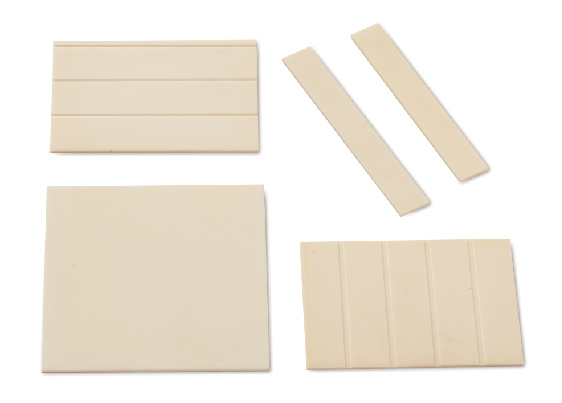
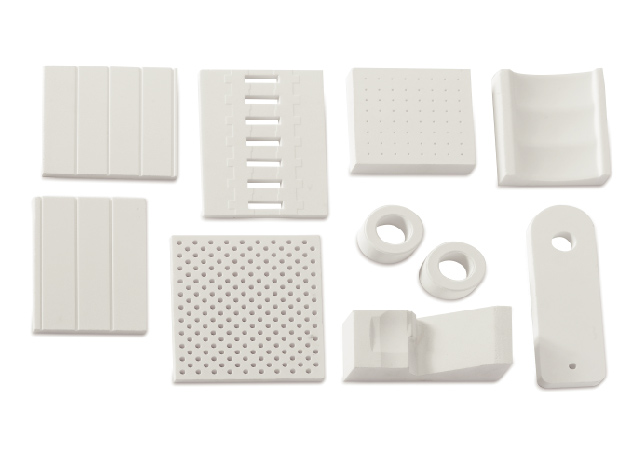
Ceramic setters play a pivotal role in the MIM process by providing support to the green parts during debinding and sintering stages. These setters are specially designed to withstand high temperatures and harsh chemical environments, ensuring the integrity of the parts throughout the thermal processing cycles.
Here are some key advantages of incorporating high-quality ceramic setters in MIM processes:
Temperature Stability: High-quality ceramic setters offer exceptional temperature stability, allowing for precise control over the debinding and sintering processes. Consistent temperature distribution is essential for achieving uniform shrinkage and minimizing dimensional variations in the final parts.
Chemical Resistance: Ceramic setters exhibit excellent resistance to chemical reactions, ensuring compatibility with the binders and debinding agents used in the MIM process. This resistance minimizes the risk of contamination and ensures the purity of the final metal parts.
Dimensional Precision: The thermal stability and rigidity of ceramic setters help maintain dimensional precision during debinding and sintering. This is critical for producing parts with tight tolerances and intricate geometries, meeting the stringent requirements of various industries such as automotive, aerospace, and medical.
Durability and Longevity: High-quality ceramic setters are engineered to withstand repeated thermal cycling and harsh operating conditions, ensuring long-term reliability and cost-effectiveness. Their durability minimizes the need for frequent replacement, reducing downtime and production costs.
Enhanced Process Control: By providing stable support to the green parts, ceramic setters enable better process control and optimization. Operators can fine-tune parameters such as temperature profiles, atmosphere composition, and dwell times to achieve optimal results, maximizing efficiency and productivity.
Versatility and Customization: Ceramic setters can be tailored to meet the specific requirements of different MIM applications. Whether it’s size, shape, or surface finish, manufacturers can customize setters to accommodate various part geometries and production volumes, offering flexibility and adaptability in manufacturing operations.
Conclusion
The incorporation of high-quality ceramic setters in Metal Injection Molding processes offers a multitude of advantages, ranging from enhanced temperature stability and chemical resistance to improved dimensional precision and process control. By investing in premium ceramic setters, manufacturers can optimize efficiency, minimize production costs, and deliver high-quality metal components that meet the most demanding specifications. As MIM continues to gain traction across diverse industries, the role of ceramic setters will undoubtedly remain indispensable in achieving superior results and staying ahead in the competitive manufacturing landscape.

Leave a Reply